International Casinos for New Zealanders: Rules and Play
 Available in US
The guide explains how New Zealand law treats offshore operators and players, alongside payments, bonuses, mobile formats and spending patterns.

Offshore Casinos and New Zealand’s Changing Rules
In New Zealand, “international casino” describes an online gambling service based outside the country and reached over the internet. The phrase says where the operator is based; it does not, by itself, establish that the operator is licensed in New Zealand. That distinction matters because the country’s rules have long treated the location of the business differently from the location of the player.
Under the Gambling Act 2003, an online casino cannot be based in New Zealand. The Act’s concern is with operators running such a business from within the country, not with residents who access a casino hosted overseas. A Kiwi player does not commit a crime merely by playing at an offshore online casino. That is a statement about the player’s legal position, not an endorsement of any particular service.
The Department of Internal Affairs (DIA) is the principal regulator and licensing authority for gambling that is legal within New Zealand. Yet, before the recent reform, offshore online casino gambling was not licensed or supervised by a New Zealand regulator. The result was an awkward divide: domestic online casinos were prohibited, while overseas services could be reached by local customers without being brought under local oversight. The player was not breaking the law, but the service was not protected by a New Zealand regulatory framework either.
Choosing an international casino from New Zealand calls for a clear look at the information available about each option. This list offers concise details to help you assess what is stated about the operators.
Payout speed: 1-3 business days Wintino lists a payout speed of 1–3 business days, giving readers a stated timeframe to consider.
License: Curaçao Gaming Authority, licence no. OGL/2024/165/0185 BitStarz lists a Curaçao Gaming Authority licence, number OGL/2024/165/0185.
License: Malta Gaming Authority, licence no. MGA/B2C/370/2017 Play Grand lists a Malta Gaming Authority licence, number MGA/B2C/370/2017.
License: Tobique Gaming Commission, licence no. 0000091 7Bit Casino lists a Tobique Gaming Commission licence, number 0000091.
License: Tobique Gaming Commission, licence no. 0000064 Neospin lists a Tobique Gaming Commission licence, number 0000064.
License: Tobique Gaming Commission, licence no. 0000002 Ricky Casino lists a Tobique Gaming Commission licence, number 0000002.
License: 07017519840 · Payout speed: 1-3 business days Zotabet lists licence number 07017519840 and a payout speed of 1–3 business days.
Payout speed: 1-3 business days Lamabet lists a payout speed of 1–3 business days, a stated detail to keep in mind when considering it.
License: Malta Gaming Authority, licence no. MGA/B2C/394/2017 N1 Casino lists a Malta Gaming Authority licence, number MGA/B2C/394/2017.
That absence had practical consequences. A customer wagering through an offshore website during that period had no domestic government recourse if a dispute arose. The DIA’s role in regulating legal gambling within New Zealand did not mean it supervised every overseas website available to a Kiwi player. Geography, in this case, was more than a line on a map. It marked the boundary of local authority.
The Online Casino Gambling Act 2026 changes that arrangement. It came into force on 1 May 2026 and establishes New Zealand’s first domestic licensing regime for online casino gambling. The measure does not make every overseas casino a New Zealand-licensed service, nor does it turn past access into a breach by players. Rather, it sets out a process for moving from the earlier unregulated position towards a system in which operators serving the market must meet a domestic licensing framework.
The transition is deliberately staged. A specialist review of the new rules reports that operators already serving people in New Zealand on 1 May 2026 may continue during the transition, which ends on 1 December 2026. The permission is limited to providers that were already operating in the market before the Act took effect; it is not a general invitation for new services to enter. The law has made room for an orderly changeover, not an open door.

There is a further condition attached to that interval. Providers that have not applied for a licence must stop conducting online casino gambling in New Zealand by 1 December 2026. If an application is refused, the provider must cease its New Zealand-facing online casino activity and leave the market. These requirements concern operators. They do not create a criminal offence for a resident simply because that person has used an offshore casino.
The full licensed regime is not expected to be operating in its complete form until 2027. The legislation also anticipates that unlicensed operation will become an offence around the middle of that year. The sequence is therefore not a sudden switch from “legal” to “illegal” for customers. It is a transition in the obligations imposed on businesses: first, a temporary arrangement for existing providers; then, licensing and enforcement as the system becomes fully operational.
A specialist review of the market’s position recorded that, as of 3 October 2026, no New Zealand online casino licence had yet been issued. That is a date-specific snapshot, not a permanent description of the market. It also helps explain why the transition period matters: the new regime has been legislated, but its licensing framework was still moving towards full operation at the time that status was reported.
Attention: Providers that have not applied for a licence must stop conducting online casino gambling in New Zealand by 1 December 2026.
The word “international” can obscure these stages. It may sound like a category of casino recognised by New Zealand law, when in ordinary use it simply means an operator based offshore. Before the 2026 Act, such services were outside domestic licensing and supervision. During the transition, only qualifying existing providers may continue under the transitional provisions. Once the licensing system is fully in force, an operator’s position will depend on whether it has the required New Zealand authorisation. The label alone settles none of that.
Nor should the absence of player liability be mistaken for local protection. New Zealand residents are not criminalised for playing at offshore casinos, but a service outside the country’s regulatory reach does not acquire the protections of a domestic licence merely by accepting customers here. Under the earlier arrangement, there was no domestic government recourse for a customer with a dispute against an offshore website. That boundary is the important one: lawful conduct by a player and regulated conduct by an operator are separate questions.
The reform reflects a familiar tension in public policy. Prohibition can prevent local businesses from operating a particular service, but it cannot necessarily prevent residents from reaching businesses elsewhere. New Zealand’s new approach acknowledges that difference and attempts to govern the supply of online casino gambling through licensing. It does not erase the older distinction between the operator’s conduct and the player’s act.
Advertising is also constrained during the transition: operators are prohibited from advertising online casino gambling services to people in New Zealand in that period. The rules permit advertising by licensed operators only within tight limits, and sponsorships are prohibited. These restrictions underline that transitional permission to continue operating is not the same as unrestricted permission to promote a service.
The legal picture, then, is neither that offshore casinos are locally licensed nor that every Kiwi player using one has committed an offence. The Gambling Act 2003 prohibits domestic online casinos and targets operators running them from within New Zealand. The 2026 Act creates the country’s first licensing route, with a limited transition for providers already serving the market and a later shift towards enforcement against unlicensed operation. The rules are changing on the operator’s side of the screen.

What Makes an International Casino Service Usable
An offshore casino can be easy to open and still be difficult to use well. For Kiwi players, usability is not just a matter of whether a page loads or a game fits a phone screen. It also depends on whether the account can be verified, whether the service works across devices, and what protection exists if a dispute arises. Those details sit behind the polished front end.
Identity checks are part of that less visible machinery. An operator may request documents to confirm who holds an account and where that person lives. A passport or other identity document may establish identity; proof of address helps connect the account to a real residence. Such requests are commonly grouped under the term “know your customer”, or KYC. The phrase sounds impersonal because the process is: a person becomes a set of details that must match.
KYC
Known as “know your customer”, this is the process where an operator requests identity and address documents to verify who holds an account and where they live.
That can make account verification feel like an interruption, particularly when the initial registration seemed straightforward. But an account that has not passed the operator’s checks may have limited functionality. The practical point is not that every offshore site asks for the same documents at the same stage; it is that identity and address evidence may be required before an account is fully cleared. The site’s process, accepted documents and handling of personal information therefore matter as much as the first screen.
There is a social bargain embedded in this procedure. Gambling services ask for personal data in the name of compliance and security, while the customer has to decide how much confidence to place in a company operating beyond New Zealand’s regulatory reach. A document upload is not simply an administrative chore: it is a transfer of sensitive information to an offshore business. Clear explanations of what is requested and how the account process works are signs of basic operational transparency, not proof of wider consumer protection.
The limits of that protection are important. Before the Online Casino Gambling Act 2026, online casino gambling supplied from outside New Zealand was not licensed or supervised by a New Zealand regulator. A customer who had a dispute with an offshore website in that period had no domestic government route for resolving it. The Act came into force on 1 May 2026 and created a transition for operators already serving New Zealand customers. That change does not turn every international service into a locally supervised one overnight; the full domestic licensing regime is expected to be operational in 2027.

Access and oversight are different questions. Offshore sites have been accessible to residents, and New Zealand law has not made the player’s act of using one a crime. But practical access should not be mistaken for the protections attached to a locally regulated service. The Department of Internal Affairs is responsible for gambling regulation in New Zealand, yet it cannot be assumed to provide the same direct oversight of an offshore operator simply because the site accepts customers from here. A page written in New Zealand English is not a New Zealand licence.
That distinction matters when something goes wrong. A customer may face a disagreement about account access, identity checks or the operator’s interpretation of its own rules. Where the business is offshore and outside domestic supervision, the route to a remedy may be limited. The service can look local enough to feel familiar while its legal and operational centre remains elsewhere. Familiarity is not jurisdiction.
Mobile access adds a more ordinary test of usability. A casino can be opened on a smartphone through its browser or through an app. The browser route avoids installing a separate program; an app may package access in a more dedicated interface. Neither format, by itself, says anything about the quality of the operator’s safeguards. A smooth screen is a design feature, not a regulatory credential.
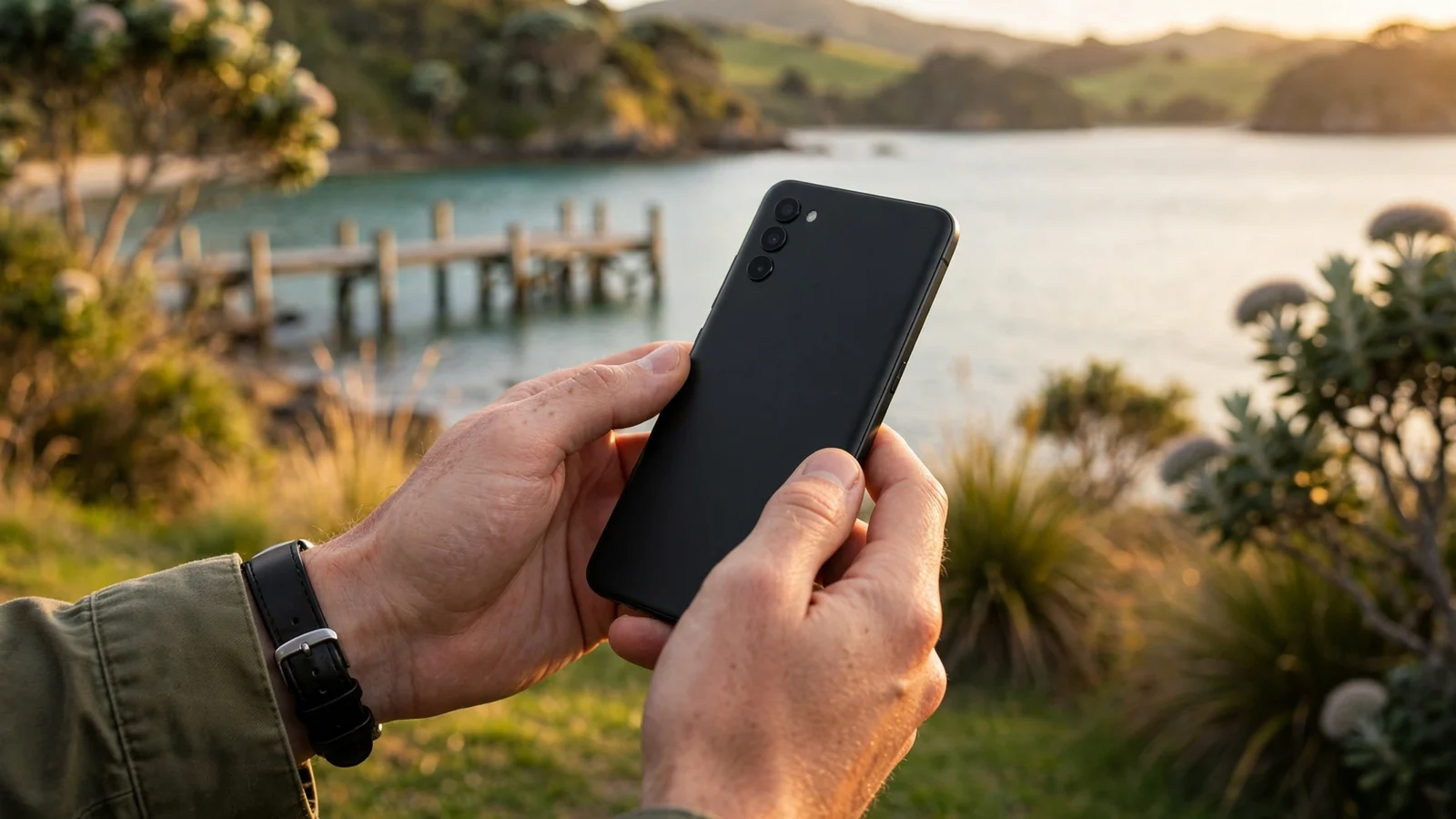
Using a phone also changes how an account is encountered. A small display makes menus, terms and identity instructions easier to skim past, while the same details may be more legible on a larger screen. That is not a special legal rule, but it is a practical reason why the convenience of mobile access should not be confused with clarity. The service may fit in a pocket; the obligations attached to the account do not shrink with it.
Account continuity is another basic measure. Mobile access can use the same account as access elsewhere; creating a second account with identical personal details is not a substitute for switching devices. That matters because identity checks attach to the account holder, not to a particular screen. Keeping one account across devices makes the service easier to follow, while duplicate registration can create avoidable confusion over which profile is being reviewed.
A usable service, then, is not merely one that opens quickly. It is one whose identity process can be understood, whose access works across a phone browser or app, and whose limits are not obscured by a familiar interface. The safeguards available to a customer depend partly on where the operator sits and which regulatory regime applies. Those distinctions are less visible than a login button. They are also more consequential.
Real-Money Play, Withdrawals and the Cost of Waiting
A deposit and a withdrawal may use the same account, but they are not mirror images. Money going in can be credited as soon as the payment is accepted; money coming out may first wait for the casino’s checks and then travel through a bank or payment service. The distinction matters more than the polished image of a balance on screen. A displayed win is not yet money in a bank account.
A specialist review reports that deposits are instant for the payment routes it describes, with withdrawals arriving within 24 to 48 hours. It also reports that both support NZD accounts and that fees are commonly 1 to 2%. Those details are not universal terms: the cashier’s available methods, the account currency and the withdrawal conditions can differ between operators. A fee attached to the transfer is also separate from any exchange-rate cost if the account is not held in New Zealand dollars.
The route can alter the wait considerably. In the same specialist review, bank-transfer withdrawals are reported at three to seven days. Skrill and Neteller withdrawals are reported at 24 to 48 hours, with fees of 1 to 2%. Cryptocurrency withdrawals are reported as often processed within an hour. These are reported processing windows, not promises of the time funds will be usable: a casino’s review process and the receiving institution’s handling can add steps. The short version: fast is not final.
For someone considering an international casino online for real money, the practical comparison is therefore not simply which method accepts a deposit. It is whether that same route is available for withdrawals, what it costs, and whether the stated time refers to the operator processing a request or the money arriving. A quick deposit says little about the speed of a payout. The distinction can be obscured by a cashier interface that presents both actions as equally simple.
Processed often within an hour.
Arriving within 24 to 48 hours with fees of 1 to 2%.
Reported processing time of three to seven days.
An NZD account can make the amount easier to read and may avoid converting the balance at the point of use, but the reported fee remains a cost to check. Where the account is in another currency, conversion may change the amount received; the details depend on the account and provider. There is no sound basis for treating an advertised processing window as the whole journey from requesting a withdrawal to spending the funds.
Identity checks are another point where a withdrawal can pause. Players may be asked for identity documents and proof of address to complete KYC checks. This is not a payment method or a banking fee, but it can be part of the operator’s review before releasing funds. The same account details used when opening an account should therefore be consistent with the documents provided. A mismatch can turn a stated processing time into an incomplete guide.
The New Zealand setting adds a further distinction. Before the 2026 law, offshore online casino gambling was not licensed or supervised by a New Zealand regulator, and customers had no domestic government recourse if a dispute arose. An overseas payment route does not change that position or create local oversight. For licensed online casinos, credit cards and credit-linked payments are banned; that restriction should not be confused with the specific routes described in specialist reporting on offshore withdrawals.
Real-money play also has a different tax character from wages or business income. Recreational gambling winnings are generally not treated as taxable income in New Zealand. That does not make a casino balance equivalent to a guaranteed payment: the route, timing, checks and possible fees still shape what reaches the account.
The useful unit of comparison is not the deposit button. It is the whole path from payment to withdrawal, including the currency and the wait. A number on the screen is only the beginning.
Welcome Bonuses: The Small Print Behind the Offer
A welcome offer can look like a simple addition to an account: a percentage match on a first deposit, sometimes paired with free spins for selected pokies. A specialist review describes this as a common structure, but the headline is only the entrance. The terms decide what the bonus can be used for and whether any resulting winnings can be withdrawn.
The same distinction matters when an offer is described as a no-deposit bonus. The label suggests that an initial payment is not required to receive it; it does not, by itself, say that winnings are immediately withdrawable or free of conditions. The rules attached to the particular offer remain decisive. A phrase such as “international casino no deposit bonus” carries little practical meaning without those rules beside it.
What the wagering figure means
A wagering requirement sets how much must be bet before bonus-related winnings can be cashed out. In plain terms, the stated multiple is applied to the bonus amount. A specialist review puts typical welcome-bonus requirements in a range from 30x to 50x. That range is not a promise about every offer: the calculation base and the wording of the terms matter.
Bonus Wagering Calculation
Determine the amount of bonus funds credited to the account.
Multiply the bonus amount by the stated requirement (typically between 30x and 50x).
Calculate the final figure that must be bet before winnings can be cashed out.
A larger-looking bonus can therefore bring a larger amount of required play. The relevant question is not only how much is credited, but what amount the wagering rule applies to. The terms should make clear whether the requirement concerns the bonus itself or another figure. If that point is unclear, the headline cannot settle it.
Small bets, different games
Bonus play may also carry a maximum bet. One specialist review describes NZ$5 per spin as a common cap under bonus wagering rules and warns that exceeding it can void winnings. That is a material condition, not a decorative footnote: a player can follow the wagering requirement and still jeopardise the result by placing a bet above the stated limit.
Game contribution can alter the pace of clearing the requirement. A specialist review gives the illustration of pokies contributing 100% while a table game contributes only 10%. Where a game contributes less, each bet moves the requirement forward less quickly. The offer’s eligible-game list and contribution rates therefore belong beside the wagering figure, not in an afterthought.
Some casino bonus terms may also include a cashout cap. A review of the offer should be read for that possibility as well as for the required wagering, eligible games and maximum bet. A balance displayed on screen is not necessarily the amount that can ultimately be withdrawn.
The deadline is part of the offer
Bonus funds and related winnings may expire if the conditions are not met in time. Specialist reviews note that offers can have a deadline, so the relevant terms need to be checked for when it begins and what must be completed before it ends. An unfinished requirement does not become harmless simply because the bonus once appeared in the account.
The practical test is a short one: identify the wagering base, the eligible games, the bet limit, any cashout cap and the expiry rule. Only then does the advertised offer become legible. The headline is the easy part.
Casino Games on a Phone: Formats, Not Promises
A casino on a phone is not one uniform game room shrunk to fit a screen. Pokies, table games and live-dealer formats ask for different kinds of attention, and bonus rules may treat them differently too. The distinction matters most when play is funded by an offer: a game can be available without contributing much towards the conditions attached to bonus money.

The device changes the setting, not the underlying categories. Kiwi players may reach a casino through a phone’s web browser or an app, but the games still sit within their familiar formats. Pokies tend to be built around individual rounds and a changing display; table games reproduce a shared set of rules, while live games add a human dealer and a streamed table. Those broad labels tell little about whether a particular game counts towards a bonus. The terms decide that.
One screen, different kinds of play
Pokies place the focus on repeated spins. Their presentation can be elaborate or spare, but the basic rhythm is direct: a player chooses a stake, starts a round and sees its result. That compact structure can make them feel especially suited to a phone, where a large table layout or several simultaneous decisions may be less comfortable to follow. Suitability, however, is not the same as value, and a vivid interface says nothing about how bonus wagering is calculated.

Table games have a different pace. Roulette turns on where a bet is placed and the result of a wheel; card games bring decisions and rules that vary by format. Live versions add a real dealer, a camera view and the sense of a table in progress. On a small screen, those elements may compete for space, but the more important distinction for bonus play is often not visual. It is the game’s contribution rate.
A casino may allow access to a game while excluding it from bonus progress, or count only part of the stake. The menu and the bonus terms therefore answer separate questions. The menu says what can be played; the terms say what counts. Confusing the two is an easy way to mistake availability for eligibility.
Why contribution rates change the calculation
Bonus wagering is measured through qualifying bets, but not every game necessarily moves the total forward at the same pace. Pokies may count at the full rate, while table and live games can receive a smaller contribution. That is a substantial difference in how quickly eligible play can clear the requirement, even when the stake is identical.
The figures are not a promise about every casino or every offer. A bonus can define its own eligible games and contribution rates, and those rules may distinguish between types of table play as well as between table games and pokies. A live roulette table should not be assumed to count like a pokie simply because both appear in the same mobile lobby. Nor does the word “casino” imply that all games participate equally.
This is where the polished convenience of a single games page can obscure the small print. A player might move from pokies to a live table without leaving the casino, yet the bonus calculation may effectively treat the two as separate worlds. If one format counts fully and another only partially, the same amount wagered produces different progress. If a game is excluded, it may produce none at all.
The distinction belongs to the offer, not to the player’s impression of what looks like a central casino game. The practical question is whether the rules name the game or category and what contribution they assign. Without that check, a progress bar can seem slow for no mysterious reason: the selected format may simply be weighted less heavily.
Mobile play does not erase the terms
A phone makes the boundary between formats easier to cross. A player can switch from a bank of pokies to a table view in the same account, sometimes with only a few taps. That fluidity is a design choice; it does not make the rules fluid. Bonus eligibility remains attached to the conditions of the offer, regardless of whether the game is opened in an app or a browser.
The screen can also encourage quick transitions. A bright game tile advertises an experience, not its contribution rate. A live table may appear more substantial than a pokie, but appearance does not determine how the wagering is counted. Even the familiar language of “playing through” can flatten the differences: the total wagered is not necessarily the same as the amount recognised towards clearing a bonus.

A useful way to understand the formats is to separate the experience from the accounting. The experience concerns pace, interaction and presentation: solitary spins, decisions at a table, or a dealer in a live stream. The accounting concerns eligibility and contribution. A player choosing a format for enjoyment may have one preference; a player trying to clear bonus terms may face a different calculation. Those motives need not align.
The less visible design of a bonus
Contribution rules are also a reminder that a bonus is not simply extra money attached to every game. It is a contract with conditions. Where pokies count fully and table or live play counts less, the structure favours some kinds of play over others. That may suit a casino’s offer design, but it can be at odds with a player’s preferred format. The display does not resolve that tension.
There is no universal hierarchy in which one game type is automatically the sensible choice. A full contribution does not make a pokie a better game, and a reduced contribution does not make a table game inherently worse. It means only that the bonus calculation values eligible activity differently. The distinction is mathematical, not a verdict on entertainment.
That distinction can be especially easy to miss when the offer is presented beside a broad catalogue of games. The catalogue invites exploration; the terms narrow the route by which bonus progress is counted. Reading those rules is less dramatic than watching a live wheel settle, but it may be the more consequential act.
A phone brings the casino close. It does not make every game equivalent.
When New Zealand Casino Players Spend
Spending is often described as if it belonged neatly inside the casino: a deposit goes in, a game begins, and the money’s story ends there. Household budgets are less tidy. A specialist market review puts the median casino-player spend at NZ$140 a month, a figure that describes the midpoint of the players counted, not a recommended budget or a promise about what any individual will spend. Half of the people in that measure sit above it and half below. The distinction matters; an average can be pulled upward by a small number of heavy spenders, while a median gives a less dramatic picture of the centre.
Even so, a monthly figure can make an uneven habit look settled. Casino spending is not necessarily spread evenly across the calendar, and the same amount may mean different things in different households. For one person it may be a planned entertainment expense; for another, it may compete with bills or other leisure spending. The number alone cannot tell those stories. It can, however, put a boundary around the discussion: casino play is part of a wider pattern of consumption, not an isolated economic activity.
A specialist market review reports that roughly three-quarters of casino gamblers also spend money in other sectors. That overlap is unsurprising in a society where leisure rarely comes with its own sealed budget. The person who spends on casino play may also spend on food, transport, subscriptions, sport or a night out. What is harder to infer is whether casino spending displaces those purchases, follows them, or simply sits alongside them. A reported overlap is not proof of a cause.

Still, it changes the picture of the player. Casino customers are not a separate species whose money circulates only between games and accounts. Their choices are made among competing claims on time and income. This is why a spending figure is most useful as a prompt for context, rather than as a verdict on character. The purse has company.
The timing reported by the same kind of specialist market review is more striking. Casino and hybrid spending is said to peak in the early morning, before most people are properly awake. That is a pattern in the data described by the review, not an explanation for it. The clock cannot reveal whether a transaction follows a night shift, a disrupted sleep schedule, a quiet moment before work, or a longer session that has crossed into morning. It only marks when activity appears.
There is a small social history in that hour. Leisure once had visible boundaries: a venue opened, a journey was made, other people were present, and closing time eventually intervened. Online services loosen those boundaries. A phone or computer can make play available in the hours that used to belong to sleep, work preparation, or the first cup of tea. Availability does not establish why someone spends then, but it does make the old separation between public leisure and private routine less persuasive.
That observation should not be turned into a diagnosis. An early-morning peak is not, by itself, evidence that every person active at that hour is in difficulty. Nor does it establish that the activity is harmless. The useful point is narrower: when spending clusters at a particular time, the pattern deserves to be read alongside the conditions of people’s lives, rather than treated as a colourful quirk of casino culture. The hour is evidence of timing, not motive.
The weekday finding is unusually definite in the specialist review’s account: Thursday is identified as the busiest day overall, with both total spending and transaction volume reaching their high point then. That makes Thursday stand out, but it does not tell why. A weekly rhythm might reflect ordinary payday patterns, work schedules, promotions, or simply the way the activity was measured. None of those explanations is established by the reported peak itself. The honest reading is that the day is a marker in the observed data, not a universal rule for every Kiwi player.
There is a difference, too, between the amount of money spent and the number of transactions. Both are reported to peak on Thursday, but they describe distinct features of activity: one concerns total value, the other how often money moves. A busy day can therefore be busy in more than one sense. The figures do not disclose whether a smaller number of large transactions or many smaller ones account for the pattern, so the distinction should not be filled in with a convenient story.
Taken together, the reported median, cross-sector spending and timing patterns sketch a partial portrait rather than a complete one. They suggest that casino expenditure belongs within household consumption, that it overlaps with other spending, and that activity may cluster at hours and on days when conventional leisure schedules are least visible. But such observations cannot identify individual circumstances or settle what a particular pattern means. Numbers can show where attention gathers. They cannot do the listening.
Is it safe to play at offshore casinos from New Zealand?
Playing at an offshore casino is not a crime for New Zealand residents, but that does not mean the service is locally regulated or protected. During the transition, only operators already serving New Zealand on 1 May 2026 may continue, and they must stop by 1 December 2026 if they have not applied for a licence.
What are the common mistakes made by New Zealand pokies players?
A common bonus-related mistake is betting more than the NZ$5 maximum per spin: doing so can void winnings. Players can also overlook wagering requirements, eligible-game rules and bonus expiry deadlines.
Are online casinos legal for NZ players in 2026?
Yes, playing at an offshore online casino is not a crime for a New Zealand resident. The 2026 law changes the rules for operators: existing providers may continue during the transition until 1 December 2026, subject to the new licensing process.
How do NZ online casino bonuses work?
Welcome bonuses commonly match a percentage of the first deposit and may include free spins. Wagering requirements are typically 30x to 50x, while game contribution, maximum-bet limits, eligible games and expiry deadlines can affect whether winnings can be withdrawn.
Prepared by the Casino Slots Hub NZ editorial staff.