Baccarat Casinos in NZ: Rules, Bets and Online Play
 Available in US
A practical guide to baccarat arithmetic, table rules, live and online play, and the claims surrounding betting systems.
Table of Contents
- Baccarat’s Compact Arithmetic
- How the House Earns Its Share
- A Hand at the Table, from First Bet to Result
- Live Baccarat, with a Dealer in the Frame
- The Rules, Including the Less Familiar Exceptions
- Baccarat Casinos in New Zealand’s Licensing Transition
- Online Sites, Bitcoin and the Limits of What Can Be Verified
- Online Baccarat: Bonus Terms and a Different Banker Bet
- Casino Baccarat Beyond the Familiar Table
- Betting Systems, Winning Claims and the Next Hand
Baccarat’s Compact Arithmetic
Baccarat looks like a game of grand gestures: a broad table, a dealer, cards revealed with deliberate care. Its underlying arithmetic is unusually small. The aim is to finish with a hand total as close to 9 as possible without going over. The winning hand is not the one with the largest total in the ordinary sense; it is the one nearer that target. A total that seems high can therefore be less useful than a modest one.
That compact target shapes the whole game. Card values are added, but a total beyond the target does not keep rising in the way it would in many familiar card games. Only its final digit counts. A hand whose combined value reaches a larger total is treated according to the value left at the end, not as a total that has simply overshot and lost. Baccarat’s arithmetic is less a ladder than a loop.
This is why the table can feel calmer than its ceremony suggests. The cards do not invite players to calculate a long sequence of choices. The central comparison is between the final totals of two hands, commonly labelled Player and Banker. Those labels can sound personal, as if one side belongs to the customer and the other to the house. In Punto Banco, however, they identify the two competing hands; players wager on an outcome rather than deciding how to play either hand. It is a version of baccarat in which players bet against the dealer.
Choosing a baccarat casino in New Zealand is about finding an option that suits your priorities and checking the details that matter to you. This list offers a concise starting point for reviewing the available operators.
Payout speed: 1-3 business days Wintino lists a payout speed of 1–3 business days, a useful detail for players considering how quickly withdrawals are processed.
License: Curaçao Gaming Authority, licence no. OGL/2024/165/0185 BitStarz lists a Curaçao Gaming Authority licence, number OGL/2024/165/0185.
License: Malta Gaming Authority, licence no. MGA/B2C/370/2017 Play Grand lists a Malta Gaming Authority licence, number MGA/B2C/370/2017.
License: Tobique Gaming Commission, licence no. 0000091 7Bit Casino lists a Tobique Gaming Commission licence, number 0000091.
License: Tobique Gaming Commission, licence no. 0000064 Neospin lists a Tobique Gaming Commission licence, number 0000064.
License: Tobique Gaming Commission, licence no. 0000002 Ricky Casino lists a Tobique Gaming Commission licence, number 0000002.
License: 07017519840 · Payout speed: 1-3 business days Zotabet lists licence number 07017519840 and a payout speed of 1–3 business days.
Payout speed: 1-3 business days Lamabet lists a payout speed of 1–3 business days, giving readers a stated timeframe to consider when reviewing the operator.
License: Malta Gaming Authority, licence no. MGA/B2C/394/2017 N1 Casino lists a Malta Gaming Authority licence, number MGA/B2C/394/2017.
The other available outcome is a Tie. These three labels—Player, Banker and Tie—are the game’s basic vocabulary. They describe what may happen, not a set of individual playing styles. The distinction matters because baccarat is often presented as though the Player hand were the participant’s hand and the Banker hand belonged to the dealer. That is an appealingly simple picture, but in Punto Banco the labels are attached to the game’s sides. The player’s role is principally to choose which result to back.
A baccarat casino table is usually designed around this shared view of the hands. Several people can make their own selections while watching the same deal unfold. The game’s social rhythm comes from that common event: different choices, one pair of totals. The arithmetic remains the same for everyone at the table, even when the meanings attached to the labels are less intuitive than their names suggest.
The deck itself is not a single pack. Baccarat is played with three to eight decks, combined for the game. That larger supply of cards helps sustain repeated deals without changing the central objective. The point is not to memorise a complicated catalogue of card combinations, but to understand how the total is interpreted. Once that small piece is clear, the table’s terminology becomes easier to follow.
There are familiar variations in presentation. Squeeze Baccarat turns the reveal into a more gradual piece of theatre: cards are bent or peeled back so that their faces appear slowly. The total does not acquire a different meaning; what changes is the manner in which it becomes visible. A short pause is made into part of the occasion. The method belongs to the spectacle around the cards, not to a separate arithmetic system.
That distinction is useful when comparing casino baccarat games. A different table style may alter the pace, the display or the atmosphere, while leaving the basic target intact. A game may look more elaborate because a dealer reveals the cards slowly, or more brisk because the result appears with little ceremony. In either case, the essential question remains whether one hand’s final total is closer to the target than the other’s.
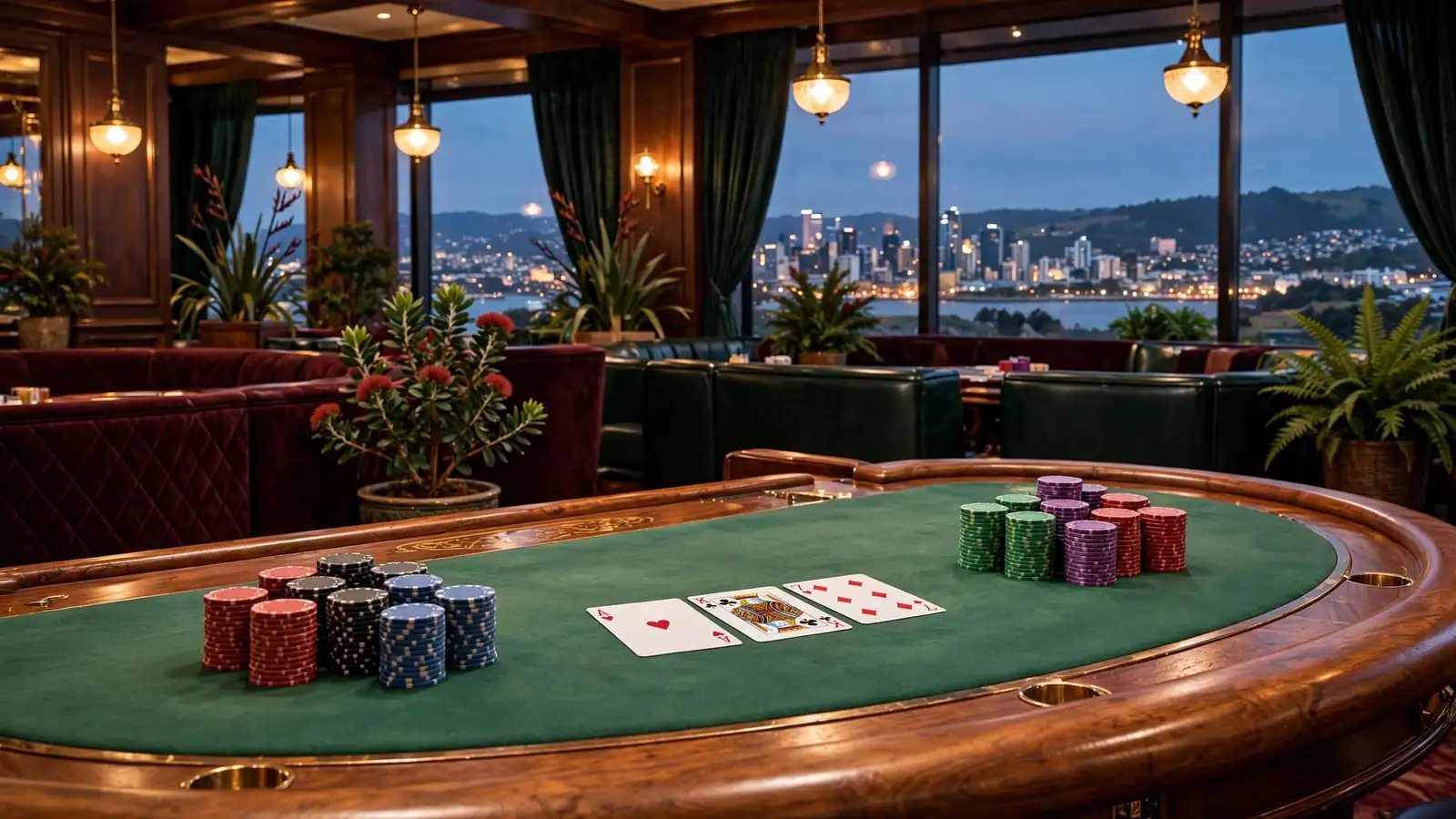
The word “baccarat” can also cover formats that differ in how the game is organised. Punto Banco is a prominent example, but the shared name does not mean that every table presents the same procedures or mood. Some versions foreground the dealer’s handling of the cards; others put more emphasis on the players gathered around the felt. For someone meeting the casino game called baccarat for the first time, the labels and display can seem more complicated than the mathematics beneath them.
The game’s appeal may lie partly in that contrast. Baccarat offers a formal setting and a small, legible objective. Its cards are dealt within a ritual, but the aim can be stated in a sentence: get as close to 9 as possible without exceeding it. Around that sentence, casinos build different table arrangements and ways of revealing the hand. The arithmetic stays compact. The ceremony does the rest.
How the House Earns Its Share
A baccarat table does not need to win every hand to make money. Its advantage is built into the terms of the bets: across repeated wagers, the casino expects to pay out less than it takes in. That difference is the house edge. It is a mathematical expectation, not a prediction of what will happen in any particular session.
Punto Banco makes the contrast between bets unusually plain. The Banker option carries a house edge of 1.06% once its commission is accounted for. The Player option has a slightly higher edge, at 1.24%. These figures describe the casino’s long-run advantage under the stated rules; they do not mean a casino keeps that share from every bet or wins on every round.
The commission matters because the Banker outcome is not paid on quite the same terms as an even-money wager. The casino’s calculation includes the 5% commission applied to Banker wins. Without that adjustment, the edge figure would not describe the same bet. In this respect, the table’s economics are tucked into a small deduction rather than announced as a fee at the door.
Small, but consequential.

The Player bet is close in mathematical terms, though less favourable to the bettor than the Banker bet under these figures. A difference of this size can be easy to overlook when attention is fixed on individual results. The house edge becomes meaningful through repetition: the casino offers the same terms again and again, while each hand remains uncertain. The business does not depend on knowing which side will win next.
The Tie bet changes the picture sharply. At an 8-to-1 payout, its house edge is 14.36%, far above the edges attached to Banker and Player. The larger apparent return can make the option look more tempting, but the payout must be considered alongside the chance of the result. A generous-looking prize is not the same thing as a generous mathematical bargain. The numbers sit quietly beneath the felt.
This is how casinos make money on baccarat: not through a special method of dealing, nor by requiring the house to control each outcome, but through bets whose payouts give the casino a durable statistical advantage. The casino edge is not a guarantee of profit on a single table over a short period. Results fluctuate; the edge describes the structure of the game over time. A run of wins for players does not remove it, just as a run of losses does not prove that the next hand is due to favour them.
That distinction also separates the economics of baccarat from the mechanics of play. Questions about how to play casino baccarat, how to deal it, or how to win concern actions and outcomes at the table. House edge concerns the price of the choices offered. A dealer can administer the game correctly without changing those underlying proportions, and a player can make a selection without changing the casino’s mathematical advantage.
The three bets therefore do not offer equivalent terms. Banker has the lowest stated edge here, Player is slightly higher, and Tie is markedly higher at the specified payout. That comparison does not promise a winning choice. It shows how the casino’s expected share varies according to the wager selected.
Lowest house edge at 1.06%, but subject to a 5% commission on wins.
Slightly higher house edge of 1.24% with even-money payouts.
Highest house edge at 14.36%, offering a higher 8-to-1 payout.
A quiet design. The advantage is in the terms.
A Hand at the Table, from First Bet to Result
A baccarat hand begins before any cards are revealed. At the table, betting positions are marked Player, Banker and Tie. These are names for possible outcomes, not instructions to identify with one side or another. The Player and Banker hands are compared; the Tie option is a separate wager that they will finish level.
The first decision is where to place a bet. Choosing Player means backing that hand to finish closer to the game’s target. Choosing Banker means backing the other hand. A Tie bet predicts an equal result. Once the wager is placed and betting closes, the hand is dealt and its totals are assessed under baccarat’s rules. The table then settles the bets according to the result.
That is the whole shape of a round: choose an outcome, let the hand unfold, and see whether the prediction matches. The objective is to bring a hand total as close to nine as possible without going over it. The game does not ask for a long sequence of decisions from each player; most of the action lies in making the initial choice and watching the cards determine which side is nearer.
The names can be misleading. “Player” does not mean the person sitting at the table, and “Banker” does not mean that the player is taking on the casino in a personal contest. They label the two hands. Punto Banco, the form found in many casino settings, is a game in which wagers are placed against the dealer rather than by playing a hand directly against another customer.
A Tie bet has a different logic from backing either hand: it succeeds only if neither side finishes ahead. It may look like a neat middle ground, but it is simply another prediction, not a way to influence the deal. The cards do not respond to the position of a chip.
For someone learning how to play baccarat at a casino, the practical sequence is therefore spare. Find the marked betting area, select Player, Banker or Tie, place the wager before betting closes, and follow the result. The table’s labels do much of the explaining. The ceremony around the cards can make the game seem more intricate than this basic loop.
As for how to win baccarat at a casino, no choice can guarantee a favourable result. A winning hand is one in which the selected outcome matches the deal; the next hand begins without owing anything to the last. That distinction is easy to lose amid the table’s formal rhythm. The wager is a prediction, not a command.
Live Baccarat, with a Dealer in the Frame
Live baccarat puts a human dealer and a physical table on screen, while the betting interface remains part of the online game. The arrangement occupies an interesting middle ground: the cards are handled in a studio, but the player’s view is framed by a camera and a screen. It is neither the quiet abstraction of a fully automated game nor the crowded room of a land-based casino.
That distinction changes the texture more than the rules. In an automated game, cards and outcomes appear through software, with little sense of a person carrying out the ritual. A live dealer makes those actions visible. The table has a centre, the cards have weight, and the pauses between stages belong to a person rather than a loading sequence. The player still interacts through buttons, but the hand seems to happen somewhere beyond them.
Live baccarat combines a human dealer and physical table in a studio with an online betting interface, creating a middle ground between automated games and land-based casinos.
At NZ-friendly online casinos, specialist reviews describe live baccarat as being almost exclusively presented in the Punto Banco format. That is a report about the games those reviews examined, not a permanent description of every table available in the market. Punto Banco is well suited to a studio setting: players choose among the available outcomes, while the dealer manages the cards and the game’s progression. The screen makes the dealer the visible host, though not the person deciding the result.
The camera also gives the game a social surface. A dealer may speak, acknowledge the table and keep the round moving; the interface may show betting options and the developing result. These features do not turn an online table into a room full of other players. They create a sense of shared attention, a small performance conducted for viewers who may be watching from separate places. Casino hospitality, reduced to a frame.
The pace depends on the table. An automated game can move briskly because dealing and presentation are handled by software. A live table must leave room for the dealer’s movements and the betting window, so its rhythm includes visible pauses. Those pauses are not wasted motion: they make the process legible, giving the eye time to follow what happens instead of receiving only a sequence of graphics.
Speed Baccarat compresses that rhythm. A specialist review gives its pace as 60 to 80 hands per hour. The figure describes the table format covered by that review, rather than guaranteeing the rate at any particular casino or session. Faster rounds mean less time between one result and the next. The atmosphere can feel more urgent, even though the underlying game has not changed.
That is the useful distinction between live and automated baccarat: not a different promise, but a different presentation of time. One places a dealer in the frame; the other lets software carry the action. The live version makes the interval visible. In Speed Baccarat, the interval narrows. A small difference, until it isn’t.
The Rules, Including the Less Familiar Exceptions
The phrase “commission-free” sounds like a favour from the casino. In baccarat, it usually signals a different arrangement for the Banker win, not the disappearance of the house’s advantage. The rule to watch is what happens when the Banker hand wins with a total of 6: instead of paying even money, the bet returns at half that rate, or 0.5 to 1.
That qualification changes the character of the wager. The commission-free label describes how the casino handles a winning Banker bet; it does not mean every Banker win pays alike. A win on 6 receives a smaller return than other Banker wins under this rule. The distinction can be easy to miss when a table’s headline says “no commission” and the less prominent terms carry the arithmetic.
In standard Punto Banco, a 5% commission is taken from winning Banker bets. After that commission is accounted for, the Banker bet has a house edge of 1.06%. The commission-free version replaces that familiar deduction with the reduced payout on a Banker total of 6, and its Banker bet has a house edge of 1.46%. No commission is not the same as no cost; the cost has moved into the payout rule.
Attention “Commission-free” baccarat is not a cost-free option; the house edge is maintained through a reduced payout (0.5 to 1) when the Banker wins with a total of 6.
This is the sort of difference that belongs on the felt, in the rules displayed beside it, and in any explanation of a casino baccarat game. Two tables can offer the same broad format while treating one particular Banker result differently. The name of the game alone does not settle the terms. A player considering a table needs to know whether winning Banker bets are subject to commission or whether a win on 6 is paid at the reduced rate.
The distinction also gives a more useful answer to the hunt for casino baccarat tricks. There is no secret in the altered payout: it is a rule, and its effect is already reflected in the house edge. Calling a table commission-free does not make it a loophole or a special route to better returns. It describes one feature of its settlement terms, while the reduced payment on a specific result restores the casino’s mathematical advantage in another form.
The practical point is less glamorous than the label. Baccarat’s familiar names can make table rules seem interchangeable, but small wording changes matter when they alter what a winning bet pays. The less familiar exception is not decorative fine print; it is the rule that explains why “commission-free” should be read as a description of payment structure, not a promise of a better deal. A short label, with consequences.
Baccarat Casinos in New Zealand’s Licensing Transition
New Zealand’s online casino landscape is changing from a market without a domestic licensing system to one governed by the Online Casino Gambling Act 2026. For baccarat, that shift matters as much as the table rules: a casino’s place in the market increasingly depends on when it began operating and how it fits the new framework.
The Act came into force on 1 May 2026, establishing New Zealand’s first domestic licensing regime for online casino gambling. It does not mean that a fully licensed market appeared overnight. Instead, the law provides a transitional period, running from 1 May to 1 December 2026. Online casinos that were already serving people in New Zealand before the Act took effect may continue operating during that window, subject to the transitional provisions.
That distinction is important when assessing a baccarat casino in 2026. A site available to New Zealand players during the transition is not necessarily licensed under the new system. The permission for qualifying existing providers to continue temporarily is not the same thing as a completed licence. New Zealand is moving toward domestic oversight, but the transition leaves an interim stage between the old arrangement and the new one.
A specialist review of the market reports that no operator is currently licensed under the new framework and places the expected launch of the licensed online casino market around 1 December 2026. The date is an expectation, not a guarantee that every part of the regime will be fully operational on that day. The broader licensed system is expected to be fully operational in 2027.
This timing gives the phrase “best baccarat casinos in New Zealand” a moving target. A comparison made during the transition may describe access and offers available under the interim rules; a later comparison will need to account for licensing status under the new regime. A familiar brand name, a polished table or a large baccarat lobby does not establish that an operator holds a New Zealand licence.
The change also reflects a particular public choice. The Gambling Act 2003 did not permit online casinos to be based in New Zealand, and online gambling supplied from offshore had not been licensed or supervised by a New Zealand regulator. The 2026 Act creates a domestic route for licensing rather than simply treating the old arrangement as a local one. Regulation arrives by transition, not by a switch.
For players considering baccarat casinos during 2026, the practical point is to distinguish temporary permission to continue from formal licensing under the new system. The framework is new; its market is still taking shape. A date on the calendar is not a licence.
Online Sites, Bitcoin and the Limits of What Can Be Verified
A baccarat table can sit behind a familiar casino page, while the legal position of the business behind it remains a separate question. The game’s presence on a site does not establish that the operator holds a New Zealand licence. Nor does a payment option: a casino advertising Bitcoin deposits is not thereby shown to be licensed, locally supervised or even offering the same terms to every customer.

That distinction matters in a market moving to a domestic licensing system. The Online Casino Gambling Act 2026 provides the framework, but a polished website and a menu of baccarat games are not substitutes for checking an operator’s status under it. Names and payment methods can travel easily across borders; regulatory authority does not.
The division of responsibility is specific. The Department of Internal Affairs is New Zealand’s primary gambling regulator and oversees regulation of the online casino licensing framework. The Gambling Commission handles licensing applications, deciding whether they should be granted, and issues online casino licences. It also approves changes to licence conditions. These are related roles, not interchangeable labels: oversight of the framework sits with the Department, while individual licensing decisions and licence changes fall to the Commission.
This gives a practical way to read claims made by casinos offering baccarat. A statement that a site is “regulated” needs context: by whom, under which framework, and with what status in New Zealand. A licence from another jurisdiction is not the same as a licence under the New Zealand system. The new regime also means a status checked at one point may not settle what applies later, so the operator’s position should be checked against current official information rather than inferred from branding or an old review.
Bitcoin adds another layer, but not a shortcut through that question. A search for a Bitcoin baccarat casino may return sites that mention both the game and cryptocurrency; that pairing says something about the site’s advertised features, not its New Zealand licensing position. It does not establish who holds customer funds, what conditions apply to deposits or withdrawals, or whether New Zealand’s domestic framework covers the operator. Payment technology is not a regulator.
The distinction between a casino with baccarat and a casino authorised under New Zealand’s framework is therefore consequential. Before the new domestic regime, online gambling supplied from outside the country was not licensed or supervised by a New Zealand regulator, and customers had no domestic government recourse. The arrival of a statutory framework changes the landscape, but does not make every site displaying a baccarat table part of it.
Licensing Status
A polished website or the availability of Bitcoin deposits does not prove an operator is licensed under the Online Casino Gambling Act 2026.
Baccarat is easy to recognise. Corporate status is less theatrical. The sensible test is not whether the site looks local or accepts a particular currency, but whether its current standing can be verified through the relevant New Zealand licensing process. A logo is not a licence.
Online Baccarat: Bonus Terms and a Different Banker Bet
Online baccarat can look familiar while carrying a less familiar price for the Banker wager. In commission-free baccarat, the casino does not take the standard commission on Banker wins. Instead, if the Banker hand wins with a total of six, the payout is cut to half of the stake rather than paid at even money. The exception is small in appearance and consequential in arithmetic: this version gives the Banker bet a house edge of 1.46%.
“Commission-free” is therefore a description of how the payment is handled, not a promise that the wager costs nothing. The reduced payout replaces the visible commission with a less frequent, rule-based deduction. That distinction matters when a table’s labels make one format seem simpler than another.
Bonuses introduce a separate calculation. A specialist review reports that every operator it covers applies wagering requirements to the deposit plus the bonus. Under the terms that apply here, bonus funds must be wagered 50 times within 30 days. The wording matters: the requirement is not confined to the bonus amount, because the deposit is included in the calculation too. A headline offer can therefore be much less useful than its terms suggest.
Licensed operators overseen by the Department of Internal Affairs must present bonus terms in clear, plain language. Direct marketing generally goes only to account holders who have opted in. Those protections do not make every promotion suitable for every player, and bonuses should not be promoted to people showing signs of gambling harm.
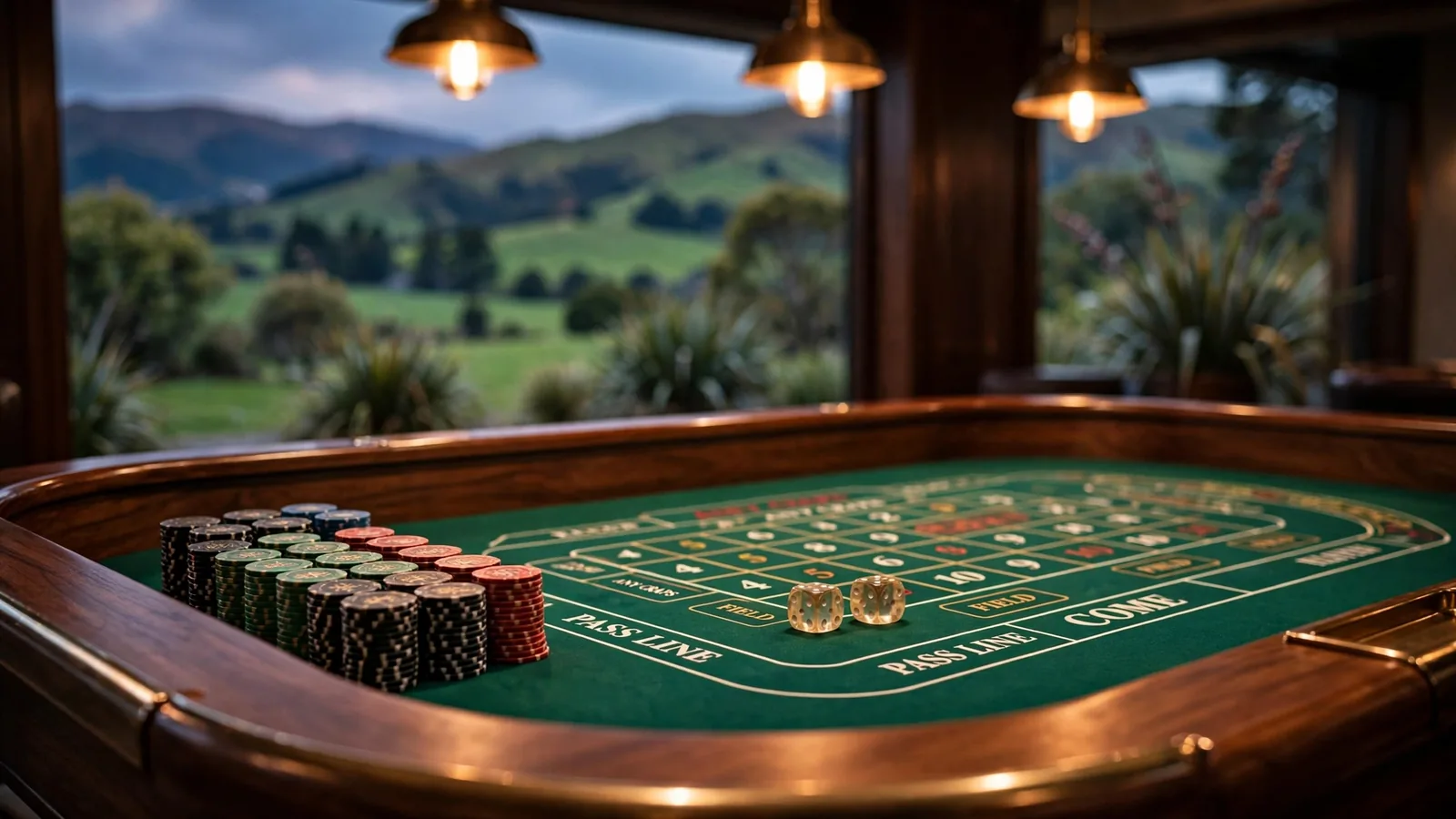
Other conditions can affect the balance as well. Withdrawal requests void all active or pending bonuses. Skrill and Neteller deposits are excluded from bonus offers. Breaking the maximum bet limit, even once, is grounds for the operator to void the bonus and any winnings attached to it. These are not footnotes to the offer; they are part of its actual cost.
A casino bonus and a baccarat rule are different kinds of constraint, but both can change what a player receives. The Banker’s half payout is attached to a particular hand result; wagering requirements, eligibility limits and withdrawal conditions govern the promotion. All casinos operate under specific terms and conditions, including wagering requirements, eligibility restrictions and withdrawal limits. The full terms on the casino should be reviewed before play.
Payment methods raise another question, especially where Bitcoin is concerned. A site’s use of a digital currency does not establish that it offers baccarat, or that it operates under New Zealand’s new framework. Players should check whether a preferred casino is operating under or preparing for that regime. The table’s rules can be read directly; the status of an online operator requires separate verification.
Casino Baccarat Beyond the Familiar Table
Baccarat is often imagined as a game with a fixed, almost ceremonial appearance: a broad table, a dealer, cards laid out under the attention of a small audience. That image belongs to casino culture as much as to the game itself. The table gives the proceedings a visible centre, while the people around it supply the quieter drama: concentration, restraint, a sudden change in mood. A game can be mathematically spare and socially elaborate.
The physical setup is not quite as singular as the familiar image suggests. Baccarat is played with three to eight decks of cards, so the table’s equipment may vary even while the central idea remains recognisable. A spread of decks can look like abundance, though it does not turn the game into a different species of contest. It is still baccarat: a compact card game made legible through a shared table and a set of conventions.
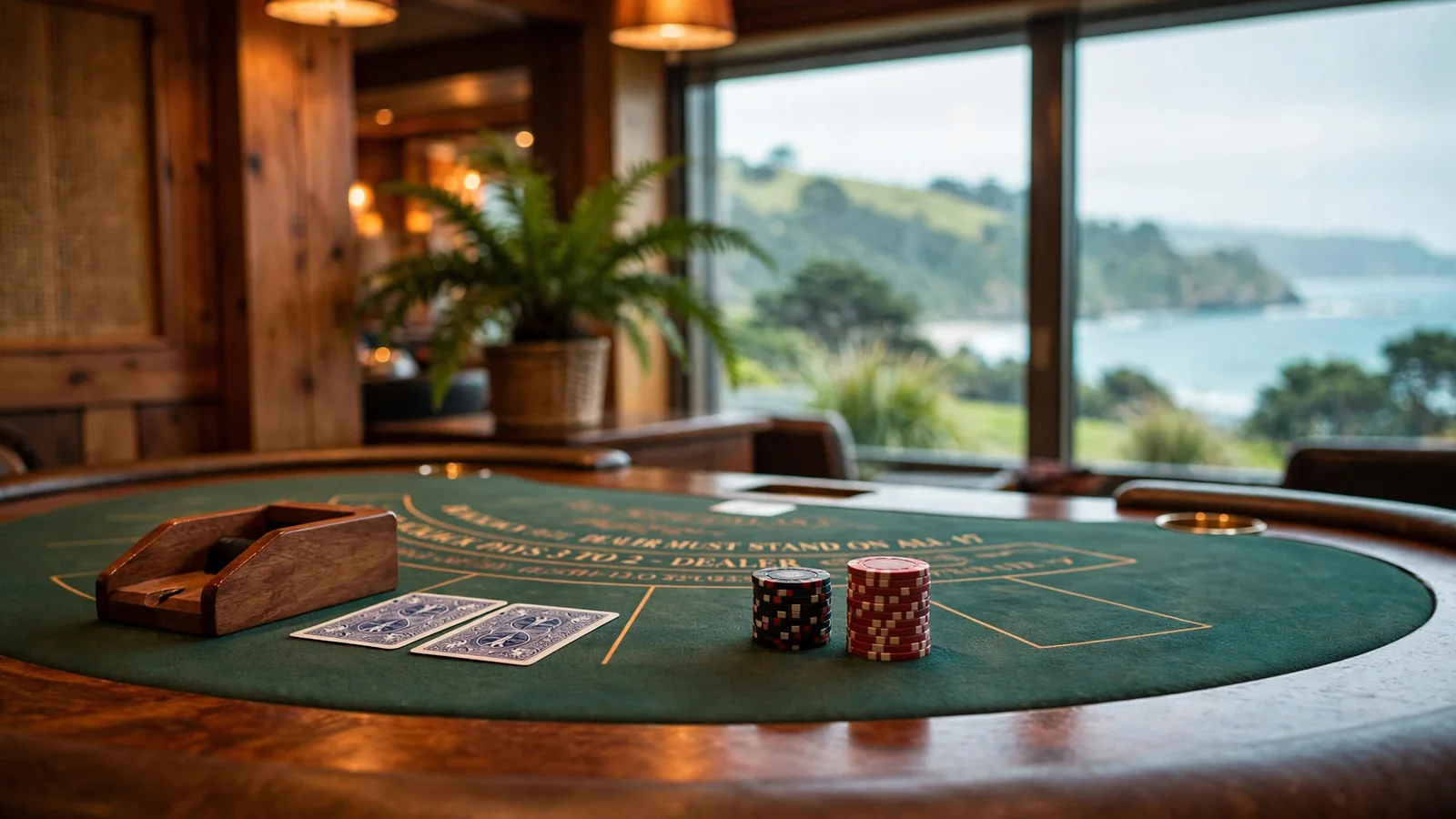
That distinction matters in a casino. A table is not merely a surface on which cards happen to land. It organises attention. The dealer’s actions are public; the cards are exposed to a group; the result belongs, for a moment, to everyone watching, whether or not everyone has chosen the same side. The arrangement makes a private calculation feel communal. Casinos have long understood the value of such theatre.
The table also gives baccarat a particular social temperature. It can appear formal without requiring complicated equipment or elaborate rules. Its seriousness is partly enacted: the pause before a card is turned, the stillness around a decision, the eyes following the hand. None of this changes the game’s arithmetic. It changes how the arithmetic is experienced.
There is no need to mistake ceremony for mystery. The cards remain cards, and the table does not grant them memory or intention. Yet casino baccarat has always carried more atmosphere than its simple structure might seem to warrant. That is one reason the game continues to sit comfortably among the casino’s more recognisable scenes: a modest pack of decisions, staged in public.
The deck range is a useful reminder that the table’s appearance can accommodate variation without losing its identity. The setting may invite a crowd’s attention; the game itself remains concise. A small theatre, then. No grand machinery required.
Betting Systems, Winning Claims and the Next Hand
A progression can make a betting session look orderly. Martingale, for instance, calls for increasing a stake after a loss, with the hoped-for win covering what came before. Its appeal is less mathematical than theatrical: a neat sequence seems to impose a plot on a game that offers none.

The odds do not move when the stake changes. A larger wager changes the amount at risk, not the likelihood of the Banker, Player or Tie result. A run of wins may feel like confirmation; a run of losses may seem to demand a correction. Neither feeling changes the next hand.
The Banker commission makes the recovery story less tidy still. A Banker win is subject to a 5% commission, so a winning stake does not return the same net gain as an equivalent amount won without that deduction. That can leave a Martingale progression short of recovering earlier losses, even when the planned winning hand arrives. The system has no special claim on the table’s arithmetic. It simply asks for more money after an unfavourable result.
This is why promises about how to win at baccarat in a casino should be treated cautiously. Betting patterns can organise choices, but they cannot make a result predictable or erase the house’s advantage. A system that appears to work across one short session may still fail in another; its neatness is not evidence of control.
Recent results are especially tempting material for a story. A sequence of Banker outcomes can suggest that Player is “due”, while repeated Player wins can look like momentum. But baccarat’s previous hands do not forecast the next one. The record describes what has already happened, not what is about to happen.
The practical value of a plan lies in its limits: deciding in advance what can be risked, and stopping when that boundary is reached. It is not a winning formula, and it cannot make losses harmless. The table keeps no memory.
Casino baccarat winning tips often dress caution as a technique. There is no progression that changes the underlying odds; there are only choices about stakes and the point at which play ends. A calm stopping rule may be less exciting than a recovery system, but it does not depend on the next hand arriving on cue.
What is the Online Casino Gambling Act 2026, and how does it affect live baccarat?
It establishes a domestic licensing framework for online casinos serving New Zealand. The licensed market is expected to launch around 1 December 2026, and no operator is currently licensed; licensed operators must provide deposit limits, session timers, reality checks and self-exclusion.
What is the difference between Punto Banco and other baccarat variants?
In Punto Banco, players bet on the Player, Banker or Tie outcome rather than choosing how either hand is played. Other baccarat formats can differ in how the game is organised and presented.
What are the rules of Punto Banco, and how does the game work?
The aim is for a hand to finish as close to 9 as possible, with only the final digit of the total counting. In Punto Banco, players bet on whether the Player hand, Banker hand or a Tie will win; the game uses three to eight decks.
What is the house edge on Banker, Player and Tie bets?
With the 5% commission included, the Banker bet has a 1.06% house edge, compared with 1.24% on Player. The Tie bet has a 14.36% house edge at an 8-to-1 payout.
Prepared by the Casino Slots Hub NZ editorial staff.