American Roulette in New Zealand: Rules and Odds
 Available in US
A practical guide to the American roulette layout, betting options, payouts and odds, including how online and live play compare.

Table of Contents
- How an Online American Roulette Round Works
- Free Play: Practice Without a Deposit
- Browser Play, Downloads, and the Random Number Generator
- Real-Money Play and the Cost of Getting Started
- American Roulette in New Zealand’s Online Casino Market
- Roulette Strategies and the Limits of a System
- Live American Roulette and the Table Experience
- Reading the Layout and Understanding Payouts
- American, European, and French Roulette: Three Wheel Traditions
- American Roulette Odds and the House Edge
How an Online American Roulette Round Works
An online American roulette round is a small ritual of choice followed by a result. Before the wheel turns, players place chips on a number or on a group of numbers where they think the ball may land. The casino is the other side of every wager. Once betting closes and the wheel is spun, the selection is fixed; the ball’s landing place determines which bets are paid and which are lost.
The order matters. A round does not begin with the wheel already in motion: first comes the betting phase. The table layout gives each wager a place, and the player selects chips and positions them on the chosen number or combination. In an RNG game, the player decides when to spin the wheel. That button is a modest piece of theatre, but it marks a clear boundary: before it, choices can be made; after it, the round is in the hands of the outcome.
The number bets are the most direct. A chip placed on one number backs that number alone. Other bets cover combinations: a selection can include more than one number, or a broader group represented on the layout. These choices differ in how many possible landing places they cover and in how the casino settles them. The idea beneath them is simple: every wager names a result, narrowly or broadly, before the ball comes to rest.
In an online American roulette game, coloured chips help distinguish one player’s bets from another’s at a shared table. They serve as markers, not as a separate kind of wager. In a solo digital game, the interface may still assign a colour to the player’s chips so that placed bets are easy to identify. The colour follows the player’s selections around the table; it does not alter what those selections mean.
A round therefore has a visible grammar. Chips are chosen, bets are placed, the betting phase ends, and the wheel is spun. The result is then read against the layout, and the game settles each selection accordingly. Online versions make these stages happen on a screen, but the sequence remains recognisable: a decision first, an uncertain landing second. No flourish can reverse that order.

The layout invites several kinds of decision without requiring a complicated theory. A player may back one precise number, or choose a combination that covers more possible outcomes. The first is exacting; the second is broader. Neither changes the basic condition that the ball must land within the selected area for the wager to succeed. Betting on a combination is not the same as betting on a prediction with special powers. It is simply a different way to define what counts as a favourable result.
This is why the game’s pause before the spin matters. It gives the player a moment to review the chips already placed and decide whether to add, remove or leave them as they are, while betting remains open. When the round moves on, that window closes. The wheel’s movement may draw the eye, but the consequential act happened earlier, in the quiet arrangement of chips.
An online casino may present American roulette with animations, sound or a button that starts the spin. Those features frame the round; they do not change its basic sequence. The game is still played against the house, with wagers placed on numbers or combinations before the wheel is spun. In RNG roulette, the player’s choice of when to initiate the spin gives the round a small element of control over timing, not over where the ball will land.
That distinction is useful when considering what it means to play American roulette online. Control belongs to the placement of bets and, in an RNG game, the timing of the spin. The outcome belongs to the game. A round is brief, but its structure is plain: choose, place, spin, settle. The suspense comes after the decision.
Free Play: Practice Without a Deposit
A free American roulette game offers a quieter way to become familiar with the table: no deposit is needed, and some New Zealand online casinos make this kind of practice available without registration. The option is not universal, so its presence depends on the casino. Where it exists, the point is simple: the game can be explored without committing money first.
Free play is for learning the interface and the shape of the activity; it cannot show that a particular choice is more likely to succeed in a later round.
That distinction matters. Free play is not a promise of a preview of future results, nor a rehearsal that improves the chance of winning later. It is a chance to learn what the screen asks of a player and how a round feels to follow. A virtual balance keeps the financial consequence out of the exercise; it does not turn chance into a skill that can be mastered.
For someone new to American roulette, practice can make the table less crowded with unfamiliar choices. The layout may at first look like a private language made of numbers, colours and marked areas. A free session gives time to look around, try selecting different kinds of bets and see how the interface records them, without the pressure of deciding what real money should be put at risk. It can also reveal whether the pace and presentation suit a player.
That is useful, but modest. Free play can familiarise a person with the controls; it cannot show that a particular choice is more likely to succeed in a later round. A run of favourable results in a no-cost session is not evidence of a pattern, just as an unhelpful run does not predict what comes next. Practice is for learning the shape of the activity, not extracting a forecast from it.
The same caution applies to the word “free”. It describes the absence of a deposit or registration requirement where that option is offered; it does not mean every version of the game will be available that way. Some casino pages may present a free game directly, while others may require an account or offer only real-money play. The relevant detail is the condition attached to the particular game, not the label a page gives it.

Free American roulette can therefore be a sensible first encounter for people who want to understand the interface before considering any paid play. It lets them notice where selections appear, how a chosen wager is shown and what happens when a round ends. Those details are practical rather than glamorous. A clear interface is not a winning system, but confusion is no virtue either.
There is also a social difference between practising without a deposit and playing for real money. Without a financial stake, it is easier to pause, change a selection or leave the game without weighing the cost of each decision. That can make free play a calmer setting for learning. It can also make the experience feel unlike paid play, where a balance has consequences. The practice version should not be treated as a test of how someone will react once money is involved.
Time still passes, even when no deposit does. Setting a session limit can keep a casual trial from becoming an unplanned stretch of screen time. The absence of financial commitment is a boundary, not a reason to let the game occupy every spare moment.
Free play is best understood as orientation. It can help make the table and its controls legible, and it may let a newcomer try American roulette without signing up. It cannot improve the odds, validate a betting hunch or promise a useful result for a later session. A modest purpose, honestly stated.
Browser Play, Downloads, and the Random Number Generator
American roulette can be accessed through a browser on a desktop computer or mobile device. That makes a separate game download unnecessary where the casino offers browser play: the game opens as part of the site rather than as a program installed on the device. A download may still be offered as another way to access a casino’s games, but it is not the same thing as a requirement for playing online roulette.
Whether a game is accessed via a browser or a download, the result is determined by a Random Number Generator (RNG) rather than a physical wheel.
The distinction is one of access, not of how a round’s result is produced. Online roulette uses a Random Number Generator, or RNG, to determine outcomes. In a browser game, the result is generated digitally; it does not depend on a physical wheel turning in the room. Installing an app does not, by itself, change that underlying method. The relevant question is whether the particular game is an RNG version or a live table, not whether its interface arrived through a browser or a download.
An RNG is software that produces outcomes for the game. The visible wheel and ball are the interface through which the result is presented; the display should not be mistaken for evidence that a physical ball has been spun. A browser may animate the wheel after the result has been determined, making the virtual sequence look familiar while leaving the production of the result to the game’s random-number process. The spectacle is digital. The uncertainty is real.
For Kiwi players comparing browser access with an American roulette download, the practical difference is mostly how the casino is opened and used. A browser avoids installing a separate application, while a downloaded app gives access through software on the device. Online roulette is available on both desktop computers and mobile devices, so the choice need not be framed as computer versus phone. The available route depends on what the casino provides.
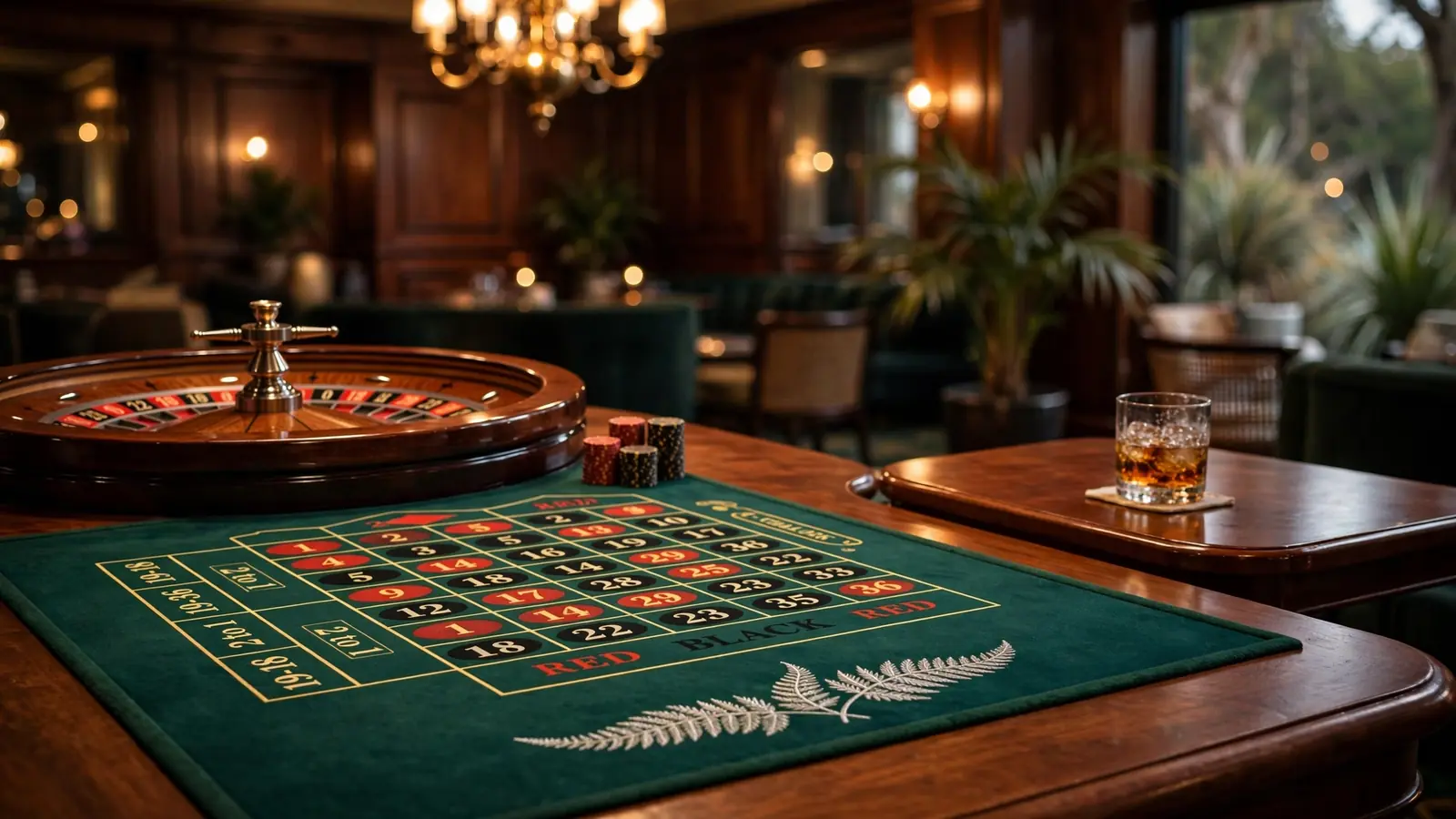
Searches for a free online American roulette game with no download often point to browser-based play. That wording describes an access method, not a guarantee that every casino offers a free version or that a demo works in precisely the same way as a real-money game. Free practice options are a separate matter. Here, the technical point is simpler: a browser can display roulette without a game installation, while the RNG remains responsible for online outcomes.
The same distinction matters when someone wonders whether a download could make it easier to win. It cannot turn random results into predictable ones. The RNG does not become more favourable because the game is opened in an app, and a browser interface does not provide a way to see the next result in advance. Software changes the route to the table, not the uncertainty at its centre.
That uncertainty also explains why a digital American roulette board should be read as an interface, not as a forecast. It shows the game’s available choices and current activity, but its appearance does not disclose what the RNG will produce next. The interface can make a traditional casino game available in a small screen or a desktop window. It cannot make chance obedient.
Browser or download: a matter of access.
Real-Money Play and the Cost of Getting Started
Playing American roulette for real money at an online casino serving New Zealand requires an account and a deposit. That changes the character of the decision before the wheel appears: money has crossed from a bank account into a casino balance, and the terms attached to that balance matter as much as the table itself. Registration is the threshold, not a formality to rush through.
Table limits differ between casinos. Each game displays a minimum stake and a maximum, and the figures can vary even when the roulette format is the same. A specialist review has reported a minimum stake of 10 cents at some casinos; that is a report about particular offerings, not a promise that every table will accept such a small bet. The available limit is set by the casino and may shape how long a balance lasts.

The upper limit matters too. A table’s maximum can put a ceiling on the size of a stake, while a low minimum can make it possible to keep individual bets small. Neither changes the game’s underlying uncertainty. A larger balance does not make a result more predictable, and a small stake is not a shield against a losing run.
Depositing and withdrawing deserve equal attention. Payment options, fees, limits and currency conversion can differ, so the practical cost of getting started is not necessarily the amount first transferred. Open Banking through a payment initiation service provider has been reported by a specialist review as capable of sending a large roulette win to a New Zealand bank account in less than 15 minutes. That is a specific reported settlement route, not a general timetable for withdrawals: processing depends on the service and circumstances.
A payment decision should include the route back out. Accepted deposit and withdrawal methods may not be identical, and a conversion from another currency can affect the amount received. Skrill and Neteller deposits should not be treated as available options. The details need to be checked before a transfer, rather than after a balance has become difficult to move.
Bonuses can also complicate a withdrawal. Terms may impose conditions on whether roulette play counts toward playthrough, and an active or pending bonus is void when a withdrawal request is made. The headline offer is therefore a poor substitute for reading the conditions attached to it. A balance that appears withdrawable may be subject to rules that were easy to overlook at registration.
A measured starting point is less dramatic than a winning tip, but more useful: set a budget and session-time limit before playing, and use daily or weekly deposit limits where available. The account should also provide a way to block access temporarily or permanently through self-exclusion. If play begins to exceed the planned amount or time, stopping is the point of the limit—not an invitation to chase a loss.
The price of entry is not only the first deposit. It includes the table’s stake range, the payment route, possible conversion costs and the discipline required to leave the balance alone once the planned session is over. A small minimum can make a table accessible. It cannot make roulette affordable for everyone.
American Roulette in New Zealand’s Online Casino Market
Choosing an American roulette casino in New Zealand calls for checking the limited operator information available before deciding where to play. This overview highlights the specific details provided for each option.
Payout speed: 1-3 business days Wintino lists a payout speed of 1–3 business days, a useful detail to consider when reviewing its payment information.
License: Curaçao Gaming Authority, licence no. OGL/2024/165/0185 BitStarz lists a Curaçao Gaming Authority licence, number OGL/2024/165/0185.
License: Malta Gaming Authority, licence no. MGA/B2C/370/2017 Play Grand lists a Malta Gaming Authority licence, number MGA/B2C/370/2017.
License: Tobique Gaming Commission, licence no. 0000091 7Bit Casino lists a Tobique Gaming Commission licence, number 0000091.
License: Tobique Gaming Commission, licence no. 0000064 Neospin lists a Tobique Gaming Commission licence, number 0000064.
License: Tobique Gaming Commission, licence no. 0000002 Ricky Casino lists a Tobique Gaming Commission licence, number 0000002.
License: 07017519840 · Payout speed: 1-3 business days Zotabet lists licence number 07017519840 and a payout speed of 1–3 business days.
Payout speed: 1-3 business days Lamabet lists a payout speed of 1–3 business days, a specific payment detail to bear in mind.
License: Malta Gaming Authority, licence no. MGA/B2C/394/2017 N1 Casino lists a Malta Gaming Authority licence, number MGA/B2C/394/2017.
American roulette sits within a wider online casino market that is changing its legal shape. New Zealand’s Online Casino Gambling Act 2026 took effect on 1 May 2026, establishing the country’s first domestic licensing framework for online casino gaming. The transition is gradual: providers that were already serving New Zealand before that date may continue under transitional provisions until 1 December 2026, while the full licensed system is not expected to be operational until 2027. New Zealand still does not permit online casinos to be based domestically.
That distinction matters when considering an American roulette casino. Before the new law, offshore online casino services were not licensed or supervised by a New Zealand regulator, and customers had no domestic government recourse if a dispute arose. The transition now has defined terms, but it is not the same thing as a fully operational licensing regime. A familiar-looking site or a polished table does not, by itself, explain the provider’s position in that process.
Until the full licensed system is operational in 2027, providers serving New Zealand may be operating under transitional provisions.
Bonuses bring a separate complication. A specialist review of New Zealand casino offers reports that the great majority of online welcome deals are aimed at pokies rather than table games or live dealer casino. That does not establish a rule for every operator, nor does a bonus banner establish that roulette qualifies. Terms can differ on whether roulette contributes to playthrough requirements, and the contribution may be restricted or excluded. The small print, not the headline, decides.
Before accepting an offer alongside American roulette online, the relevant terms include eligibility, wagering requirements, expiry, game contribution and withdrawal restrictions. Some offers may be limited to named games or exclude table games altogether. A withdrawal request may also void active or pending bonuses, so bonus funds should not be treated as ordinary withdrawable winnings. There is little romance in a clause. It is still the clause that counts.
Labels such as “VIP American Roulette” can sound like a separate class of game, but the name alone says nothing about bonus eligibility or the conditions attached to an account. A VIP label is not evidence that roulette play will count toward an offer, or that a particular deal is available. The same caution applies to promotions attached to American roulette online: their terms need to identify the game and explain how its wagers are treated.
For Kiwi players, the useful distinction is between the game and the promotion around it. Roulette may be available at an online casino without being included in a welcome offer; an offer may be visible without applying to roulette. In New Zealand’s transitional market, those are two different questions, and neither is answered by the bright wording on a promotional panel.
Roulette Strategies and the Limits of a System
An American roulette strategy can give a session a shape: which bets to make, how much to stake, and when to stop. It cannot tell the ball where to land. Each result remains uncertain, and a sequence that appears to be forming offers no dependable instruction about the next spin. A system is an arrangement for wagering, not a lever on chance.
That distinction matters because roulette encourages stories about patterns. A run of one colour can look like evidence that the other is “due”; a number that has not appeared for a while can seem ready to return. Neither impression makes the next result predictable. Statistics can describe results already observed, but they do not turn past spins into a forecast. The “What’s Due” feature, where offered, is not a sound basis for choosing upcoming numbers.
What a betting system can—and cannot—do
The Martingale is among the best-known roulette strategies. After a loss, the player doubles the next bet, intending that a later win will recover earlier losses and leave a small gain. The arithmetic sounds neat when described as a sequence. In play, a losing run makes the required stake grow rapidly, while a table limit or a finite budget can stop the sequence before a win arrives. Even when a win does arrive, it does not erase the possibility of losing again later.
Martingale Risk Progressive staking can cause required bets to grow rapidly, potentially hitting table limits or exhausting your budget before a win occurs.
This is not a route to consistent winnings. It changes the pattern and size of stakes, not the randomness of outcomes or the underlying advantage held by the house. For anyone with a limited budget, progressive staking such as Martingale is especially difficult to contain: the pressure to continue can rise precisely when the available funds are shrinking.
Outside bets offer a different way to organise play. They cover broader categories of outcomes and are more likely to win than inside bets, which focus on particular numbers or tighter combinations. That greater chance of a hit is not a promise of profit, nor does it make a bet immune to losing spins. A player can choose an outside-bet approach for its rhythm, but frequency of wins and long-term gain are not the same thing.
The most useful roulette tips and tricks are less theatrical. Decide on a budget and a session time before play begins; set daily or weekly deposit limits where available; and do not chase losses or spend beyond the amount planned. A temporary or permanent account block can provide a firmer boundary when stopping has become difficult. These measures cannot improve a spin result. They can limit how much a random sequence is allowed to cost.
A strategy may make decisions feel orderly, which is part of its appeal. It may also disguise the moment when a plan has stopped serving its purpose. The wheel does not keep accounts, remember losses, or reward persistence. The system does.
Live American Roulette and the Table Experience
A live American roulette table brings a physical wheel and dealer into the online game, with the action carried to the screen as it happens. The difference is one of presentation and pace: the wheel is visible, the dealer handles the round, and the table has the small rituals of a shared game. The camera makes a studio table appear at home, though the screen cannot reproduce its full scale or the murmur of a room.
The table’s physical size is not the same as the space it takes up on a phone or desktop display. A live broadcast frames the wheel, betting area and dealer for viewing; the interface must also leave room for digital betting controls. On a smaller screen, some details may be less comfortable to follow, even though the game remains accessible on mobile devices as well as desktop computers. The table is a set, then a picture, then a collection of buttons.
That layering gives live American roulette a different social texture from an automated game. A dealer’s presence lends the round a visible human rhythm, while the interface translates the layout into something a remote player can use. It is still a game against the house, not a private wager with the dealer. The person at the wheel conducts the round; they do not determine its result by judgement or choice.
The distinction matters because a live camera can make chance feel more legible than it is. Seeing the ball travel around a real wheel may create a stronger sense of occasion than watching an animation, but the spectacle does not make outcomes predictable or improve the underlying odds. Live play changes what is seen and heard, not the mathematical terms of the game. Human presence is not a new probability.
Live dealer games provide a human rhythm and visible wheel, but they do not change the mathematical odds or make outcomes predictable.
The label can also be less informative than it appears. “Live” describes the presentation; “American” identifies the roulette variant being offered. The table name and visual design are not, by themselves, a reason to assume that another version of roulette is being played. What matters is the game’s stated rules and layout, rather than whether the dealer is on camera.
Promotions are another point where the live-table experience can differ from the casino’s main advertising. A specialist casino review reports that the vast majority of New Zealand online welcome bonuses are aimed at pokies rather than table games or live-dealer play. That is a reported market pattern, not a promise about every offer. Bonus terms can set different contribution rules for different games, so the headline offer alone does not establish whether a live roulette session qualifies.
A polished studio, a visible dealer and a familiar wheel can make online play feel less abstract. They cannot make it less random. The distinction is plain.
Reading the Layout and Understanding Payouts
An American roulette layout turns the wheel’s pockets into a map of possible bets. Its numbered spaces are represented on the table, alongside areas for bets that cover groups of numbers or broad categories. A straight-up bet is the most concentrated choice: a chip is placed directly on one number, rather than across a line or in an outside betting area.
That small patch of felt carries the table’s highest stated payout. If the ball lands on the selected number, a straight-up bet pays at 35:1. The ratio describes the winning return against the stake; the original stake is also returned when the bet wins. A miss, naturally, does not earn that payout. The layout makes the distinction visible: a chip placed on one number is settled as a single-number bet, while chips positioned on boundaries or designated areas represent different combinations and have their own payout rates.
The table is not merely decoration around the wheel. It is a compact ledger, showing both where a bet applies and how narrowly it defines the result. A single-number selection asks for one precise landing place. A combination bet gives the ball more qualifying spaces, but its payout differs accordingly. The arrangement allows the croupier, or the software in a digital game, to identify the wager and settle it without interpreting a player’s intention after the result.
Online layouts preserve that logic even when the felt becomes a screen. In an app, a simulator, or a desktop game, the betting grid may be scaled or rearranged for the display, but the position of a chip still determines the bet. A virtual “slot” in the numbered grid is a pocket selection, not a separate slot-machine game. The visual design can change; the settlement rests on the chosen area.
This is why the payout figure should be read alongside the placement, not as a general return attached to every spin. The maximum applies to a winning straight-up bet, not to any chip on the table. A broader selection has a different chance of covering the result and a different payout. The layout is doing practical work: it translates a wager into a rule that can be resolved when the wheel stops.
On screen or felt, the principle is plain. Position first; settlement follows.
American, European, and French Roulette: Three Wheel Traditions
The difference between American, European and French Roulette is easiest to see on the wheel itself. European Roulette has 37 numbered pockets: the numbers from 1 to 36 and a single zero. American Roulette adds a double zero, bringing its wheel to 38 pockets. French Roulette keeps the European count, with one zero and 36 numbered pockets.
That extra pocket gives the American wheel its familiar distinction. The table layout may look much the same across versions, but the double zero is not a decorative flourish: it is a separate outcome. The European and French wheels share the single-zero structure, so the names describe more than different table styling. They point to different traditions of play.
The wheel’s arrangement also differs from the layout printed on the felt. Numbers do not sit around the rim in simple numerical order, and the American wheel has its own sequence of pockets. A neighbours chart is a way of showing which numbers lie beside one another around that rim; it is not a map of the betting grid. The distinction matters because “nearby” on the wheel and “nearby” on the table mean different things.
French Roulette’s defining feature is not an additional pocket but a rule applied to even-money bets. La Partage and En Prison govern what happens to those bets when the ball lands on zero. Under La Partage, the player receives back half of an even-money stake. Under En Prison, the stake is held for the next spin rather than settled immediately. These rules soften the effect of zero for those particular bets; they do not apply to every type of wager.
The names carry a trace of the game’s history: a wheel, a table and a set of conventions that travelled and adapted. French Roulette preserves the single-zero structure while attaching a distinctive treatment to zero on even-money selections. American Roulette, by contrast, is marked most plainly by its double-zero pocket. European Roulette sits alongside the French version in wheel count, though without those French rules as part of its defining package.
So a comparison of American and European Roulette begins with the extra pocket; a comparison of American and French Roulette adds the question of how zero is handled. The felt can look familiar. The traditions are not interchangeable.
American Roulette Odds and the House Edge
The house edge gives a clearer basis for comparing American and European roulette than the appearance of their layouts. It describes the casino’s theoretical advantage over time, not the result of any particular spin. A player can win a round in either game; the edge concerns how the game is structured across repeated play.
For American Roulette, the house edge is 5.26%. European Roulette has a lower edge of 2.70%, making it the more favourable of the two for players on this measure. The extra zero on the American wheel is the structural reason its odds are less favourable: it creates another losing outcome for bets that would otherwise cover the single-zero result. That difference does not make a result predictable. Each spin remains uncertain.
French Roulette complicates the comparison because its even-money bets may be covered by La Partage or En Prison when the ball lands on zero. The stated house edge with those rules is 1.35%. However, published figures disagree: another account gives the reduced French edge as 2.7%. The disagreement should not be hidden behind a single tidy number. It matters when comparing tables, so the rules and the figure attached to them need to be read together.
These percentages are not payout rates and do not tell a player what a single bet will return. They describe the built-in advantage, while the payout for a particular winning bet follows the bet type and the table’s terms. A large quoted payout can therefore coexist with a less favourable overall edge; the two measures answer different questions.
For a player weighing European or American roulette, the comparison is direct: European Roulette carries the lower stated house edge. French Roulette with its special rules may be lower still, though the stated figure is contested. None of these edges predicts the next number, or turns a run of spins into a reliable pattern. The arithmetic is structural, not prophetic.
How do I play roulette online for real money?
Sign up at an online casino in New Zealand and deposit funds. Choose a number or combination, place your bets before the wheel spins, then the game settles them according to where the ball lands.
Can players win real money playing online roulette?
Yes. Roulette bets can pay out when the ball lands on a selected number or combination, but outcomes are random and no strategy guarantees consistent winnings.
Which roulette bet has the best odds in 2026?
Outside bets are more likely to win than inside bets. However, no bet guarantees a win.
Which roulette version has the lowest standard house edge?
French Roulette with La Partage or En Prison has the lowest stated house edge: 1.35% on even-money bets.
What is the best roulette game to play?
French Roulette with La Partage or En Prison offers the lowest stated house edge, at 1.35% on even-money bets.
Is it possible to win online roulette?
Yes. A bet wins if the ball lands within the selected number or combination, but results are random and winnings are not guaranteed.
What is the best bet in roulette?
Outside bets are more likely to win than inside bets, though no bet guarantees a win.
Prepared by the Casino Slots Hub NZ editorial staff.