Playing Casino in Auckland: Rules and Bonuses
 Available in US
A guide to Auckland casino access, age requirements and the conditions that shape online bonus value.

Table of Contents
- Auckland’s Online Casino Market Is in Transition
- SkyCity Auckland: A Casino Built into the City
- When the Casino Is Open—and When It Is Not
- The Minimum Age for Casino Gambling in Auckland
- Free Spins and No-Deposit Claims: Read the Conditions
- What a Casino Bonus Is Worth After Wagering
- Welcome Bonuses: Deposits, Verification and Withdrawal
- Free-Chip Searches and the Fine Print Behind Them
Auckland’s Online Casino Market Is in Transition
An online casino serving someone in Auckland is not necessarily based in New Zealand. That distinction has shaped the country’s rules for years: the Gambling Act 2003 did not permit online casinos to be established domestically, while New Zealanders were not committing an offence simply by playing on an offshore site. The operator’s location, rather than the player’s, created the legal divide.
Before the new framework, online casino gambling supplied from overseas sat outside New Zealand’s licensing and supervision system. A player using an offshore website therefore had no domestic government recourse if a dispute arose. Access and protection were not the same thing. The sites could be reachable, but they did not answer to a New Zealand online casino regulator.
That arrangement is now being replaced, though not overnight. The Online Casino Gambling Act 2026 took effect on 1 May 2026 and created New Zealand’s first domestic licensing system for online casino gambling. The Department of Internal Affairs is responsible for allocating licences, with no more than 15 available. The change gives the state a route to authorise and oversee online operators rather than leaving the market in its previous unsettled position.

The transition has a defined boundary. Operators that were already providing online casino services in New Zealand before the Act began may continue during the transitional period, which runs from 1 May to 1 December 2026. The full licensed regime is expected to be operational in 2027. From 1 December 2026, providers that have not applied for a licence must stop conducting online casino gambling in New Zealand; an operator whose application is declined must also leave the market. Unlicensed operation is expected to become an offence around mid-2027.
This timetable matters more than a simple distinction between “local” and “offshore”. Overseas-licensed operators accepting New Zealand players have been described in a specialist review as operating in a grey area that the government is moving to regulate. That description belongs to a market in transition, not to a permanent category of lawful domestic licensing. The new Act is intended to establish that category, with a regulated framework replacing the former absence of local oversight.
There is also a specific link between one existing land-based business and online licensing. SkyCity holds a distinct online casino licence tied to its physical casino operation. That does not mean every website accessible in Auckland has the same status, nor does the existence of a local venue make the broader online market domestic. A casino floor and a website may share a name or operator, but the law treats the online service as a separate part of the changing system.
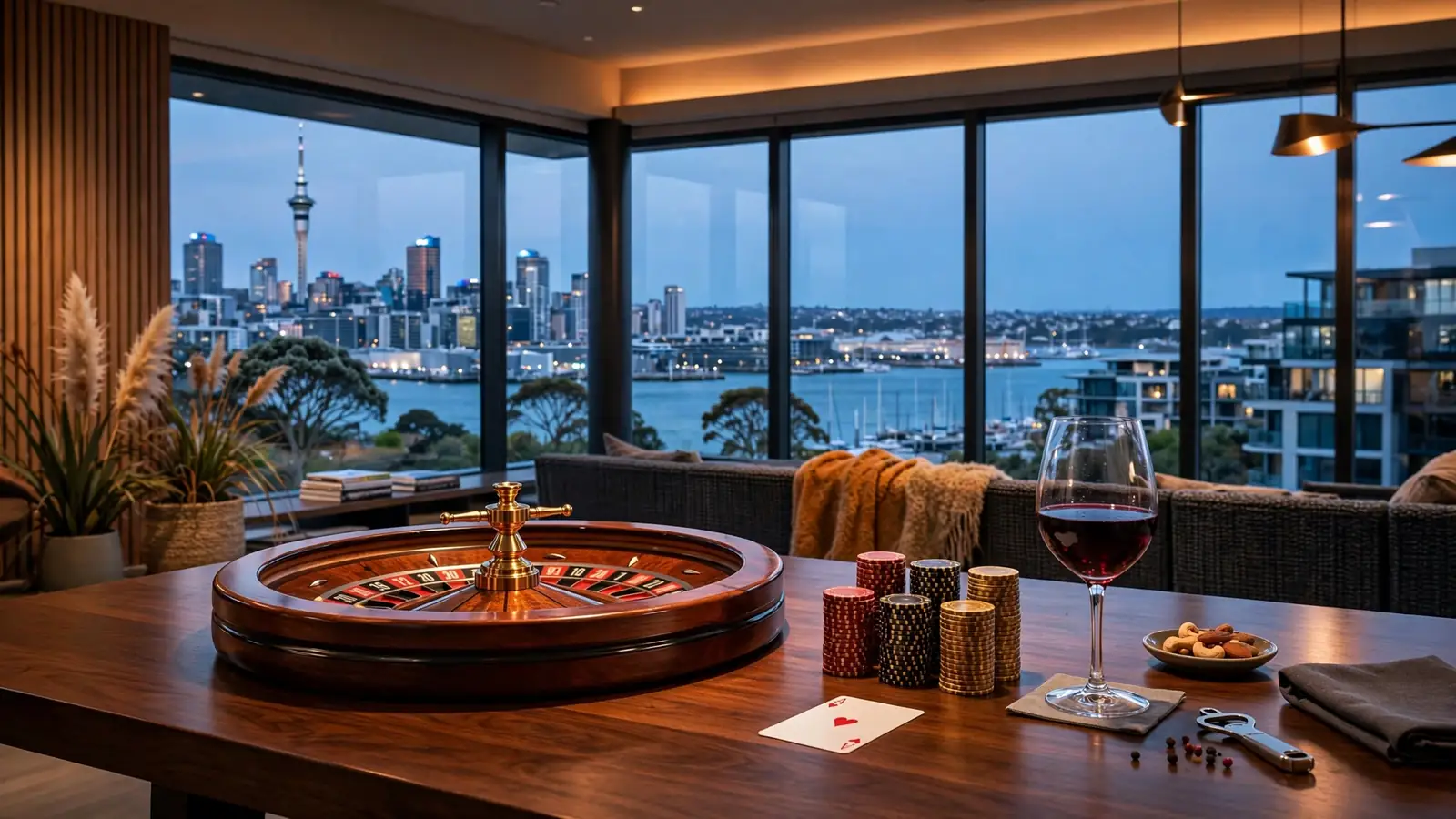
For people considering playing casino games online in Auckland in 2026, the year itself is consequential. The law is in force, yet the full licensing regime is not expected to be running until 2027. During the transition, operators already serving New Zealand customers may continue under transitional provisions, while the government prepares the licensing system. The direction is clear; the market is not yet at its final form.
That distinction also resists an easy but misleading equation: an offshore licence is not a New Zealand licence. Before the new Act, overseas provision was not supervised by a New Zealand regulator. The licensing transition is intended to change who may operate in the country and under what domestic authority, rather than simply relabelling every existing offshore site.
The broader legal framework concerns online services, not the physical Auckland casino. The latter belongs to a different part of the city’s gambling landscape; online play follows the national rules and the transition dates set by the Act. In either setting, casino gambling areas in New Zealand are restricted to people aged 20 and over. The law’s new machinery concerns operators, but the age threshold remains part of access.
Auckland’s online casino market is therefore neither an established domestic industry nor an entirely prohibited activity for players. It is moving from a period in which offshore sites could accept New Zealand customers without local supervision toward a licensing system administered in New Zealand. The interval is the story.
Legal Requirement
Casino gambling areas in New Zealand are strictly restricted to people aged 20 and over. Unlicensed operation of online casinos is expected to become an offence around mid-2027.
SkyCity Auckland: A Casino Built into the City
Auckland’s casino is not set apart on the city’s edge. SkyCity Auckland stands at the meeting of Victoria and Federal Streets, a central address that makes the venue part of the urban fabric rather than a destination reached only by leaving it behind. The casino began operating there on 2 February 1996. Its location gives the phrase “casino in Auckland” a particular meaning: not simply a gambling room somewhere in the region, but a major venue folded into the city centre.
That position matters to the way a casino occupies public life. A venue on a central street is encountered alongside the ordinary business of the city: movement between streets, workplaces and places to meet. Gambling becomes one use among many within the urban landscape, although the threshold into the casino remains a regulated one. New Zealand casino gambling areas are restricted to people aged 20 and over. The rule applies on the casino floor, not merely at the point where a particular game begins.
The word “casino” can also blur distinctions between machines that look similar to a casual observer. In Auckland, casino gaming machines such as those at SkyCity are located inside licensed casinos. Class 4 machines, by contrast, are found in pubs and clubs. The difference is not just a matter of décor or the size of the room. These are separate settings, with separate rules and forms of oversight.

Class 4 machines are often called pokies in everyday New Zealand usage. A pub machine may resemble one on a casino floor, but visual familiarity does not make the two arrangements interchangeable. The casino machine belongs to a licensed casino environment; the Class 4 machine belongs to a pub or club setting. The distinction reflects a broader regulatory habit: the state classifies gambling not only by what happens on the screen, but by where it happens and under what institutional conditions.
A specialist account of current Class 4 rules puts the maximum stake at $2.50 for a play. That lower ceiling distinguishes the pub-and-club setting from casino gaming, though a stake limit alone cannot describe the character or risks of either form. A small wager does not turn gambling into something inconsequential, just as a casino’s scale does not make every player’s experience the same. Rules can mark boundaries; they cannot tell the whole human story.
The machinery itself offers another reason not to treat a familiar cabinet as a promise. Each spin on a modern pokie is determined by a random number generator. A game’s return to player, or RTP, describes a long-run average across a very large number of spins; it does not forecast the result of an individual visit. The machine presents a sequence of immediate outcomes, while the statistic belongs to an imagined expanse of play. The distinction is easy to miss in a room designed around the next spin.
SkyCity Auckland’s place in the city gives that distinction a physical counterpart. The casino is a defined venue with a regulated boundary, even as its central location connects it to streets used for all kinds of ordinary activity. The city outside does not become a casino; nor does every machine elsewhere in Auckland become a casino machine. One building and one street corner cannot stand in for every form of gambling across the region.
Located inside licensed casinos, such as SkyCity Auckland.
Found in pubs and clubs, often referred to as pokies in everyday usage.
Class 4 machines have a maximum stake of $2.50 for a play.
This is why “Auckland casinos” can sound broader than the landscape it describes. The plural may suggest a collection of equivalent venues, while the clearest local reference is SkyCity Auckland itself. Pubs and clubs may have Class 4 machines, but that does not make them casinos. The categories matter because setting affects which rules apply, and because a machine’s appearance tells less than its location does.
A casino built into a city is an unusual civic arrangement: commerce and entertainment meet a regulated form of gambling in a place already threaded through with daily life. The arrangement is neither invisible nor separate from the city. It is simply bounded. Inside, the machines belong to a licensed casino; elsewhere, a similar-looking machine may sit under a different classification. The distinction is less theatrical than the lights. Still important.
When the Casino Is Open—and When It Is Not
A specialist venue-hours listing describes SkyCity Auckland as operating around the clock, every day of the week. The stated exceptions are Christmas Day, Good Friday and part of Anzac Day: on Anzac Day, the casino is closed from 3am until 1pm. Outside those periods, the published schedule is continuous rather than divided into morning, afternoon and evening sessions.
That distinction matters because “open” can mean different things in practice. A venue may have a general operating schedule, while a particular service or area has its own arrangements. The hours given here concern the casino’s stated opening pattern; they do not confirm the live status of the building at a particular moment. For an immediate visit, current information from the venue is more useful than a standing schedule, especially around public holidays, when ordinary routines give way to a calendar with its own rules.
The exceptions are specific, not a general reduction in holiday hours. Christmas Day and Good Friday are listed as closure days. Anzac Day is different: the stated closure covers the morning, from 3am to 1pm, rather than the whole day. Once that interval ends, the usual continuous schedule is the relevant one. It is a small but consequential distinction for anyone planning around the holiday itself.
SkyCity Auckland Hours
On ordinary days, the casino operates 24/7. It is closed on Christmas Day and Good Friday, and closed from 3am until 1pm on Anzac Day.
New Zealand’s public holidays carry histories that are not interchangeable. Christmas Day and Good Friday sit within the country’s Christian calendar, while Anzac Day marks remembrance of military service and sacrifice. Their effect on a city venue’s hours is practical, but the calendar behind it is social: certain days are set apart, and commercial activity adjusts accordingly. The result is not a complex weekly timetable, but a year-round pattern interrupted by a short list of named dates.
For someone checking whether the Auckland casino is open, the clearest answer is therefore conditional. On an ordinary day, the stated schedule is 24 hours a day, seven days a week. On Christmas Day and Good Friday, it is closed; on Anzac Day, the published closure runs from 3am to 1pm. Those details answer the calendar question, but they cannot establish whether the doors are open at this instant or whether an exceptional operational change has been made.
The schedule also says nothing about eligibility to enter. Casino gambling areas in New Zealand are restricted to people aged 20 and over, so opening hours do not remove the age requirement. Time and access are separate matters.
There is no daily closing hour to plan around in the regular schedule. The calendar supplies the interruption.
The Minimum Age for Casino Gambling in Auckland
Choosing an online casino to play from Auckland in 2026 calls for a careful look at the information available about each option. This list offers a concise reference to the stated licensing or payout details.
Payout speed: 1-3 business days Wintino lists a payout speed of 1–3 business days.
License: Curaçao Gaming Authority, licence no. OGL/2024/165/0185 BitStarz lists a Curaçao Gaming Authority licence, no. OGL/2024/165/0185.
License: Malta Gaming Authority, licence no. MGA/B2C/370/2017 Play Grand lists a Malta Gaming Authority licence, no. MGA/B2C/370/2017.
License: Tobique Gaming Commission, licence no. 0000091 7Bit Casino lists a Tobique Gaming Commission licence, no. 0000091.
License: Tobique Gaming Commission, licence no. 0000064 Neospin lists a Tobique Gaming Commission licence, no. 0000064.
License: Tobique Gaming Commission, licence no. 0000002 Ricky Casino lists a Tobique Gaming Commission licence, no. 0000002.
License: 07017519840 · Payout speed: 1-3 business days Zotabet lists licence number 07017519840 and a payout speed of 1–3 business days.
Payout speed: 1-3 business days Lamabet lists a payout speed of 1–3 business days.
License: Malta Gaming Authority, licence no. MGA/B2C/394/2017 N1 Casino lists a Malta Gaming Authority licence, no. MGA/B2C/394/2017.
Casino gambling areas in New Zealand are restricted to people aged 20 and over. The same threshold applies on the casino floor in Auckland: being an adult under another rule or in another setting does not make someone eligible to gamble there before turning 20.
The boundary is straightforward, even if the word “adult” can carry different meanings in different parts of public life. For casino gambling, the relevant age is 20. A person who has not reached it is not eligible to use the gaming areas, regardless of whether the visit is social or the intended play seems minor.
That rule shapes the casino floor as a defined space, not simply a collection of machines and tables open to anyone passing through. Age eligibility is part of the threshold for access to gambling itself. It is not a judgement about whether a particular person is likely to gamble responsibly, nor does reaching the threshold say anything about how much someone should play. It marks who may take part.
The distinction matters in Auckland because the city’s casino is a public-facing venue, but its gambling areas are not a general public amenity. The same national age restriction governs those areas as elsewhere in New Zealand. The line is legal, not a local custom.
For anyone below 20, the answer is therefore plain: casino gambling in Auckland is not permitted. For those who have reached 20, age alone satisfies only this particular condition; it does not turn casino play into an obligation or a measure of adulthood. A narrow threshold. A clear one.

Free Spins and No-Deposit Claims: Read the Conditions
“Free spins” and “no deposit” can sound like two descriptions of the same windfall. They are not. Free spins describe a form of play attached to an offer; no deposit describes the payment, or lack of one, required to claim it. Neither phrase by itself establishes that an offer is available, that its winnings can be withdrawn, or that its conditions are modest. Promotional language is the bright sign in the window. The rules sit behind it.
A specialist review describes new-account offers as matched-deposit bonuses that may be spread across the first several deposits, with free spins sometimes included. That is a description of a reported offer structure, not a promise that every new account receives one, or that the terms remain unchanged. The important distinction is that a matched-deposit offer requires a deposit. Calling its attached spins “free” does not turn the whole promotion into a no-deposit bonus.
A no-deposit claim needs closer reading still. It may refer to a genuine offer requiring no initial payment, or it may be loose wording around a promotion that requires registration, a deposit, or another qualifying action. The label alone cannot settle the question. Nor does a stated cash or chip value establish how much, if anything, can be withdrawn. What matters is the offer’s actual conditions and whether they apply to the account in question.
- Read the full terms of no-deposit claims
- Check wagering requirements for free spins
- Assume a “free” label means no deposit is required
- Treat promotional credit as immediately withdrawable cash
This distinction matters in Auckland because online promotions concern online play, not a free entitlement at the city’s land-based casino. Casino gambling in New Zealand is restricted to people aged 20 and over; an online promotion does not remove that threshold. A bonus is also not cash merely because its display uses a currency symbol. It remains promotional credit until the operator’s conditions are met.
The word “free” has conditions
Wagering requirements can be calculated against the bonus alone, or against the deposit and bonus together. Those are materially different bases. A promotion that appears generous at the headline level may require substantially more play when the deposit is included in the calculation. The terms should say which balance forms the basis, what kinds of play count, and whether free-spin winnings are treated separately from the original bonus.
A specialist review also describes bonus terms that include a maximum bet while the promotion is active and a fixed period for completing wagering. Those clauses can change the practical value of an offer. A player who exceeds the permitted bet may jeopardise the bonus or associated winnings; a player who has not completed the requirement before the deadline may lose promotional funds. “Free” does not mean unrestricted.
Free spins themselves need their own terms. The offer may specify which games they apply to, when they expire, and how winnings from them are handled. A spin can produce a balance that remains subject to wagering rather than an immediately withdrawable amount. Reading only the number of spins, or the advertised value beside them, leaves out the part that determines what happens next.

The terms should therefore be read as a sequence: what action qualifies for the offer, what funds are subject to wagering, which games contribute, what betting restrictions apply, and when the promotion ends. If those details are unclear, the headline cannot supply them by implication. A bonus is a contract-shaped offer, not a gift.
Before treating a balance as winnings
A displayed bonus balance and withdrawable winnings are not interchangeable. Until the stated conditions have been completed, the balance may remain restricted. Even after wagering is complete, an operator may apply its ordinary withdrawal and account checks. The promotion’s own wording determines whether a withdrawal request made before completion cancels the bonus or affects related winnings.
This is why a no-deposit claim should be judged by its complete terms rather than by the words “free money.” The claim may describe a real promotion, but the phrase does not explain whether play is required, whether a deadline applies, or whether winnings carry further conditions. A cash-like label does not answer any of those questions.
For a matched-deposit offer, the first question is simpler: is a deposit required? If so, it is not a no-deposit promotion, even when free spins are included. Then come the less decorative details: the wagering basis, eligible games, maximum bet, and expiry period. These decide whether the offer can be used as advertised and what must happen before any resulting balance can be withdrawn.
Promotional wording is designed to be noticed. Conditions are designed to be read.
What a Casino Bonus Is Worth After Wagering
A bonus has a headline value and a practical value, and the two can be far apart. The headline is the amount credited to an account. The practical value depends on what must be wagered before any bonus-related balance can be withdrawn, and on which games count towards that requirement. A large offer can therefore demand more play than a smaller one.
Understanding Wagering Bases
A wagering requirement can be calculated against the bonus funds alone or against the combined total of the deposit and the bonus. The latter creates a significantly higher turnover requirement for the same multiplier.
A specialist casino review puts welcome-package wagering at around 35x to 40x the bonus amount. That range should be read as an attributed estimate, not a universal rule: each offer’s terms set its own calculation. The key detail is the base to which the multiple applies. A requirement calculated against bonus funds alone is materially different from one calculated against the deposit and bonus combined.
Consider the second structure. A specialist review calculates that a NZ$30 deposit combined with its bonus, subject to 40x wagering on the combined amount, creates a turnover requirement of NZ$2,400 or more. The multiplication is applied to the total qualifying balance, not merely the bonus portion. That distinction can turn a seemingly modest offer into a substantial amount of required play.
The base changes the calculation
Terms that refer to “bonus amount” and terms that refer to “deposit plus bonus” describe different obligations. With bonus-only wagering, the deposit is not part of the calculation base. With deposit-plus-bonus wagering, both amounts are counted before the multiple is applied. The wording may sit in a short clause, but it determines much of the offer’s real weight.
Turnover is not the same as a loss, nor does a requirement mean that a player will necessarily spend that amount from their own funds. It measures eligible wagers made under the promotion’s rules. Yet each wager carries uncertainty, and the balance can rise or fall while the requirement is being completed. A large turnover target is therefore not simply a bookkeeping hurdle. It means more exposure to the game’s outcomes.

The comparison is useful even when two promotions advertise the same bonus. One may set a lower multiple against bonus funds; another may use a higher multiple against the combined deposit and bonus. Without identifying both the multiple and its base, the headline amount says little about the work required to unlock withdrawable funds.
Game contribution matters
The wagering counter does not necessarily treat every game equally. Pokies commonly contribute fully to qualifying turnover, while blackjack and other table games may contribute at a lower rate. A specialist review gives a more specific account for some offers: pokies may count at 100%, while table games and live casino titles may count at 5–20%, or may be excluded altogether. Those descriptions do not fully agree, so the terms for the particular promotion take precedence over any broad generalisation.
A reduced contribution means that a wager on a table game may move the counter far less than the same-sized wager on pokies. If a game is excluded, it may not move the counter at all. The practical effect is that a person’s preferred game can alter how long completion takes, even when the stated wagering multiple remains unchanged. A bonus that looks manageable on paper may be less so when the eligible games are narrowly defined.
This is why the percentage beside each game category matters as much as the headline multiple. A promotion that allows a wide choice of games but gives some of them reduced credit is not equivalent to one that counts those wagers fully. Nor is a high contribution rate, by itself, proof of good value: the total amount required and the qualifying balance still govern the calculation.
Calculating Turnover
Determine if the wagering multiple applies to the bonus alone or the deposit plus bonus combined.
Multiply the base amount by the wagering requirement (e.g., 40x) to find the total turnover needed.
Adjust the required play based on the game’s contribution rate (e.g., 100% for pokies, 5–20% for table games).
Comparing value without a league table
A sound comparison begins with three questions: what amount is multiplied, what games qualify, and how much each qualifying wager contributes. These are mechanics, not a ranking of operators. The same advertised bonus can produce different obligations under different rules, while two offers with different headline amounts may impose comparable workloads.
The wording deserves particular attention where a promotion describes its wagering condition in a compressed form. “40x wagering” does not reveal whether the calculation applies to the bonus or the combined funds. A game contribution table may be tucked elsewhere in the terms. Reading the multiplier without the base, or the base without the contribution rules, leaves the calculation incomplete.
There is also a difference between meeting a wagering condition and having a balance that can be withdrawn. The condition sets a threshold for eligible play; other promotion rules may still govern the funds. The value of a bonus is therefore not the credited amount alone, but the amount viewed alongside its wagering base and game restrictions.
For anyone comparing offers in Auckland, the arithmetic is less glamorous than the banner. It is also more informative. The smallest headline is not automatically the least demanding, and the largest is not automatically the most generous. The fine print does the counting.
Welcome Bonuses: Deposits, Verification and Withdrawal
A welcome offer is often presented as an addition to the first deposit, but the structure can extend beyond that first transaction. Specialist casino reviews describe matched-deposit packages that may be divided across a new account’s first several deposits, sometimes with free spins attached. Each part can have its own conditions, so the headline offer is not necessarily a single sum available at registration.
“No deposit” describes a different proposition: a bonus supposedly granted without putting money into the account. That wording should not be mistaken for proof that a particular cash bonus is available in Auckland. A promotion’s actual terms determine whether a deposit is required, who qualifies and what must happen before any bonus-related balance can be withdrawn. A sign-up label is not a withdrawal promise.
From registration to the first deposit
The account journey begins with registration and, where an offer requires it, a qualifying deposit. Before accepting a matched offer, the important distinction is what the wagering requirement applies to. Specialist casino reviews describe both approaches: some terms calculate wagering against the bonus alone, while others include the deposit and bonus together. The latter can make the required play substantially greater, even when the advertised bonus looks unchanged.
A free-spin component is also governed by its own terms. It may be tied to particular games or treated separately from cash bonus funds. The useful figure is therefore not simply the value printed beside the offer, but the amount of eligible play required before winnings can be withdrawn. Conditions govern the balance.
Account Activation
- Register an account
- Upload identity documents for verification
- Make a qualifying deposit for matched offers
- Verify the wagering base and game contributions
The offer does not remove the ordinary checks attached to an account. Every operator requires identity documents before approving a first withdrawal. The timing of the request can vary: a specialist review reports that Spin Casino and JackpotCity place verification after a deposit, whereas SkyCity requires document upload during registration. These are reported account procedures, not a guarantee that every application will follow the same path.
Verification and withdrawal
Identity checks are part of the route from registration to cashing out, rather than an optional formality that appears only when an account has won. Documents may be requested to confirm identity and account details; an incomplete check can leave a withdrawal waiting for review. Submitting documents earlier, where the operator permits it, can make the final stage less abrupt, though it does not erase bonus conditions or promise a particular processing time.
Age is another threshold at account access: casino gambling in New Zealand is restricted to people aged 20 and over. Verification helps establish eligibility as well as identity. A bonus cannot alter that rule.
The sequence matters. Registration may trigger document checks immediately or defer them until later; a deposit may activate a matched offer; wagering terms then govern whether bonus-linked funds are eligible to leave the account. Only after the operator has completed its checks and the promotion’s conditions have been met can a withdrawal proceed. The promotional balance is not the same thing as cash in hand.
Free-Chip Searches and the Fine Print Behind Them
A free casino chip sounds like a small gift with a clear value. In practice, the phrase is promotional shorthand, not a promise that cash can be collected without conditions. Claims about a no-deposit chip, whether framed as a modest welcome or a larger offer for Auckland players, need to be read as claims until the terms identify what is actually being offered. A code is only a way of activating an offer; it does not make the offer unrestricted.

The first distinction in the terms is what the wagering requirement applies to. A specialist review describes two possible bases: the bonus funds alone, or the deposit and bonus combined. Those calculations can produce materially different turnover obligations, even where the promotional amount looks identical. The words “free chip” do not settle which calculation applies.
The difference matters because wagering requirements must be completed before bonus funds can be treated as withdrawable winnings. If the calculation includes a deposit as well as the bonus, the amount of play required can be greater than a reader might infer from the bonus figure alone. The rule should be visible in the offer conditions, not guessed from the headline.
Other conditions govern how that play can be completed. A specialist review notes that bonus terms can set a maximum bet while the offer is active and a deadline for completing wagering. The maximum bet matters because a larger stake may breach the offer rules, potentially putting eligibility for the bonus or related winnings at risk. The deadline matters because unfinished wagering may no longer qualify once the stated period ends. Neither condition is incidental fine print; both shape the practical value of the chip.
The relevant terms should therefore be read together: the wagering base, the permitted bet, the expiry window, and what happens if the requirement is not completed in time. A headline amount, by itself, cannot show whether an offer is usable or what must happen before a withdrawal. That is the arithmetic behind the flourish.
For Auckland players, this is online promotion language, not a description of a physical casino chip. Casino gambling areas in New Zealand are restricted to people aged 20 and over, a threshold that applies to access to Auckland’s casino floor. Online offers have their own terms, but a promotional label does not remove the age requirement or turn bonus funds into cash.
There is little romance in a table of conditions. Still, the terms are where the offer becomes concrete: what counts towards wagering, how large each permitted bet may be, and when the opportunity expires. A “free” label is only the beginning of that calculation.
Is verification required?
Yes. Every operator requires identity documents before your first withdrawal; SkyCity requires document uploads during registration, while some other sites verify after a deposit.
What are the wagering requirements for the welcome package?
Welcome-package wagering is typically 35x to 40x, applied either to the bonus alone or to the deposit plus bonus. Slots usually count fully, while table games may contribute much less or not count at all.
Is it legal for New Zealanders to play at offshore online casinos?
Yes, playing at an offshore online casino is not illegal for New Zealanders. The market is transitioning to a domestic licensing system, and offshore operators have not been supervised by a New Zealand regulator.
Created by the ”Casino Slots Hub NZ” editorial team.