Free Slot Machines in New Zealand: How Play Works
 Available in US
A look at slot mechanics, browser and download options, and the conditions that can shape bonus rounds and free spins.
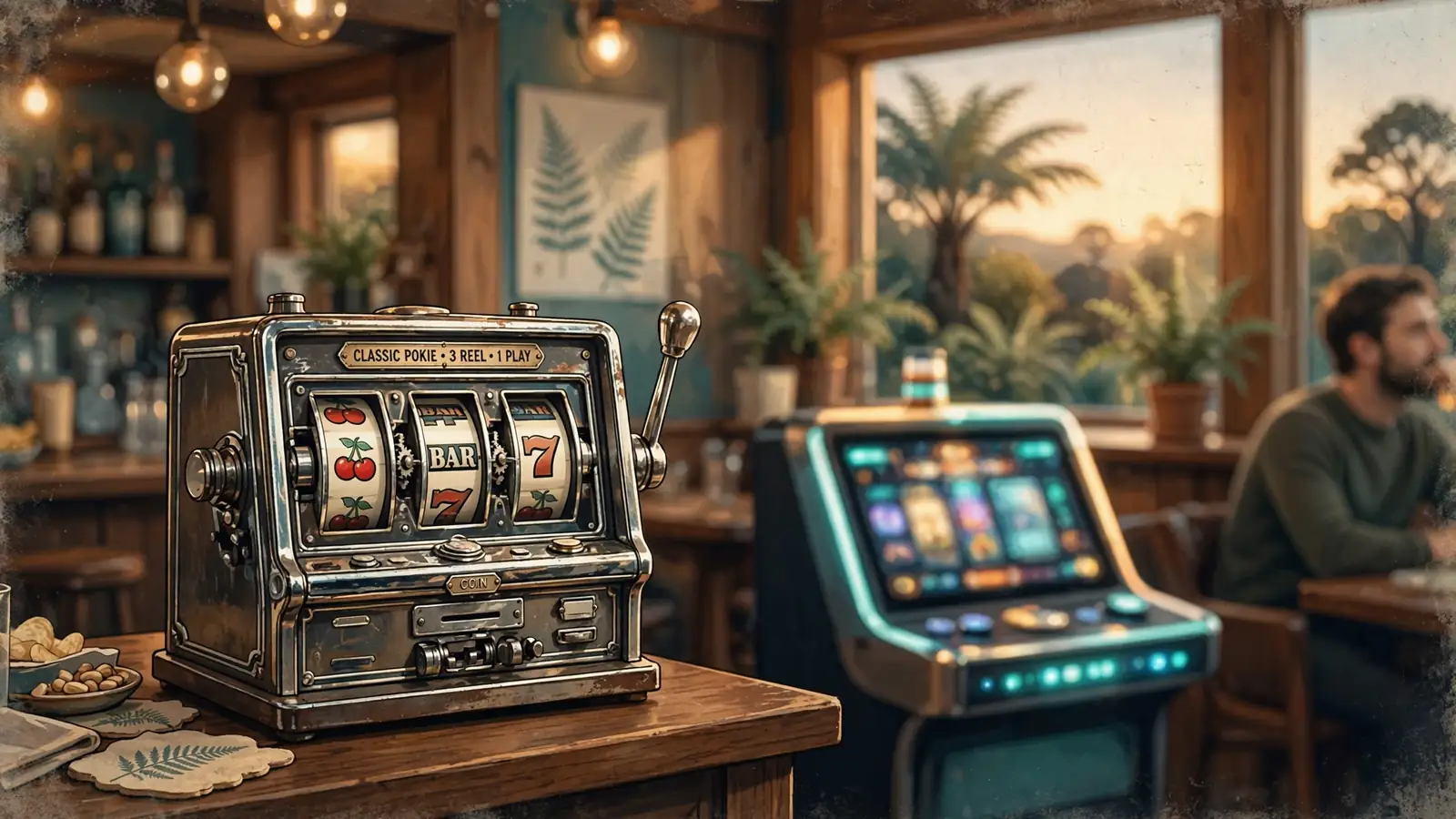
Table of Contents
- From Three Reels to a Reel That Changes Shape
- Browser Play, Downloads and the Choice of a Doorway
- New Zealand’s 2026 Licensing Turn
- A Spin Is Not a Promise
- The Long Arithmetic Behind a Free Slot
- For Fun, the Quiet Stretches Matter Too
- Bonus Rounds Have a Price of Entry
- Free Spins, with Conditions Attached
- No Download Does Not Mean No Distinctions
- When ‘Free’ Meets Real-Money Play
From Three Reels to a Reel That Changes Shape
The oldest visual grammar of pokies is spare: three reels, symbols arranged in columns, and a result read across them. The compact design makes the relationship between symbol and outcome easy to see. There is little machinery on the surface to distract from the central event: the reels stop, and their arrangement determines whether the spin has produced a win.
Classic pokies typically return smaller wins more often than high-volatility titles. That contrast is part of their character, but it is not a promise about any particular run of play. Their appeal lies partly in how little needs explaining. Three reels offer a small stage and a short cast; the eye can take in the whole arrangement at once.
Video pokies expanded that stage. They typically use five reels and add symbols with special functions, notably wilds and scatters. A wild can stand in for other symbols in a winning combination, while scatters can activate features without needing to line up in the same way as ordinary symbols. The details differ between games, but the broad effect is consistent: the symbols are no longer merely pictures to match. Some have jobs.
Choosing a site for free slot play in New Zealand starts with checking what reliable information is available about each operator. This list offers a concise reference to the details provided for the operators featured on this page.
Payout speed: 1-3 business days Wintino lists a payout speed of 1–3 business days.
License: Curaçao Gaming Authority, licence no. OGL/2024/165/0185 BitStarz lists a Curaçao Gaming Authority licence, number OGL/2024/165/0185.
License: Malta Gaming Authority, licence no. MGA/B2C/370/2017 Play Grand lists a Malta Gaming Authority licence, number MGA/B2C/370/2017.
License: Tobique Gaming Commission, licence no. 0000091 7Bit Casino lists a Tobique Gaming Commission licence, number 0000091.
License: Tobique Gaming Commission, licence no. 0000064 Neospin lists a Tobique Gaming Commission licence, number 0000064.
License: Tobique Gaming Commission, licence no. 0000002 Ricky Casino lists a Tobique Gaming Commission licence, number 0000002.
License: 07017519840 · Payout speed: 1-3 business days Zotabet lists licence number 07017519840 and a payout speed of 1–3 business days.
Payout speed: 1-3 business days Lamabet lists a payout speed of 1–3 business days.
License: Malta Gaming Authority, licence no. MGA/B2C/394/2017 N1 Casino lists a Malta Gaming Authority licence, number MGA/B2C/394/2017.
Free spins are among the features that can follow from those special symbols. They extend a game beyond its ordinary sequence of spins, often with their own rules or altered conditions. In a free-play version, the same feature may be part of what makes a game legible or entertaining, even when the point is to see how its moving parts fit together rather than to pursue a cash result. A feature can be an invitation to watch the design at work.
That extra machinery also changes what a player has to keep in mind. On a three-reel game, attention rests on the symbols and their arrangement. On a video pokie, wilds, scatters and free spins introduce different routes through the same set of reels. The screen becomes less like a row of windows and more like a small system of cues: one symbol completes a line, another may open a feature, and a third can alter the next phase of play.
Some games change the reels themselves. Megaways titles vary how many symbols appear on each reel from spin to spin, so the visible grid is not fixed. One turn may present a different arrangement of reel heights from the next. The change is not simply decorative: because the number of symbols shifts, the possible ways to form a win shift as well.
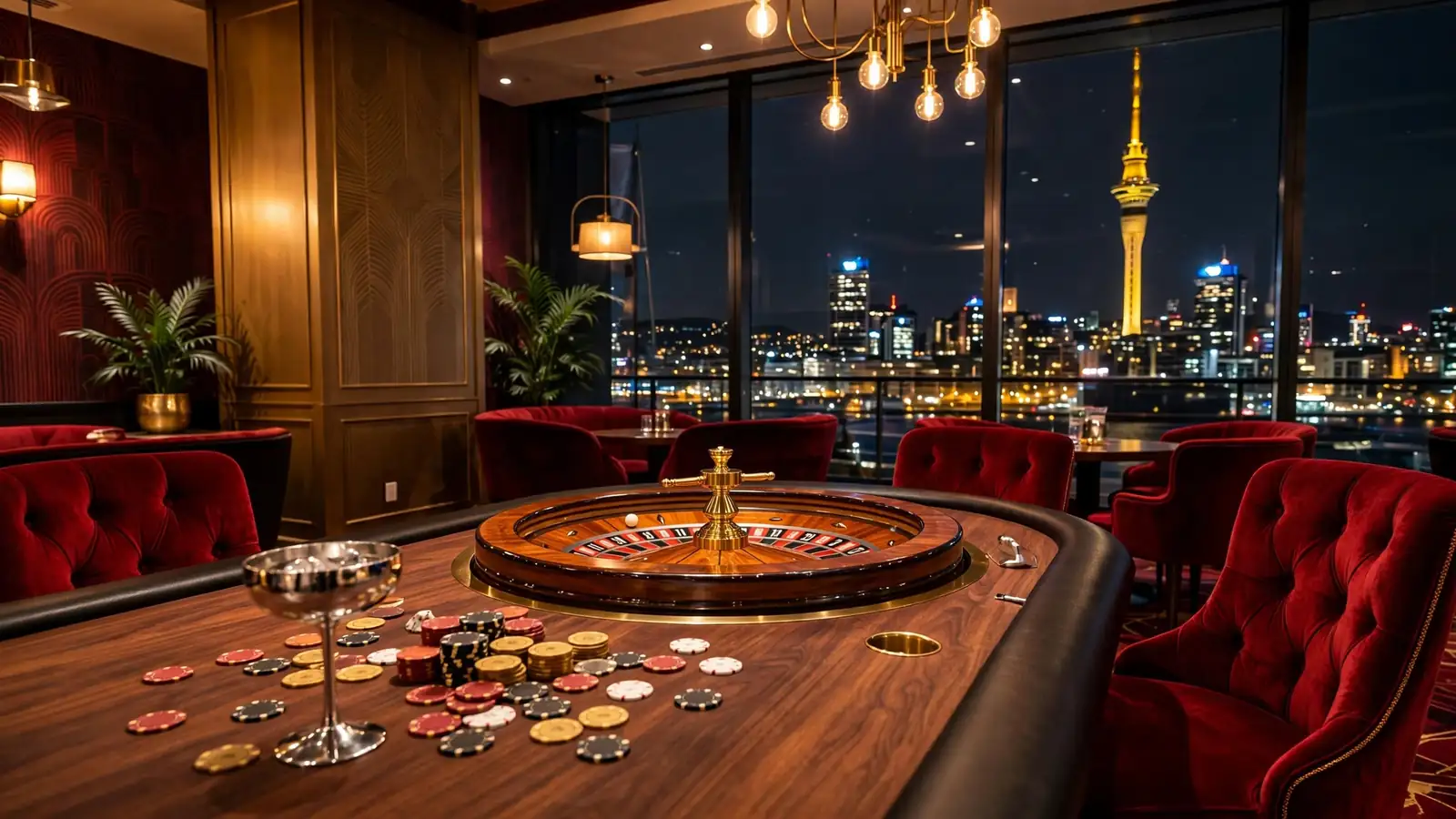
In some Megaways games, a single spin can offer as many as 117,649 ways to win. That figure describes the number of possible winning paths, not a guarantee that one will be completed. The appeal of the format is partly its changing architecture: the reels do not merely display a new combination; they can rearrange the number of positions from which combinations are built. A familiar grid has become a moving one.
There is a quiet historical irony in this progression. The early machine made its rules visible by keeping the field small. Later designs make the field larger and then keep changing its dimensions. More symbols and more routes may create a busier experience, but complexity is not the same thing as certainty. A large number of possible paths remains a description of the game’s structure, not a forecast of what a spin will produce.
Progressive jackpot games add a different kind of architecture. Rather than changing the shape of the reels, they connect a game’s prize pool across casinos running that game. Every spin contributes to a shared pot. The jackpot is therefore not contained within one screen or one local session; the game belongs to a wider network of play.
That shared pool gives the format a social scale, though not necessarily a social experience. A player sees one machine, while the pot is fed by spins taking place across casinos running the same game. The mechanism links separate play into a common prize. It is an ingenious bit of bookkeeping with a very public number attached to it.
Compact design with three reels and symbols arranged in columns for a simple, legible experience.
Five reels featuring special symbols like wilds and scatters that activate various game features.
Dynamic grids where the number of symbols on each reel changes per spin, creating thousands of ways to win.
Games connected across multiple casinos to feed a shared prize pool that grows with every spin.
These formats are often presented together under the broad label of slot machines, but they offer quite different designs. A classic pokie keeps the field compact. A video pokie adds symbols with special functions and features such as free spins. Megaways changes the number of symbols on the reels as play proceeds. A progressive jackpot links contributions across casinos into one shared pot.
For anyone browsing free casino slot games, those differences matter more than a game’s theme. A dramatic backdrop may set the mood, but the mechanics determine what happens on the reels: how symbols interact, whether the grid changes, or whether spins feed a shared jackpot. The most popular free slot machine games may attract attention for their look or name; popularity alone says little about how their underlying design works.
The reel, it turns out, is not always a reel in the old sense. Sometimes it is a small, fixed row; sometimes a screen full of special symbols; sometimes a changing grid, or one part of a much larger shared system. The cabinet became a screen. The screen became a set of rules.
Browser Play, Downloads and the Choice of a Doorway
The difference between a browser-based casino and a download-based one begins before a game appears. It is a choice about where the software sits: on a remote service reached through a browser, or on the computer as a client that must first be installed. The distinction can sound modest, almost administrative. Yet it shapes the first encounter with online casino games, including the kind of access implied by searches for free video pokies without a download.
A web-based casino runs its games through the browser without requiring software to be saved to the local computer. The browser is the doorway; the game remains part of the service being accessed. That can make the route feel lighter: there is no casino client to find, download and install before reaching the games. For someone looking to play free pokies online without downloads, this is the model the phrase most naturally points towards.
“Without a download” describes the access method, not the nature of the game. It does not, by itself, mean that every game is available for free, that registration is unnecessary, or that the service is appropriate to use. Those are separate questions. A browser can be a narrow technical threshold, not a certificate of anything beyond the fact that local casino software is not required.
The browser route also changes where the boundary of the experience sits. The player opens a page rather than launching a casino program installed on the computer. The interface is encountered inside the ordinary environment used for other websites, rather than in a dedicated client. That difference may seem small beside the vivid machinery of a pokie, but it belongs to a larger habit of contemporary life: services increasingly arrive as pages, while software quietly recedes from view.
- Use browser-based casinos for lighter access without software installation
- Recognise that “no download” refers to the access method
- Assume no-download means registration is unnecessary
- Mistake a browser doorway for a guarantee of free play
Download-based casinos make that boundary more visible. They require a software client to be downloaded before games can be played and wagered on. The client becomes a distinct piece of software on the local computer, rather than a page accessed through a browser. The route therefore has an extra step by definition: obtaining and installing the program before using it.
That distinction matters when someone types “free slot machine games to download” or looks for free machine games online. The first phrase imagines a program that can be installed; the second often suggests a browser route. But the wording alone cannot settle what a particular service offers. A download may be required to use its games, while a web-based service may not require one; neither description tells whether a specific game can be accessed without payment. The doorway and the terms of entry are not the same thing.
There is an old, quietly revealing division here. Installed software asks for a place on the machine and a small act of commitment: download, install, launch. Browser access keeps the encounter closer to the open-ended traffic of the web. Neither arrangement is inherently the more intimate one. The client occupies the computer; the browser tab occupies attention. Different furniture, much the same room.
For people comparing online access, the practical question is therefore not simply whether a pokie is “online.” Both routes are online in the ordinary sense that they connect to casino games over the internet. The useful distinction is whether the casino requires a local client. A web-based service does not require that download; a download-based service does. That is the whole technical hinge, and it is enough to explain why “no download” and “download” searches lead towards different kinds of access.

The word “free” often gets attached to both kinds of doorway. It may describe what a person hopes to try, rather than the software format itself. A free online game can still be reached through a browser or through a client, depending on the service; likewise, needing a download does not establish whether play is free. The technical category answers how the software is reached, not what it costs or what conditions apply.
This is why the no-download appeal should be read narrowly. It promises no local installation as part of the route, not a universal absence of other requirements. A browser-based casino removes one piece of friction, not every distinction between services. Conversely, a download is a real requirement in the client model, not a verdict on the game experience. The categories are functional, not moral.
At the level of the computer, the contrast is plain: browser page or installed client. At the level of habit, it reflects two ways of treating software—something visited, or something kept. The browser makes the casino feel like a destination among many; the client makes it feel like a separate place. The doorway changes. The house does not.
New Zealand’s 2026 Licensing Turn
For years, New Zealand’s online-casino rules drew a boundary around where an operator was based. The Gambling Act 2003 made it illegal to run an online casino from within the country. Its target was the business operating the service, not the person playing on it. That distinction matters: a ban on domestic operation was not a rule making players criminally liable for using an offshore site.
Under the Gambling Act 2003, it was illegal to run an online casino from within New Zealand, though this focused on the operator rather than the player.
The arrangement left a regulatory gap. Before the new law, online casino services based outside New Zealand were not licensed or supervised by a New Zealand regulator. Customers using those services had no domestic government recourse. The games could be reached across a border without the protections or oversight that a local licensing system is designed to provide. Access and accountability were not the same thing.
The Online Casino Gambling Act 2026 is the country’s first framework for licensing online casino gambling domestically. It came into force on 1 May 2026, marking a change in legal structure rather than an instant arrival of a fully operating licensed market. The Department of Internal Affairs is responsible for regulating the framework. That gives oversight a place within New Zealand’s own public institutions, where previously the domestic regulator had no licensing role over offshore casino services.
A transition, not a switch
The law allows a transition for providers that were already serving people in New Zealand before it came into force. They may continue operating until 1 December 2026, subject to the Act’s transitional provisions. This is a temporary bridge, not a permanent substitute for licensing. The full regime is not expected to be operational until 2027.
That timetable makes “New Zealand’s 2026 licensing turn” a description of the legal change, not a claim that every part of the new system is already in place during 2026. The distinction is easy to lose in a headline. Less easy for a regulator to ignore.
Policy descriptions of the planned framework have put the initial licensing capacity at up to 15 online casino licences. The figure describes an expected ceiling for the initial system, not a guarantee that that many licences will be issued or that every provider currently accessible from New Zealand will qualify. Licensing is the new gate; the transition sets out who may continue while that gate is being built.

The Department of Internal Affairs therefore occupies a different position from a general information office. Under the new arrangement, it is the regulator for online casino licensing, with responsibility tied to a defined domestic framework. The change also alters the meaning of “regulated” in this market: before the Act, an offshore service was not supervised by a New Zealand regulator simply because New Zealand residents could reach it. A local framework gives the state a formal role that access alone never supplied.
For people looking for free casino games, that legal context is separate from whether a game offers a demo or whether a particular spin uses real money. “Free” describes a mode of play; it does not establish that a casino is licensed in New Zealand. Nor does the existence of the new law mean that the full licensing regime began operating on its commencement date. In 2026, the transition and the longer implementation timetable are part of the picture.
Attention The Online Casino Gambling Act 2026 establishes a framework, but the full licensing regime is not expected to be operational until 2027.
The shift is notable because it moves from restricting the location of domestic operators to creating a system for domestic licensing and oversight. New Zealand is not simply changing the label attached to online casinos. It is establishing a regulator’s role, a transitional period, and a route toward a licensed market, while preserving the old restriction on basing online casinos within the country during the transition.
A boundary, then, is becoming a framework.
A Spin Is Not a Promise
A pokie can look as though it has a memory. A run of blank spins gives way to a win; a near miss seems to sit close to a better result; the same symbols appear often enough to invite theories about what comes next. The screen supplies a story, and the mind is quick to give it a plot. But the machinery behind a virtual spin does not read the plot.
Virtual pokie outcomes are determined by pseudorandom number generator software. In broad terms, this is software that produces a sequence of numbers with random-like results. The game uses that process to determine the outcome of a spin. The symbols then give the result its visible form: fruit, treasure, wilds, or whatever happens to belong to that game’s design. The display is a way of presenting the outcome, not a record of the machine weighing up what has happened before.
That distinction matters because a sequence can look meaningful without carrying a message. Several losses in succession may feel like a run that must soon turn. A win may seem to have used up the game’s generosity. Neither impression changes the next spin. Each one is independent; the game is not ‘due’ a win, and a recent result does not make a particular outcome owed.
The word “independent” can sound cold beside a bright screen. In practice, it means that one spin does not promise to balance another. A losing spin does not build credit toward a win, and a winning spin does not make the following result less likely to pay. The game does not keep a private ledger of disappointment or reward and then settle the account. No account is being settled.
This is where free play can be useful as a way to observe a game, though not as a way to predict it. A no-cost session can show how the controls respond and how the visual presentation unfolds. It can also produce a convincing little sequence: a few dry turns, a sudden payout, a pause, another stretch without one. Such a sequence may feel like evidence of a pattern. It is only the outcome of those spins, not a forecast of the spins that follow.
The difference between experiencing an outcome and explaining it is easy to blur. A player sees symbols land, remembers the striking moments, and may forget the ordinary ones. Near misses are especially good at recruiting attention: they look like almost-arrivals, though “almost” belongs to the picture on the screen, not to a promise about what comes next. The next spin remains its own event.
Independent Spins
Each spin is an independent event; previous results do not influence or promise future outcomes.
This does not make a game’s presentation meaningless. A pokie may arrange its symbols, sounds and animations to give a result drama. That is part of how a digital game communicates. But drama is not evidence that the software has changed its chances in response to a sequence of past spins. The visual language can suggest suspense; the outcome mechanism does not thereby acquire a sense of timing.
Free pokies online are therefore best understood as games that can be tried without turning their recent history into a forecast. A run of results belongs to the run already seen. It cannot establish that a machine is warming up, holding back, or preparing to repay patience. The screen invites interpretation. The next spin offers no reply.
That is a modest boundary, but an important one: the symbols can tell a story after they land, while the previous chapter cannot write the next result. A machine is not keeping score.
The Long Arithmetic Behind a Free Slot
RTP is a tidy abbreviation for an untidy span of time. It describes the share of wagers a pokie is designed to return across its entire lifetime. That is a measure of the game’s long-run arithmetic, not a promise about what happens during a short visit to a free demo or a real-money session.
The distinction is easy to miss because a percentage looks precise. It can seem to offer a forecast: put something in, receive a predictable portion back. But RTP does not work as a receipt for each player, nor as a schedule of what a game will pay next. Its horizon is the game’s life, not one person’s evening. Individual sessions are only small fragments of that much larger accounting.
A free slot machine can therefore be entertaining without becoming a miniature test of its published RTP. A short run of spins cannot establish whether the long-term measure is being met; nor can a session that seems unusually generous or unusually stingy settle the question. The number describes an aggregate tendency over time. It does not divide itself neatly into a personal share.
That is the arithmetic’s quiet trick. The measure sounds intimate because it is expressed as a return to a player, yet it belongs to the game’s lifetime calculation. A person’s experience may sit far from that long-run figure, without contradicting it. A percentage can describe a broad design property and still tell very little about the next stretch of play.
For free slot machines, this matters in a particular way. A demo can show how a game behaves and what its interface does, but a brief trial cannot prove that a player has encountered the game’s lifetime return. The same caution applies when money is involved: RTP is not a personal budget, a target, or a reliable estimate of what will come back before play stops. The decimal point does not make the future legible.
Some online casinos claim that their pokies offer higher payback percentages, and some publish payout audits on their websites. Such information may help describe a game’s stated long-run return, but it does not turn that return into a session forecast. A published figure, even when accompanied by an audit, remains a statement about long-term performance rather than a promise to an individual.
Understanding RTP
Return to Player (RTP) is a statistical measure of the share of wagers a pokie is designed to return over its entire lifetime, not a forecast for any individual session.
This is where the language around a slot machine free demo can become misleading. “Return” sounds like an event that will happen to the person playing. In RTP, it is a statistical description spread across the game’s entire operating life. It should not be read as money owed, or as a result that will appear within any particular block of spins.
A free session has no cash loss to recover, but the arithmetic can still shape expectations. If play moves from a demo to wagering, a maximum loss limit set beforehand gives the session a boundary that RTP cannot provide. Gambling is for adults of legal gambling age. Long-run percentages are not safeguards.
The number has a long memory. A session does not.
For Fun, the Quiet Stretches Matter Too
Volatility is about the rhythm of a pokie’s payouts: how often wins tend to appear and how large they may be. It is not a measure of how much a game returns over its lifetime. Two games can therefore feel quite different in a casual session, even before their themes or features come into view.
Low-volatility pokies tend to pay out more regularly, with smaller amounts. Their play can feel less interrupted by long stretches without a win. That regularity is part of the appeal for people who prefer a steady sequence of small outcomes to a dramatic pause followed by a larger one. The wins are smaller; the rhythm is the point.
High-volatility titles work to a different cadence. Quiet stretches can last longer, while payouts, when they arrive, may be larger. That contrast can make a session feel more suspenseful, though suspense is not the same thing as a promise. A long pause does not announce that a large payout is approaching. It is simply part of the pattern associated with a more volatile game.
For free pokies played for amusement, this difference can matter even when no money is at stake. A low-volatility game may feel gentler and more continuous; a high-volatility one may feel stop-start, with more waiting between its brighter moments. Neither description makes one kind objectively more entertaining. The preference belongs to the person sitting through the sequence, not to a ranking printed beside the game.
The word “regularly” can be misleading if it is heard as “at predictable intervals”. It describes a broad tendency, not a timetable. A low-volatility title is not obliged to pay on a particular spin, and a high-volatility one does not owe a large win after a quiet run. The labels describe the shape of play across a game, not a schedule that can be read from a short session.
That is why the most useful comparison is often about mood. Some players enjoy frequent small changes in fortune; others are comfortable with a quieter stretch and the possibility of a more substantial payout. In free play, this can be a way to notice which pace is enjoyable without mistaking a game’s temperament for a forecast. The screen may supply a little theatre. It does not supply certainty.
Use free play to identify which volatility rhythm—steady small wins or rare larger payouts—best suits your personal preference.
There is no universal “best” volatility for fun. A game that feels lively to one person may feel tedious to another; a title built around long pauses may be absorbing for some and simply slow for others. Volatility gives a name to that difference in pace, but it cannot decide how the experience will land.
The distinction is modest, but useful: low volatility tends toward smaller, more frequent payouts; high volatility toward longer quiet periods and larger payouts. Neither turns a free session into a reliable preview of future results. A rhythm, not a guarantee.
Bonus Rounds Have a Price of Entry
A bonus round can arrive as part of ordinary play, or it can be offered through a feature called bonus buy. The name is plain enough: instead of waiting for the game to trigger its bonus, a player pays a set multiple of the stake to enter that round directly. It changes the route into the feature, not the fact that money is being risked.
That distinction matters when a game is described as having bonus rounds. The feature itself may be part of a pokie’s design, but buying immediate access is not the same as receiving a free feature during play. A free label attached to a game or its demo does not turn a paid bonus-buy option into a free one.
The price is expressed as a stake multiplier, rather than as a single cash amount. That makes the cost move with the stake: a larger stake produces a larger purchase price at the same multiplier. A specialist review of bonus-buy games reports costs ranging from 50x to 100x the stake, with the amount depending on the game. This is a reported range, not a fixed rule for every title, and the feature can change as games are revised.
The design has an unmistakable appeal. It removes the waiting period and puts the bonus round at the front of the experience, where its animations and special mechanics are immediately visible. It also concentrates the cost in one decision. The round is entered directly; its outcome is not thereby promised.
That is the bargain, and the boundary. A bonus buy is paid access to a game feature, not a free spin and not a guarantee of a return. In a free-to-play setting, it is especially important to distinguish a no-cost way of exploring a game from a purchase option that charges a stake multiple. The button may sit beside the ordinary controls. Its economics are different.
Free Spins, with Conditions Attached
Free spins are part of the vocabulary of video pokies: a feature round can award spins without charging for each one separately. The reels may pause on scatters, and the resulting feature gives the game a different rhythm from its ordinary turns. “Free” describes the spins, though, not necessarily the money that might appear on screen.
While free spins allow a player to take turns without a separate charge, any resulting bonus balance typically remains subject to wagering conditions.
A welcome offer may attach bonus funds to an account, with a wagering condition before those funds can be withdrawn. A specialist casino review reports requirements of 30x to 50x for welcome bonuses. That is a range reported by that kind of review, not a universal rule: the terms of an individual offer determine what counts, and how much wagering remains.
The distinction matters when free spins are bundled with a bonus. A spin can be free to take while any resulting bonus balance remains subject to conditions. The attractive part is immediate; the arithmetic waits.
The same specialist-review source reports a typical maximum bet of NZ$5 per spin while a bonus is active. That figure should be read as a reported condition, not a permission that overrides an offer’s own rules. Exceeding a stated cap may affect eligibility for the bonus or its winnings, so the written terms are the operative part of the offer.
Free spins can make a feature easy to enter, but they do not dissolve the conditions around bonus funds. The label is brief. The terms are longer.
No Download Does Not Mean No Distinctions
A demo can make a pokie available to try without first installing a casino client. Its value is practical and limited: the game’s mechanics can be explored, including how its features behave, without treating that trial as a real-money round. The absence of a download, however, says nothing by itself about whether a site will allow play without registration. Those are separate conditions, and access rules vary.
That distinction matters because “free” can describe the cost of a demo, not every feature inside it. Progressive jackpots are the clearest boundary. A demo may show the jackpot feature as part of the game, but it does not pay the progressive prize. The display can be present; the money is not.
A no-download trial is therefore a way to inspect a game, not a rehearsal with every consequence intact. It can show the pace of play and the way features are presented. It cannot establish that a jackpot is payable, nor does it prove that the same title will be available under identical conditions outside demo mode.
The distinction is less glamorous than a jackpot counter, but more useful. A free trial tells something about the machinery of play. It does not turn a simulated prize into a claim on a shared pot, and it does not settle a site’s registration requirements.
When ‘Free’ Meets Real-Money Play
A free demo and a real-money game may look alike on the screen, but they do not offer the same thing. Demo mode lets a player try a game’s mechanics without turning its displayed results into money. That distinction matters most when a progressive jackpot is involved: the shared prize may appear as part of the game, but a demo spin cannot win it for cash.
The word “free” can describe the cost of trying a game, not a route to a payout. A demo is a way to see how a pokie behaves; it is not a claim on a jackpot or a promise that a later paid spin will produce one. The interface can make the two modes seem close. Their consequences are not.
Real-money gambling changes the stakes, even when the same game is used. In New Zealand, gambling winnings are not taxed. That is a statement about tax treatment, not a guarantee of profit, and it does not turn demo results into winnings. Free play remains practice; money play remains gambling.

The difference is easy to blur because the reels, symbols and jackpot display may be familiar in both modes. Yet only real-money play can involve an actual cash outcome, and a progressive jackpot shown in demo mode is not payable. A screen can simulate the promise. It cannot settle it.
Created by the ”Casino Slots Hub NZ” editorial team.