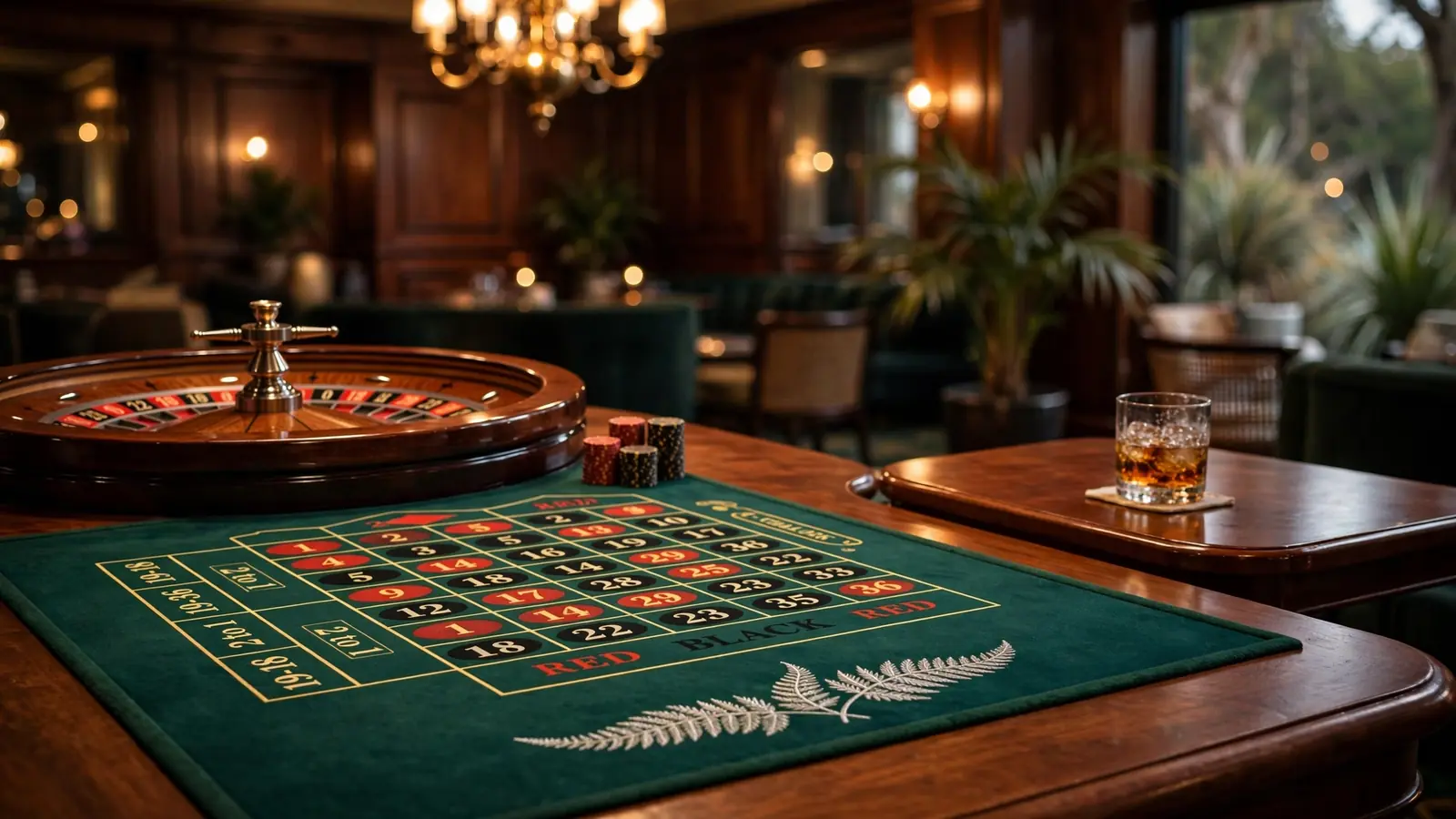
Roulette Casinos in NZ: Wheels, Rules and Odds
 Available in US
Wheel type, zero rules, table limits and bonus conditions affect how roulette plays, but none removes the house edge.

Table of Contents
- The Wheel’s Two Zeros, and the Rules That Change Them
- How a Roulette Round Unfolds
- What Matters in a Roulette Casino
- Roulette Tables, Multiple Wheels and the Online Setting
- New Zealand Sites: Bonuses with a Table-Game Catch
- Practice, Table Limits and the Martingale Temptation
- Online Roulette: Randomness on Demand
- Roulette Tips Without Promises
- Live Roulette and the Limits of What Can Be Verified
- Roulette Odds: The House Keeps Its Edge
The Wheel’s Two Zeros, and the Rules That Change Them
Roulette looks like a game of numbered spaces, but its character is set before any choice is made: by the wheel. The important distinction is whether it has one zero or two, and whether a rule softens the effect of zero on certain bets. Those details separate European, American and French roulette more meaningfully than their names alone.
European Roulette has 37 numbered spaces, with a single zero. American Roulette has 38, because its wheel includes both a single zero and a double zero. French Roulette also has 37 spaces and a single zero, but it is distinguished by rules called La Partage and En Prison. Thus the European and French wheels share the same basic count; their treatment of some bets is not the same. The American version adds another zero, a small-looking change with consequences for the game’s balance.
A zero is not simply another ordinary choice among the numbered spaces. Its presence affects the terms on which the game is played, and an additional zero gives the American wheel a different mathematical profile from the European one. European Roulette is considered to offer more favourable odds than American Roulette. The comparison is not a matter of atmosphere or table decoration: it follows from the different wheel layouts. A player comparing casino roulette games can therefore begin with a plain question about the wheel, rather than with a flourish in the game’s name.
Choosing a roulette casino in New Zealand is easier when you can review the available details before deciding where to play. Use this list as a starting point and check that each option suits your preferences.
Payout speed: 1-3 business days Wintino lists a payout speed of 1–3 business days, which gives readers a stated timeframe to consider.
License: Curaçao Gaming Authority, licence no. OGL/2024/165/0185 BitStarz lists a Curaçao Gaming Authority licence, number OGL/2024/165/0185.
License: Malta Gaming Authority, licence no. MGA/B2C/370/2017 Play Grand lists a Malta Gaming Authority licence, number MGA/B2C/370/2017.
License: Tobique Gaming Commission, licence no. 0000091 7Bit Casino lists a Tobique Gaming Commission licence, number 0000091.
License: Tobique Gaming Commission, licence no. 0000064 Neospin lists a Tobique Gaming Commission licence, number 0000064.
License: Tobique Gaming Commission, licence no. 0000002 Ricky Casino lists a Tobique Gaming Commission licence, number 0000002.
License: 07017519840 · Payout speed: 1-3 business days Zotabet lists licence identifier 07017519840 and a payout speed of 1–3 business days.
Payout speed: 1-3 business days Lamabet lists a payout speed of 1–3 business days, a practical detail to review when considering this option.
License: Malta Gaming Authority, licence no. MGA/B2C/394/2017 N1 Casino lists a Malta Gaming Authority licence, number MGA/B2C/394/2017.
The words “European” and “American” can suggest that roulette belongs neatly to national traditions. At the table, however, the useful distinction is more exact and less romantic. Count the spaces, note the zeros, then consider the rules attached to particular wagers. Names may travel; the wheel keeps the account. In a casino game, the layout is not background scenery. It defines what the game is.
French Roulette makes that point especially clearly. Its single-zero wheel has the same number of spaces as the European wheel, yet La Partage and En Prison alter the treatment of even-money bets. These rules are associated with bets whose possible outcomes are divided into two broad sides, rather than a prediction of one particular number. The distinction matters: the special rules are for even-money bets, not a general promise that every wager receives gentler treatment. French Roulette is therefore not merely European Roulette wearing another label. Its wheel resembles the European layout, while its rules give some bets a different relationship with zero.
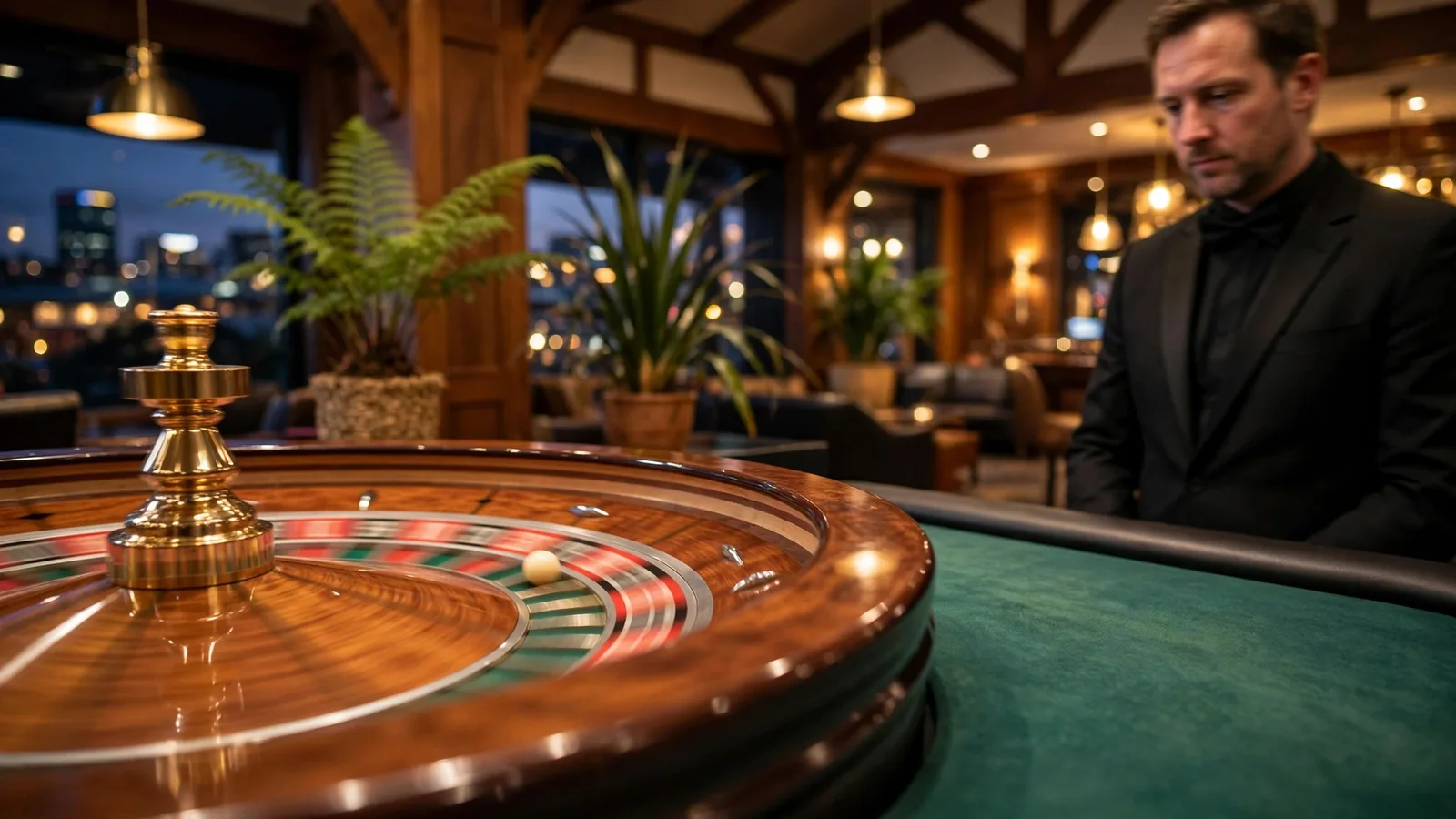
Descriptions of the French house edge under La Partage and En Prison do not agree: one states 1.35%, while another gives 2.7%. Both values are attached to the same named rules, so presenting either as an uncontested figure would make the comparison seem tidier than it is. The important structural point remains: these rules reduce the house edge for French Roulette under the stated conditions. The disagreement concerns how large that reduction is expressed, not whether the French version has a special provision for even-money bets.
That distinction is worth keeping separate from the wider comparison of wheel types. The European wheel has one zero; the American wheel has two; the French wheel has one zero and adds rules for certain bets. These are related features, but they are not interchangeable. A wheel with a single zero does not, by that fact alone, establish that every bet is treated under French rules. Conversely, the presence of La Partage and En Prison does not turn the French layout into a different count of spaces.
For someone learning how to play roulette at a casino, the names can initially seem like a catalogue of versions of one game. They are better read as a compact description of conditions. The wheel determines the available numbered outcomes; the rules determine how selected bets are handled. Before considering where a bet might go or how a round proceeds, it helps to know which version sits on the table. Otherwise, “roulette” can conceal a consequential difference behind a familiar word.
37 numbered spaces with a single zero, offering more favourable odds than the American version.
38 numbered spaces, including both a single zero and a double zero, which changes the game’s balance.
37 numbered spaces and a single zero, distinguished by the La Partage and En Prison rules for even-money bets.
The American double zero is the most visible variation: an extra marked space distinguishes its wheel from the single-zero layouts. The French variation is quieter. Nothing in the wheel count announces La Partage or En Prison; their significance lies in the rules applied to eligible bets. One version changes the layout, another adds a condition to the game. Both are reminders that a casino roulette game is not defined by its spinning wheel alone.
These distinctions do not require a long taxonomy. European and French roulette each have 37 spaces and one zero, while American Roulette has 38 spaces, including two zeros. French Roulette further offers La Partage and En Prison for even-money bets, with disagreement in published descriptions over the reduced house-edge figure. That is the essential map of the variants: count first, rule second. The rest is play.
How a Roulette Round Unfolds
A roulette round starts at the betting layout, not at the wheel. Players place chips on marked spaces representing numbers or groups of numbers, choosing where they think the ball may come to rest. The layout turns that choice into a visible instruction: a chip on one number backs a single outcome, while a chip placed across a boundary or on a marked group covers several possible outcomes. Each position has a defined meaning, so a bet is read from where the chip sits rather than from any spoken explanation.

The betting area is a map of possibilities. Number spaces make individual selections clear; other marked areas collect numbers by shared features or position. A player can place more than one bet in a round, spreading chips across different parts of the layout or concentrating them on a particular selection. The wheel does not know what the layout says, of course. It simply turns; the layout is the players’ way of making their choices legible to the table.
At a physical table, differently coloured chips help keep each player’s bets distinct. The colours are not decorative: when several people are placing wagers on the same layout, they let the dealer identify whose chips belong to whom. A shared table can contain many bets in close proximity, and personal colours prevent one player’s position from being mistaken for another’s. The wheel is communal; the accounting cannot be.
Once players have placed their chips, the wheel is spun and the ball is set in motion. The ball travels around the rim before dropping into a numbered pocket. Until it settles, every position on the layout remains a claim on a possible result. When the ball comes to rest, the winning number determines which bets have succeeded and which have not. A losing chip is removed; a winning position is settled according to the game’s payout rules.
That sequence gives the round its basic rhythm: choose, place, spin, settle. The wheel’s motion is visible, but the wager itself is decided beforehand. A late adjustment is not part of the same decision once betting has closed, and the table moves on to the next round after the result has been cleared. The ceremony is brief. The consequence is precise.
Roulette Round Sequence
Players place chips on the betting layout to back specific numbers or groups of numbers.
Once betting is closed, the dealer spins the wheel and sets the ball in motion.
The ball settles into a pocket, and the winning number determines which bets are paid by the house.
The house is the party running the game, rather than another player making a competing selection on the layout. Players wager against the house, which oversees the round and pays winning bets while retaining losing ones. The dealer manages the physical table: keeping the betting area orderly, identifying the result and settling chips. The arrangement has an old-fashioned clarity. Everyone can see where the wagers sit, but the house controls the terms on which they are resolved.
In a digital game, the same logic remains easy to follow: a selection is made on a betting layout, the round begins, a result appears, and bets are settled. In RNG roulette, the player decides when to spin. That changes who triggers the moment of resolution, not the underlying sequence of choosing a position and waiting for a result. Online Roulette NZ may present the table differently from a physical casino, but the wager still needs a clear place and a result against which it can be judged.
Casino roulette is a game of a ball and a numbered wheel, not Russian roulette, whose name refers to an entirely different and dangerous practice. The distinction is worth stating because similar wording can obscure a stark difference in meaning. In the casino game, players make wagers on numbers or combinations; the house runs the round, and the ball’s resting place decides which claims are paid. No bet predicts the wheel with certainty. It records a choice, then waits.
The mechanics also explain why the layout matters as much as the spin. A player may understand the wheel’s movement perfectly and still need to know what a chip’s position represents. A marker placed on one number is not the same wager as one placed over a boundary or on a group label. At a busy table, the coloured chips and marked spaces perform quiet administrative work: they preserve each player’s intention from placement through settlement.
There is no secret gesture that turns the round into a different game. Chips go down before the wheel is spun; the ball lands; the house resolves the wagers. The apparent drama belongs to the turning wheel. The rules belong to the table.
What Matters in a Roulette Casino
A roulette casino is not made suitable by the word roulette appearing in its games menu. The useful questions are more ordinary: whether the game can be played for real money, what the table allows as a stake, and whether those conditions fit the purpose of the visit. A polished lobby can make these distinctions look smaller than they are. They are not.
In New Zealand, real-money play at an online casino requires an account and a deposit. That makes access a practical threshold, not a decorative feature. A game available for browsing is not necessarily available for wagering; the account and funding steps separate the two. The distinction matters to anyone comparing casinos, because a roulette title on a page says little by itself about what a player can actually do there.
In New Zealand, real-money play at an online casino requires the creation of an account and a deposit.
Table limits are the next point to examine. Minimum and maximum bets vary between casinos, so there is no single stake range that defines a suitable roulette table. The minimum determines whether a table is accessible at the low end; the maximum indicates how far its permitted stakes extend. Neither figure, on its own, measures quality. A table with a low entry point may be useful to one player and irrelevant to another. A generous ceiling is not a virtue if it has no bearing on the intended style of play.
Some specialist reviews have reported real-money roulette minimums as low as ten cents at particular casinos. That is a reported example, not a dependable market standard. Limits can differ by casino and table, and the conditions available at one point may not remain in place. Treating one strikingly low figure as representative would be much like judging a whole dining room by its smallest spoon.
The more reliable comparison is therefore specific rather than impressionistic. The listed minimum and maximum should be checked for the roulette table in question, rather than inferred from a casino’s general reputation or from a figure attached to another game. If the casino presents several roulette tables, their limits may not be identical. What matters is the actual table and its stated terms, not the broad promise of a large game catalogue.
The phrase “best roulette casino” can suggest a universal winner, as though the same table conditions suited every player. In practice, a sensible choice depends on fit. A player looking for access at a modest stake needs a different threshold from someone who wants a higher maximum. The useful comparison is not a contest in grand claims, but a check that the real-money route and the table’s limits match the intended use.

That is also why a ranked list cannot replace close attention to the game itself. A casino’s position in a comparison may help narrow the field, but it cannot make a particular table’s minimum or maximum irrelevant. The small print is less glamorous than a ranking. It is also where the decision becomes concrete.
For Kiwi players considering Online Roulette NZ, the practical standard is modest: confirm that real-money play is available after sign-up and deposit, then check the limits attached to the table rather than assuming they are uniform. A low entry point may exist, but it is not a promise about every casino or every roulette game. The table, not the slogan, sets the terms.
Roulette Tables, Multiple Wheels and the Online Setting
Online roulette is not one fixed arrangement transplanted onto a screen. The same game can be approached on a desktop monitor or a mobile device, and the change in scale alters how much of the table is visible at once. On a larger screen, the layout has room to breathe; on a phone, the display is more compact. The wheel remains the subject, but the player’s view of it is shaped by the device.
That matters because a roulette table is both a game and a visual map. Its numbered layout, betting areas and wheel compete for attention, even when no new rule is involved. A desktop presentation may make it easier to see the whole table without shifting between views. A mobile presentation brings the game into a smaller space, where clear controls and readable labels matter more than decorative flourishes. Neither format changes the underlying game simply by being on a different screen.
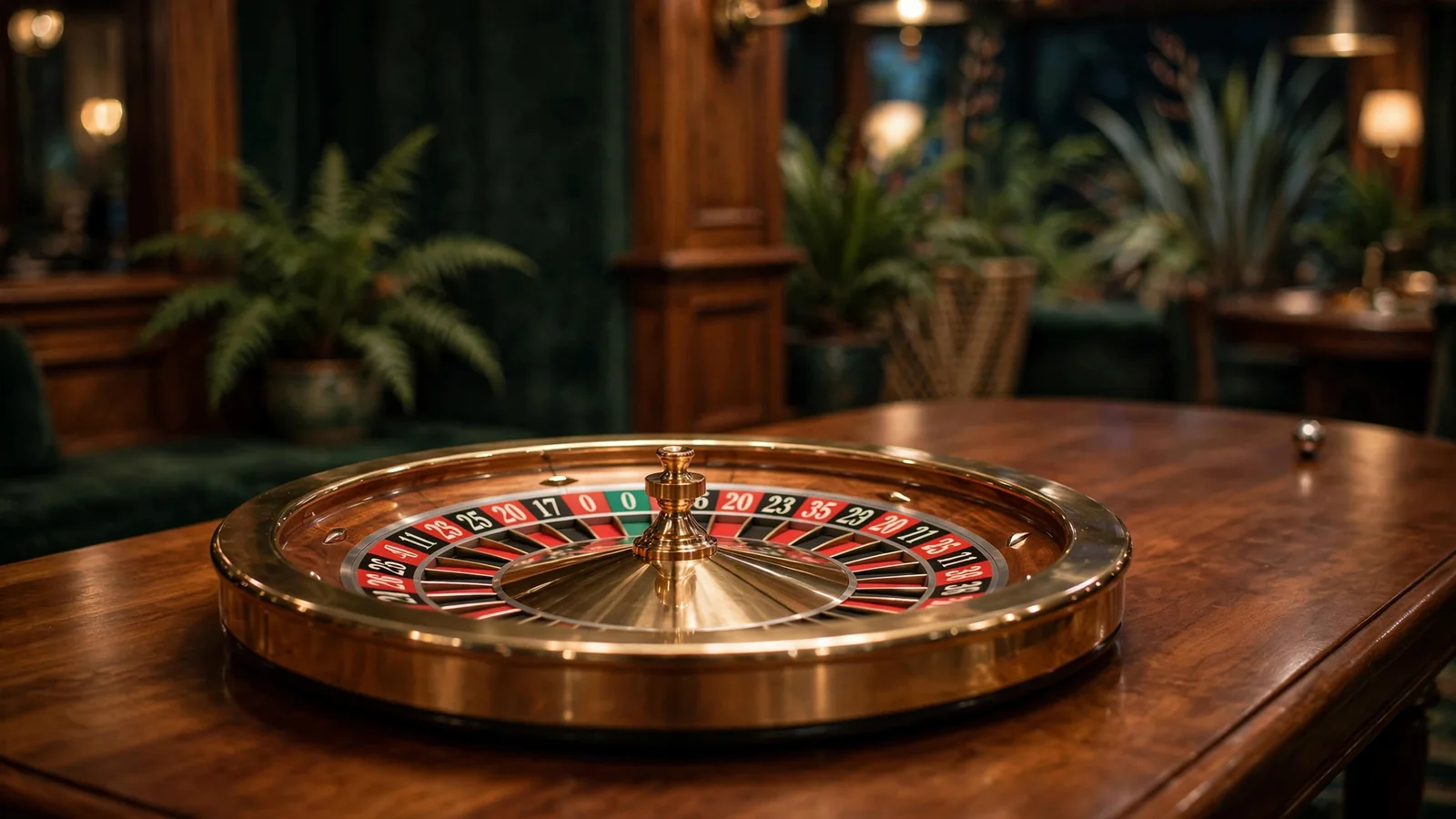
The word “immersive” is often applied to casino experiences, but it can mean several things: a vivid visual style, a feeling of presence, or simply a design that keeps the table prominent. Those are qualities of presentation, not guarantees about how a game works. A polished interface may make a session feel more like sitting at a casino table, but atmosphere is not evidence of a different roulette rule or a better outcome. The distinction is useful. Online settings can borrow the look of a physical casino without reproducing every part of one.
A more unusual format is Multi Wheel Roulette. A specialist review describes it as allowing bets across several wheels in a single round. That changes the shape of the decision: rather than following one wheel alone, the player is presented with outcomes from more than one. The appeal is plain enough. Several simultaneous possibilities can make the screen feel busier and the round more eventful.
But multiplication of wheels is not multiplication of certainty. A broader display does not establish that the game is more favourable, and a lively format cannot promise profit. It is still roulette presented in a particular way. The extra visual activity may suit someone who enjoys comparing several outcomes at once; for someone who prefers to keep track of one table, it may feel like needless noise. More, in this case, means more to watch.
For Kiwi players, the practical distinction between desktop and mobile is therefore less about which device is “best” than about the setting in which the game will be played. A larger display offers space; a phone offers portability. Online roulette is accessible on both, but access alone says little about whether a particular table’s layout will be comfortable to follow. The screen size, clarity of the controls and the number of simultaneous elements all affect the experience.
The casino setting itself is also less singular online than the phrase “roulette table” suggests. One version may place the wheel at the centre of the screen; another may give more room to betting areas or supporting information. Multi-wheel play pushes that variation further by putting several wheels into one round. The result is not simply a choice between casinos with roulette tables, but between ways of arranging the same broad activity on a screen.
There is a small cultural shift in that arrangement. A physical table gathers players around a shared object; an online table distributes attention across personal screens. The wheel remains a social artefact even when no crowd is gathered around it: a circle, a set of numbers and the old hope that chance can be watched closely enough to feel almost orderly. The screen changes the room. Not the chance.
New Zealand Sites: Bonuses with a Table-Game Catch
A roulette casino serving Kiwi players is not necessarily a casino based in New Zealand. Domestic online casinos were prohibited under the earlier framework, while offshore gambling sites could be reached by local customers without supervision from a New Zealand regulator. That distinction matters: during that period, a customer using an offshore site had no domestic government recourse if a dispute arose.
Legal Transition
Under the Online Casino Gambling Act 2026, unlicensed operation is expected to become an offence around the middle of 2027.
The position began to change in 2026. The Online Casino Gambling Act 2026 took effect on 1 May, creating New Zealand’s first domestic licensing system for online casino gaming. Its transition allows providers already serving the country before that date to continue until 1 December 2026, under the Act’s transitional provisions. The full licensed regime is not expected to be operational until 2027, and unlicensed operation is expected to become an offence around the middle of that year. The transition is a bridge, not a settled landscape.
That context can make the word “New Zealand” in a site description do too much work. It may refer to the audience a casino accepts, rather than a locally based or locally licensed business. In the current transition, those are different claims. A welcome banner, meanwhile, says little about whether roulette itself qualifies for a promotion.
A specialist review of New Zealand casino offers reports that the vast majority of welcome bonuses are aimed at pokies, rather than table games or live dealer play. That observation should not be treated as a permanent rule for every operator: offers and their terms can change. Still, it explains why a large headline bonus may be beside the point for someone chiefly interested in roulette.
The detail that matters is the game contribution clause. A specialist review also reports variation in whether roulette counts toward the wagering attached to a bonus. If it does not, roulette play may leave the bonus requirement untouched; if it does, the terms determine how it is counted. The promotional amount alone cannot settle that question. Casinos have made the headline visible and the conditions consequential.
Before accepting an offer, the useful comparison is between eligibility, wagering requirements, expiry, game contribution and withdrawal restrictions. Those terms establish whether roulette is included, how the promotion must be used, and what conditions apply when funds are withdrawn. A bonus can be available at sign-up yet be poorly matched to table-game play. Reading the rules is less glamorous than receiving an offer. It is also more informative.
A search for the best roulette casinos in New Zealand can therefore produce a misleading shortcut if “best” is understood as “largest welcome bonus”. For roulette, a promotion is relevant only when its rules support the way the player intends to use it. Any active or pending bonus may be voided when a withdrawal is requested, so that condition belongs in the calculation before play begins, not after a winning session. The small print is part of the offer.
Practice, Table Limits and the Martingale Temptation
A practice table changes the cost of learning. Some online casinos in New Zealand make roulette available to play for fun without a deposit or registration, letting newcomers get used to placing bets and following a round before committing real money. The setting may look much like a real-money game, but the absence of a financial stake changes the experience: a sequence of wins or losses carries no consequence for a player’s balance.
- Use practice tables for familiarity with the layout
- Set a strict budget and session-time limit
- Use deposit limits and self-exclusion tools
- Treat practice results as predictions for real money
- Use the Martingale system to chase losses
- Spend beyond your original financial plan
That makes practice useful for familiarity, not prediction. It can help make the layout and pace less distracting, but it cannot establish what will happen in a later real-money session. Nor does a run of favourable results in a no-cost game turn into a method for repeating them. A rehearsal is a rehearsal.
At a casino roulette table, the limits matter as much as the interface. Casinos set different minimum and maximum stakes, and the available range can shape how long a planned budget lasts. A table’s minimum may leave little room to adjust a stake, while its maximum can prevent a player from following a staking system after several losses. The limits are part of the game’s practical boundaries, not a route around them.
The arithmetic behind Martingale
The Martingale system is simple to describe: after a loss, double the next stake, with the aim of recovering earlier losses when a win arrives. Its appeal lies in the tidy-looking sequence. One eventual win, the theory suggests, can make the preceding setbacks seem temporary.
The sequence is less tidy in practice. Each loss requires a larger next stake, and repeated losses can make that stake grow quickly. A player may reach the casino’s table maximum, or run out of the money set aside, before a win occurs. The system cannot make either boundary disappear. It also does not change the roulette game’s underlying edge; it only changes the size of successive bets.
For anyone with a limited budget, that escalation is a reason not to use Martingale. A staking pattern that demands increasingly large bets can turn a modest starting wager into pressure to spend beyond the original plan. No progression guarantees that a recovery win will arrive in time.
A more sensible rehearsal has a clear stopping point. Before playing for real money, set a budget and a session-time limit, then keep to both. Deposit limits can help make the budget harder to exceed; temporary or permanent self-exclusion can block access when a pause needs to become firmer. Chasing losses is not a recovery plan, and an available stake is not an obligation to place it.
Practice can make the mechanics less unfamiliar. It cannot make chance obedient.
Online Roulette: Randomness on Demand
In online roulette, the result is determined by a Random Number Generator, or RNG. The name sounds like a piece of machinery; in practice, it describes the mechanism by which the game produces an outcome. The screen may show a wheel and a ball, but in an RNG game the decisive event is generated electronically rather than by a physical spin.

That distinction changes who sets the moment of action. In an RNG game, the player decides when to spin. The wheel does not wait for a dealer to complete a turn, and the game’s timing is not governed by a roomful of people watching the same table. A solitary click sets the next result in motion. Efficient, certainly. Also rather quiet.
The software’s role is to determine the outcome, not to make a chosen number more likely because it has been absent, or to reward a sequence of earlier results. Each new spin remains a fresh event. A run of reds, blacks or zeros may invite a story; randomness offers no obligation to continue it. The human mind is an eager bookmaker, always ready to price a pattern after the fact.
This is one reason online roulette can feel unlike the familiar image of a casino. The ritual is compressed: a player acts, the RNG determines the result, and the game presents it on screen. The authority that once seemed to belong to the croupier and the turning wheel is located instead in software. The ceremony survives as an image. The mechanism is elsewhere.
For anyone comparing an online roulette casino, the distinction is worth noticing because an electronic game and a live table are not the same experience. RNG roulette gives the player control over when to initiate a spin; it does not give control over what the generator returns. Timing belongs to the player. The outcome does not.
That is the modest bargain of digital roulette: less waiting, no greater command over chance. The interface may make the game feel immediate, but immediacy is not influence. A spin can be summoned on demand. Its result cannot.
Roulette Tips Without Promises
Roulette invites patterns to be read into a sequence of results. A run of one colour can look like evidence that the other is due; a number absent for several spins can seem to be gathering momentum. Neither impression changes where the next ball lands. The wheel has no memory, and a betting system cannot make random outcomes obey a schedule.
Outside bets cover broader groups of outcomes and are more likely to win than inside bets, which focus on narrower choices. That difference describes the chance of a bet succeeding, not a way to secure profit. More frequent wins can still be outweighed by losses, and no roulette tactic guarantees consistent winnings. The table is not persuaded by confidence.
A sensible approach begins before the first spin, with a budget and a stopping time set in advance. Those limits give the session an endpoint that is not determined by a win, a loss or the feeling that one more round might repair the evening. Deposit limits and session-time controls can help keep those boundaries in place. Where available, account tools can be used to restrict access temporarily or permanently through self-exclusion.
The discipline matters most after a loss. Raising stakes to recover money already spent turns a chance game into a contest with the player’s own limit. Chasing a win has the same flaw: the next result is not obliged to complete a story begun by earlier ones. Once the planned budget or time has been reached, stopping is the practical rule.
Some interfaces display recent results or highlight numbers that have not appeared for a while. Such displays record the past; they do not forecast the next spin. Treating a “What’s Due” feature as a prediction gives a decorative pattern more authority than it has.
Responsible Roulette Play
- Set a defined amount of money for the session
- Establish a firm stopping time in advance
- Confirm the table’s minimum and maximum limits
- Identify available account tools for self-restriction
Good casino roulette tips therefore have less to do with choosing a lucky number than with deciding what the game is allowed to take: a defined amount of money, a defined stretch of time, and no further claim once either boundary is met. Strategy can shape the session. It cannot control the wheel.
Live Roulette and the Limits of What Can Be Verified
Live roulette suggests a particular kind of casino theatre: a wheel in view, a dealer conducting the game, and decisions unfolding around a shared table. Online access can preserve some of that sense of occasion, but the label alone does not establish what a particular site actually offers. A page may use “live” to describe a game format, while the details that matter—whether a dealer is present, which tables are available, and how they are presented—belong to the specific operator’s current catalogue.
That distinction matters for Kiwi players comparing casino roulette online. Games can be accessed on mobile devices and desktop computers, so the screen need not dictate the setting. A phone can bring the table to a smaller display; a desktop can make room for a broader view. Neither tells anything, by itself, about the game’s production or whether a live dealer is involved.
The same caution applies to a request for live roulette at Hippodrome Casino. The name may point to a venue someone has in mind, but it is not enough to establish that a particular online casino offers a live roulette table connected with it. Nor does the phrase confirm that the venue, its tables or any related service are available to Kiwi players. Those are separate claims, and they should not be smuggled into an answer by the convenience of a familiar name.
A useful comparison therefore begins with what is visible on the casino’s own game pages: whether the game is explicitly presented as live, what table information is shown, and whether access is offered on the device being used. A polished image of a wheel is not proof of a live table. Casino language has always been good at dressing a mechanism; the screen gives it new costumes.
The distinction is not a judgment on live roulette, but a boundary around what can responsibly be said. Online roulette is accessible across mobile and desktop. Specific live tables, named venues and dealer arrangements require confirmation from the operator at the time of play. Anything more would turn a plausible impression into a claim.
Roulette Odds: The House Keeps Its Edge
Casino roulette odds are shaped by the wheel and by the rules attached to it. The house edge describes the mathematical advantage built into a game over time; it does not predict the result of an individual spin. European Roulette has a stated edge of 2.70%, while American Roulette’s is 5.26%. The difference reflects the extra zero on the American wheel, which creates another losing outcome for most bets.
French Roulette can soften that advantage on even-money wagers through La Partage or En Prison. The edge under those rules is not consistently reported: figures of 1.35% and 2.7% both appear. The discrepancy matters because neither figure should be treated as a universal description of every French Roulette table.
A straight-up wager selects one number. If it wins, its payout is 35 to 1: the return is large because the chance of naming the winning number is small. By contrast, an even-money bet covers a broader set of outcomes and pays at equal odds. On a European wheel, such a bet wins 48.6% of the time. That is close to half, but not quite; the single zero leaves the house with its margin.
These percentages describe long-run mathematics, not a promise about a session. A run of results can depart sharply from the average in either direction. The edge is patient. The player need not be.
Which roulette bet has the best odds in 2026?
Outside bets are more likely to win than inside bets. On French Roulette, La Partage and En Prison also reduce the house edge for eligible even-money bets.
What is the best roulette game to play?
French Roulette with La Partage or En Prison offers the lowest stated house edge: 1.35% on eligible even-money bets.
Is it possible to win online roulette?
Yes. Online roulette outcomes are random, so wins are possible, but no strategy guarantees consistent winnings.
How do I play roulette online for real money?
Sign up at an online casino in New Zealand and deposit funds, then place bets before the wheel is spun. Roulette is available on desktop and mobile, and minimum bets can be as low as 10 cents at some casinos.
Can players win real money playing online roulette?
Yes. Players can win real money, but roulette outcomes are random and no strategy guarantees consistent winnings.
Do roulette strategies work?
No strategy guarantees consistent winnings because roulette outcomes are random. The Martingale, for example, doubles a bet after a loss but cannot ensure that previous losses will be recovered.
Which roulette version has the lowest standard house edge?
French Roulette with La Partage or En Prison has the lowest stated house edge, at 1.35% for eligible even-money bets. European Roulette has a 2.70% edge and American Roulette a 5.26% edge.
Written by the editors at Casino Slots Hub NZ.