Live Dealer Blackjack in New Zealand: Rules & Licensing
 Available in US
Explore how live blackjack works, how rules and payouts vary, and what New Zealand’s online casino licensing transition means for players.
Table of Contents
- Live Blackjack in New Zealand’s 2026 Licensing Transition
- What Makes a Live Blackjack Table Different
- The Rules Behind the Cards and the Payouts
- Reading the Rules Before Choosing a Table
- Counting Cards Online: The Limits of the Idea
- Playing Live Blackjack for Real Money
- Real-Money Play, Payouts and a Sensible Budget
- Free Live Blackjack and the Software-Shuffle Difference
- Blackjack Variants, Free Bets and Bonus Conditions
- The Dealer’s Hand and the Player’s Choices
Live Blackjack in New Zealand’s 2026 Licensing Transition
For anyone looking at live dealer blackjack in New Zealand in 2026, the important change is not at the table but in the law around it. The Online Casino Gambling Act 2026 created the country’s first domestic licensing system for online casino gambling. It came into force on 1 May 2026, beginning a transition rather than an instant switch to a fully operating licensed market.
That distinction matters. New Zealand’s earlier framework did not permit online casinos to be based domestically. Before the new Act, offshore online casino services were not licensed or supervised by a New Zealand regulator. Customers using those services had no domestic government recourse. Playing at an offshore site did not, however, make the customer liable to a fine or prosecution under the described legal position.
The Department of Internal Affairs remains the country’s primary gambling regulator and oversees the online casino licensing framework. The Gambling Commission has a different, more specific role: it hears and decides casino licensing applications, issues online casino licences, and approves changes to licence conditions. The arrangement separates broad regulatory oversight from decisions about individual applications and licence terms. A live blackjack service, like other online casino gambling, sits within that operator-focused framework; the distinction between a live table and another casino product does not create a separate licensing route.
Choosing a live dealer blackjack site in New Zealand calls for a look at the specific information available about each operator. This list offers a concise reference to the stated licensing or payout details.
Payout speed: 1-3 business days Wintino lists a payout speed of 1–3 business days.
License: Curaçao Gaming Authority, licence no. OGL/2024/165/0185 BitStarz lists a Curaçao Gaming Authority licence, number OGL/2024/165/0185.
License: Malta Gaming Authority, licence no. MGA/B2C/370/2017 Play Grand lists a Malta Gaming Authority licence, number MGA/B2C/370/2017.
License: Tobique Gaming Commission, licence no. 0000091 7Bit Casino lists a Tobique Gaming Commission licence, number 0000091.
License: Tobique Gaming Commission, licence no. 0000064 Neospin lists a Tobique Gaming Commission licence, number 0000064.
License: Tobique Gaming Commission, licence no. 0000002 Ricky Casino lists a Tobique Gaming Commission licence, number 0000002.
License: 07017519840 · Payout speed: 1-3 business days Zotabet lists licence number 07017519840 and a payout speed of 1–3 business days.
Payout speed: 1-3 business days Lamabet lists a payout speed of 1–3 business days.
License: Malta Gaming Authority, licence no. MGA/B2C/394/2017 N1 Casino lists a Malta Gaming Authority licence, number MGA/B2C/394/2017.
A transition, not a completed market
The transitional period runs from 1 May to 1 December 2026. During that window, providers that were already serving people in New Zealand before the Act took effect may continue operating, subject to the Act’s transitional provisions. This is not a general permission for new operators to enter the market. It is a bridge for existing services while the new licensing system takes shape.
The bridge has a clear end point for providers that do not apply. If an operator has not submitted a licence application by 1 December 2026, it must stop providing online casino gambling in New Zealand. A provider whose application is declined must also cease those operations and leave the market. The full licensed regime is not expected to be operational until 2027, so the transition year contains a gap between the start of the law and the completed licensing system.
That is an unusual interval: the rules are being built while some established services continue under transitional provisions. The distinction is practical, not ceremonial. A site’s presence during the transition does not by itself show that it already holds a New Zealand online casino licence.
The law also places requirements on operators beyond applying for permission. Licensed providers must use stricter age and identity checks. Operators without a licence may face enforcement action and fines of up to NZ$5 million. Unlicensed operation is expected to become an offence from around mid-2027. These provisions concern the conduct and status of providers, rather than imposing a new criminal burden on customers who use offshore services.
Advertising and the limits of reassurance
The transition also restricts how gambling services may be promoted. Providers are prohibited from advertising to people in New Zealand during this period. Once licensed operators are able to advertise, that activity is permitted only under tight rules, while sponsorships remain prohibited. The distinction reflects a policy choice: licensing is not an invitation to promote online casinos without restraint.
For a person comparing a live blackjack casino with other online options, regulatory language can easily sound more settled than the market itself. “Licensed” has a specific meaning in this framework; it should not be treated as a general synonym for established, accessible, or familiar. In 2026, the relevant questions concern whether a provider falls within the transitional rules and, as the system develops, whether it has applied for and obtained the necessary New Zealand permission.
The same caution applies to claims about oversight. Before the Act, offshore online casino gambling was outside New Zealand licensing and supervision, and there was no domestic government recourse for customers. The new framework changes the legal position for operators, but the transition does not instantly convert every service available online into a locally licensed one. Access and licensing are different matters.
Unlicensed Operation
Operators without a licence may face enforcement action and fines of up to NZ$5 million.
New Zealand’s approach is therefore a staged move from a market without domestic online casino licensing to one with a local application and oversight structure. The Department of Internal Affairs oversees that structure; the Gambling Commission decides applications, grants licences, and considers licence-condition changes. In the meantime, existing providers may continue only within the transition’s limits, and the rules tighten as the licensing system comes into operation.
A legal framework takes time to become a functioning market. That is the point of the transition.
What Makes a Live Blackjack Table Different
A live-dealer blackjack table puts actual cards at the centre of the game. The action is streamed from a casino table, making the experience closer to sitting across from a dealer than playing a software-based version. The distinction is simple, though its consequences are practical: a streamed game depends on a live sequence of events, not just a screen presenting the next move.
That resemblance to a physical table has an appeal beyond the cards themselves. A dealer handles the game in real time, and the stream gives the table a visible human presence. Blackjack has long been arranged as a contest across a table, with its rituals made legible through gestures and turns. The live format preserves something of that social architecture, even when the participants are watching from elsewhere.
It does not, however, make distance disappear. A stream can introduce delay, so what appears on screen may not feel as immediate as being in the room. The pace is shaped by the broadcast as well as by the table. For someone accustomed to software-based play, that may feel slower; for someone drawn to a live dealer, the pause is part of the format rather than a malfunction to be assumed.
The financial threshold can differ too. Live tables may require higher bets than software-based games. That is not a rule applying to every table, but it changes the character of the choice: the appeal of a human dealer and actual cards may come with a less flexible entry point. Atmosphere has a price, sometimes.
The question of whether live dealers can hear players is more complicated than the image suggests. A stream shows a dealer and a table, but that alone does not establish whether the dealer can hear a player at home. The format should not be mistaken for a two-way conversation. The visible human presence is real; the audience’s relationship to it may still be one-sided.
This is the central difference in live dealer blackjack: actual cards are dealt in a casino setting, while the player follows the action through a stream. The result borrows the look and cadence of a shared table, yet keeps the separation of online play. Delays and higher betting requirements are part of that trade-off, not reasons to assume that every live table works identically.
The format occupies an unusual middle ground. It is not simply a faster screen-based game with a dealer added for decoration, nor is it the same as taking a seat in a casino. It carries the material presence of cards and a human dealer across a digital distance. The table is real. The room is elsewhere.
Live Dealer Experience
A live-dealer table uses a video stream to bring actual cards and a human presence to the player, though it may introduce broadcast delays and higher betting thresholds.
The Rules Behind the Cards and the Payouts
Blackjack turns a small set of arithmetic rules into a contest of judgment. The aim is to finish closer to 21 than the dealer without going over. A hand that exceeds 21 is bust, and its fate is settled without needing a more dramatic explanation.
Number cards count at their face value; jacks, queens and kings each count as 10. An ace has a useful ambiguity: it can be worth 1 or 11, depending on which value best serves the hand without taking it over 21. A hand containing an ace counted as 11 is often called soft, because that ace can fall back to 1 if the total would otherwise bust. This flexibility gives the ace more influence than its single printed symbol suggests.
Once the cards are dealt, a player can hit to take another card or stand to keep the current total. Doubling down means increasing the wager while taking a further card under the table’s conditions. Splitting separates a pair into two hands, each played on its own. Some rules also permit surrender, which ends the hand in exchange for giving up part of the wager. These are not interchangeable gestures: each commits the hand to a different path, and the available choices depend on the table rules.
The arithmetic is simple; its consequences are not. Hitting may improve a weak total, but another card can push it beyond 21. Standing protects a total from that risk while leaving the dealer to play out their hand. Doubling down makes a decision more consequential, since the player accepts a further card after increasing the stake. Splitting can turn one hand into two, but it also creates two separate outcomes to manage. Surrender, where allowed, trades the chance of continuing for an early exit. None of these actions changes the basic aim. They alter how a hand approaches it.
The payout for a natural blackjack—the opening two-card combination of an ace and a 10-value card—also matters. A specialist review reports that such a hand may pay 3:2, while some tables instead offer 6:5. That difference changes the return on the same result; a natural is still a blackjack, but the table’s terms decide what it earns. The displayed rules therefore belong to the game, not to the small print outside it.
Strategy follows those terms. The value of a choice depends on the hand, the dealer’s position in the contest and the permissions attached to the table. A decision that is available at one table may not be offered at another, and a payout can change the value of reaching a natural. Blackjack’s reputation for neat sums has always concealed a negotiation: the cards supply the possibilities, while the rules assign their price.
Take another card to move closer to 21, risking a bust.
Keep the current total and end the turn.
Increase the wager while taking exactly one further card.
Separate a pair of cards into two independent hands.
Reading the Rules Before Choosing a Table
A live blackjack table can look much like another on screen while offering a different mathematical bargain. The comparison is not settled by camera quality or a polished interface. Deck count, the dealer’s decision on soft 17, surrender options and the natural-blackjack payout can all differ. A specialist review describes these as table-specific details, so they are worth checking in the rules for the particular game rather than treating them as fixed features of live blackjack.
Deck count changes the composition of the shoe from which cards are dealt. The practical effect is not a simple ranking in which fewer or more decks automatically make a table better; its significance depends on the other rules and on how the game is played. A game’s rules need to be read as a set. The same is true of soft 17: whether the dealer draws or stands on that hand can alter the strategic conditions facing players.
Surrender matters for a different reason. Where the option is available, it gives a player a way to forfeit a hand under the table’s conditions rather than continue with it. Where it is absent, that choice is not available. Differences like this can change the decisions that make sense in particular situations. Blackjack variants are not merely new names wrapped around the same experience; rule changes can affect both strategy and house edge.
Payout terms deserve equal care. A specialist review notes that blackjack payouts vary between tables; one cannot safely assume that a familiar arrangement applies to every live game. A natural blackjack may be treated differently from an ordinary winning hand, and a displayed payout should be checked before play. Small print, large consequence.
Comparing live dealer blackjack sites therefore means comparing individual tables, not just operators’ broad descriptions. A site may show several games with different rule sets, and a table’s name alone does not settle what it offers. The useful comparison is the rules panel attached to the chosen table: deck count, soft-17 decision, surrender availability and payout terms. A claim that one site is the best live blackjack site has little meaning unless the particular table and its conditions are specified.
For anyone looking for lower-stakes play, the relevant detail is the table’s stated limits, not an assumption based on the site’s general branding. The same discipline applies on mobile: the rules need to remain accessible and legible on the device, since a compact screen can make important conditions easier to overlook. A smooth stream is no substitute for readable terms.
Promotional language adds another layer. A no-deposit bonus or other offer should be read alongside its conditions, including wagering requirements, the way blackjack contributes to them, and any maximum-bet rules that apply during wagering. Those conditions can shape the value of an offer more than its headline suggests. They do not alter the rules of the hand, but they can alter the terms under which play counts.
No single feature can carry the comparison. A table with one favourable rule may pair it with another that changes the balance; the house edge depends on the combined rules, not on a flattering label. Careful reading is less dramatic than a ranking. It is also more useful.
Table Comparison Checklist
- Check the deck count
- Verify the dealer’s decision on soft 17
- Confirm if surrender is available
- Check the natural blackjack payout ratio
- Review table betting limits
Counting Cards Online: The Limits of the Idea
Card counting has a simple premise: keep mental track of cards already seen and use that information to estimate what may remain. It is arithmetic applied to a stream of play, not a way to predict an individual card. Its appeal lies in the possibility that the composition of the remaining cards can matter. Its weakness is that the calculation is only useful when the cards seen have a meaningful relationship to the cards still to come.
In New Zealand, mental card counting is not illegal. That narrow point is worth keeping narrow. It does not mean that counting guarantees a profit, that every game makes it useful, or that an operator must welcome every strategy. Nor does an online account of a player being challenged establish that mental arithmetic itself is unlawful. A calculation and a claim of dishonest conduct are different matters.
Online blackjack makes the distinction between methods of play important. In RNG games, software shuffles the cards, and the pace is faster than in live-dealer games. That changes the setting for counting: a player is watching a software-generated game rather than observing actual cards dealt at a live table. The speed can leave less time to pause over each hand, while the software shuffle makes a remembered sequence a poor basis for assuming what comes next.
This is not a claim that every software game reshuffles in precisely the same way. The practical point is more modest: mental counting depends on continuity. If the game’s shuffle process breaks the link between cards already seen and cards yet to appear, the count has little to say about the next hand. Fast play can make the exercise feel purposeful, but activity is not evidence of an edge.
A live dealer uses actual cards, which gives the game a visible physical sequence. That difference may make counting seem more promising than it does in RNG play. But seeing cards is not enough on its own. Any calculation rests on what is known about the cards in play and whether the sequence continues in a way that makes previous observations relevant. Without that continuity, a running count becomes a record of the past, not a reliable forecast.
The screen can also give a misleading sense of control. A stream presents the table in a human, recognisable form: a dealer, cards, pauses, gestures. The familiar appearance may encourage the belief that the game is more readable. Yet a live image does not automatically reveal every condition that would make a count actionable. The camera shows what is dealt; it does not turn uncertainty into certainty.
That is the limit often lost in discussions of online card counting. The legality of the mental act in New Zealand answers a legal question, not a mathematical one. Whether counting has practical value depends on the game’s handling of cards and the continuity of play. The fact that an approach is permitted does not establish that it works in a particular online setting. Small distinction. Large consequences.
Attention: Mental card counting is legal in New Zealand, but its practical value depends on the game’s shuffle continuity and is limited in RNG software play.
There is also a difference between counting and simply remembering. A player may recall which cards have appeared, but a count is an organised estimate of how that information changes the remaining mix. Even then, the estimate concerns probabilities, not a promise about the next card. Blackjack remains uncertain hand by hand; a mental method cannot make a particular result inevitable.
The faster rhythm of RNG blackjack can make counting especially tempting as a ritual. Each hand arrives quickly, creating a steady supply of decisions and numbers to hold in mind. But speed can just as easily obscure the central question: does the information from previous hands still matter to the next ones? If software shuffling interrupts that connection, more concentration does not repair it.
For live-dealer play, the same caution applies in a different form. Actual cards make the sequence visible, but visibility alone does not prove that counting is effective. A player can be lawful and attentive while still having no dependable advantage. The distinction is less dramatic than the lore surrounding card counters, and more useful.
Mental card counting is therefore best understood as a conditional technique, not a universal online strategy. New Zealand law does not make the calculation a crime; the mechanics of a particular game determine whether the calculation has any practical significance. In software-shuffled play, that significance is limited by the shuffle and the faster pace. In live play, the presence of physical cards does not by itself settle the question. A count is only as meaningful as the sequence it describes.
Playing Live Blackjack for Real Money
Real-money live blackjack brings a physical table into an online setting. The dealer handles actual cards, and the game reaches players through a video stream. That makes the experience recognisably casino-like, though the screen remains an intermediary: the cards are present in the studio, while the decision and its consequences are experienced elsewhere.
The distinction matters when money is involved. A stream can introduce a delay between the dealer’s action and its appearance on screen. That pause is not evidence that the cards are being dealt differently; it is part of how a live game travels over a network. But it can change the tempo. A table that feels social in the studio may feel less immediate to someone watching from a distance, especially when a hand is awaiting a decision.
The other practical difference is the price of entry. Live tables may require higher bets than software-based games. That can narrow the room for casual play, where small stakes and quick rounds might otherwise make the format feel accessible. The actual cards lend the game a familiar ritual; they do not make the financial terms gentler. Casino atmosphere, meet arithmetic.
Playing online blackjack with live dealers for real money therefore means accepting both the table’s pace and its stated stakes. Those are not incidental details. A delayed feed can make a hand feel slower, while a higher required bet can make each decision carry more weight. Neither feature guarantees a better or worse result; they shape the conditions under which the game is played.
- Set a fixed budget before the session
- Check bonus wagering requirements
- Verify maximum bet rules
- Chase losses by raising stakes
- Rely on a betting system for profit
- Assume all live tables have the same terms
Real-money blackjack also sits within the wider language of casino promotions. Bonus terms can treat blackjack differently from other games, and wagering requirements may specify how much it contributes. Maximum bet rules can apply while wagering requirements are being met. The fine print matters more than the headline offer, because the conditions determine what a promotion actually permits. These terms should be checked before play on trustworthy sites and casinos, rather than inferred from a general promise of bonus value.
A sensible budget gives the session a boundary, and losses are not a reason to chase the next hand. Live dealing can make play feel more tangible because each card is physically handled, but that atmosphere does not change the uncertainty of the outcome. Nor does a steady stream of hands turn a losing run into a debt the game must repay. The dealer continues; the balance remains the player’s responsibility.
That is the peculiar bargain of online blackjack with a live dealer: the table is materially real, while the experience is mediated and the stakes remain personal. Cards are handled in front of a camera. Money is risked at a distance. The room is vivid; the consequences are not remote.
Real-Money Play, Payouts and a Sensible Budget
A live blackjack hand can feel immediate, but real-money decisions are best made before the cards arrive. The stake is exposed to chance, and a run of losses does not make a win due. A budget set in advance gives the session a boundary; once it is reached, stopping is part of the plan, not a reason to raise the next stake and chase what has gone.
The payout on a natural blackjack deserves attention because the difference is not merely decorative. A specialist review describes one table convention in which a natural pays 3:2, while some tables offer 6:5 instead. These are ratios of the stake, not promises about how often a natural will appear. For the same stake, the lower ratio returns less when a natural occurs. The table’s stated payout therefore belongs in the calculation before play begins, rather than in the small print discovered after a hand has settled.
That distinction can shape how long a budget lasts, though no payout rule turns blackjack into a dependable source of income. A larger return on a natural does not remove the ordinary uncertainty of later hands; nor does a run of ordinary wins offset a poor decision to keep playing beyond a pre-set limit. The arithmetic is plain. The appetite is less so.
Real-money play also means that the displayed stake is not the only figure worth reading. Where a bonus is involved, its conditions can specify how blackjack contributes to wagering requirements, and maximum-bet rules may apply while those requirements are being met. The contribution may differ from that of other games. The practical value of an offer therefore depends on its terms, not simply on the amount presented beside it. Fine print and bonus conditions should be checked on trustworthy sites and casinos before money is committed.
Blackjack Payout Ratios
A natural blackjack may pay 3:2 or 6:5. The 3:2 ratio is more favourable, returning more for the same stake than the 6:5 ratio.
A workable budget is one the player can lose without borrowing, dipping into money needed for ordinary expenses, or trying to recover it through larger bets. It should be fixed before the session, not revised in response to the dealer’s last card. If the limit is reached, the session ends. No betting system can make that discipline unnecessary or guarantee a profit.
Insurance is another decision that can sound protective while adding a separate wager to the hand. It is best avoided by most players: the name suggests shelter, but the label does not change the underlying risk.
The point of a budget is not to make real-money blackjack safe or predictable. It is to keep the cost of an uncertain pastime contained, while allowing the table’s payout terms to be judged for what they are. The house has its rules. A player’s limit is one of the few rules they can set themselves.
Free Live Blackjack and the Software-Shuffle Difference
“Free” can describe the price of a game, but it does not describe how the cards are dealt. That distinction matters when comparing free blackjack with a live dealer to a software-based version. The word on a button or in a lobby may tell little about the format behind it.
Online RNG blackjack uses software shuffles and moves faster than live-dealer play. There is no streamed table to follow: the software handles the shuffle and deals the cards, allowing hands to proceed without the pauses involved in a live broadcast. A free version of this format can therefore provide a way to see how software blackjack works, but it is not the same experience as watching a dealer use physical cards.
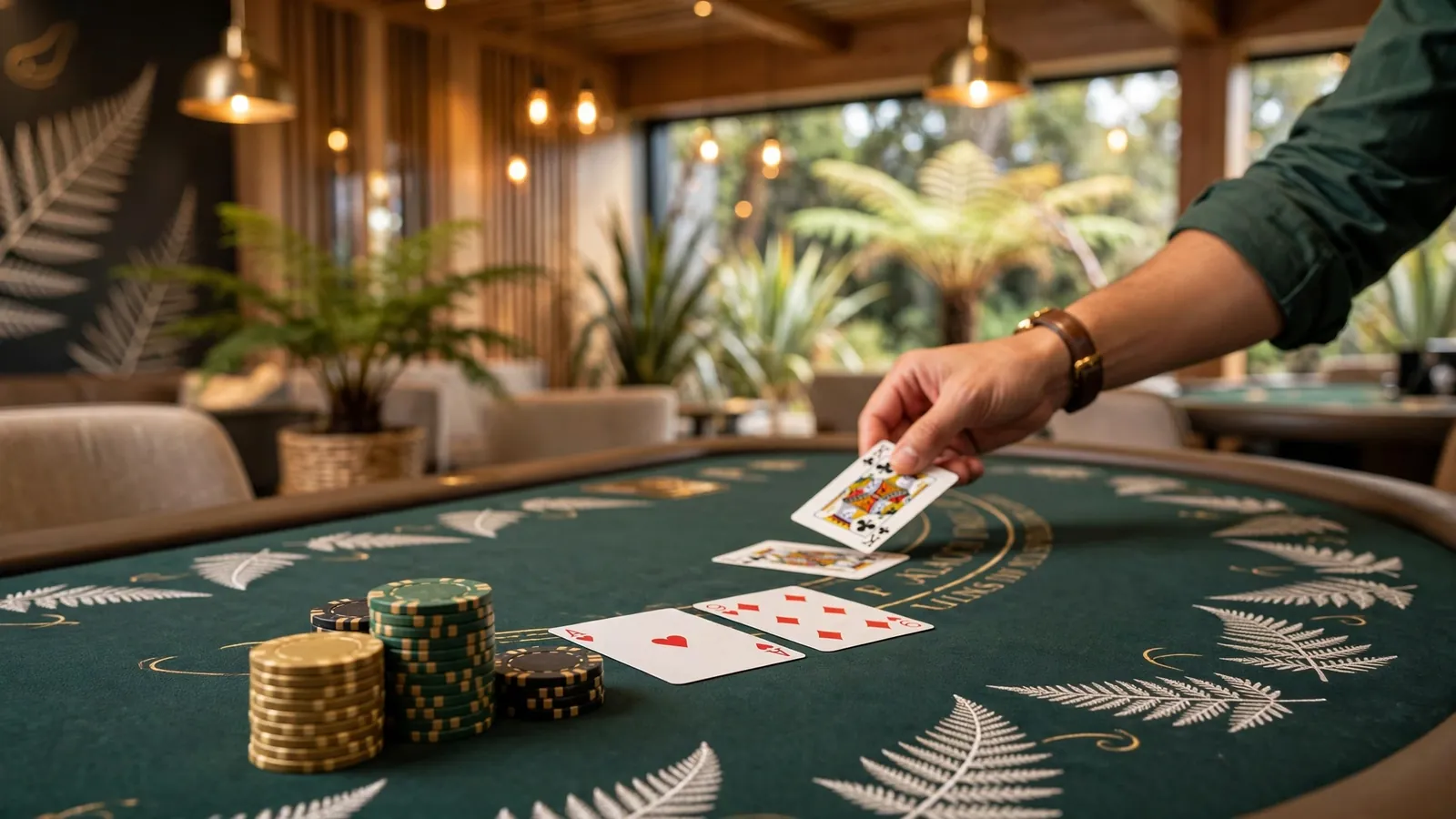
Free live-dealer blackjack is a separate question. The fact that a casino offers free blackjack does not establish that it offers a live table without a stake. A live game may be presented through a stream, while access to play may depend on the table’s own conditions. Without clear details, “free live dealer” should not be read as a promise that a no-cost live table is available. The wording is not the game.
The distinction also gives some context to the question of whether live blackjack is rigged. A live stream shows actual cards being used; an RNG game relies on software shuffles. Those are different dealing methods, not evidence by themselves that a game is fair or unfair. The format alone cannot settle a claim about how a particular game is operated. In a live setting, the stream is part of what can be observed, but observation is not the same as a complete audit of the game.
The appeal of free play is often practical: it can familiarise someone with the pace and layout before money is involved. Yet a quick software game and a live table do not teach identical habits. The first moves briskly; the second carries the pauses, camera angles and turn-taking of a broadcast. One is a simulation of a table game, the other a table game carried through a screen.
A careful description separates three things: whether money is at stake, whether cards are dealt by software or a human dealer, and whether the table is streamed. Treating “free” as an answer to all three makes the label do more work than it can bear. A small word, with a large shadow.
What is the difference between RNG and live dealer blackjack?
RNG blackjack uses software shuffles and moves faster, while live dealer blackjack streams actual cards dealt by a human in a studio.
Is live blackjack rigged?
The format alone does not settle fairness; live streams show physical cards, while RNG relies on software, both being different dealing methods.
Does “free live blackjack” guarantee a no-cost live table?
No, “free” may describe the price of a game, but access to a live-dealer stream may still depend on the specific table’s conditions.
Blackjack Variants, Free Bets and Bonus Conditions
A blackjack variant is not merely a new name for the same contest. Its rules can differ, and those differences may change both the decisions that make sense at the table and the house edge. A variant that looks familiar can still reward a different approach. “Best” therefore has no universal meaning: the relevant comparison is between the rules of a particular game and the preferences of the person playing it.
Free-bet promotions call for a separate kind of scrutiny. The phrase may sound simple, but the offer’s conditions determine what it means in practice. The terms should explain how the promotion works, whether blackjack contributes to wagering requirements, and what maximum bet rules apply while wagering is under way. Blackjack may count differently from other games. A prominent bonus label is not a substitute for those details.
That distinction matters because promotional wording can make a game seem more generous than its conditions are. A free bet does not alter the underlying rules of a blackjack variant, and it does not remove the house edge. Nor does a bonus make a particular strategy reliable. The table and the promotion are two different sets of terms, each with its own consequences.
For live dealer games, the title alone is not enough to establish whether a table is a standard version or a variant. The rules attached to that game are what matter. Comparing them before play can help explain why two tables that both look like blackjack may call for different decisions. Claims about a supposedly superior version deserve the same careful reading as claims about a promotion.
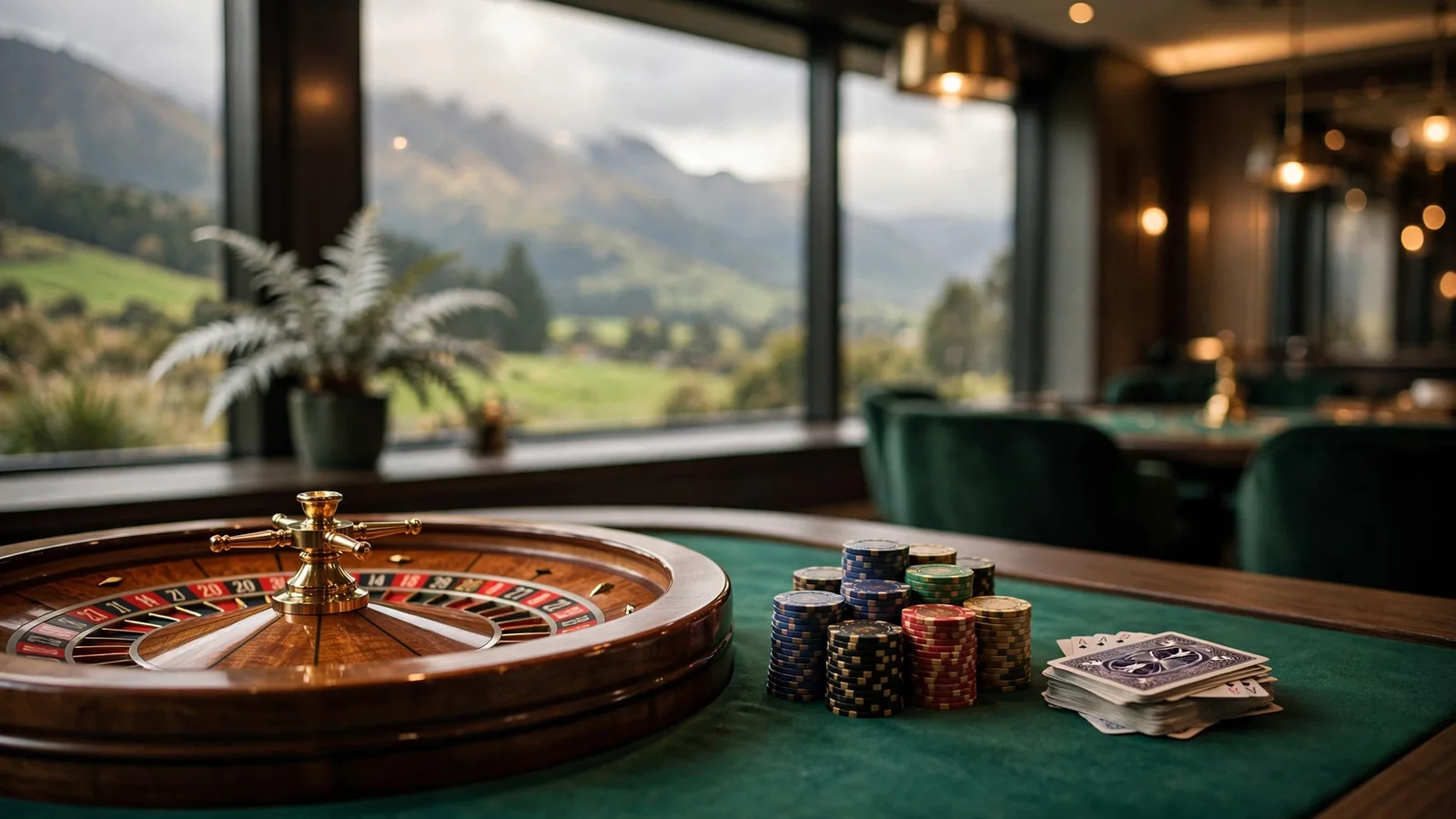
Fine print is the least theatrical part of gambling, and often the most consequential. Trustworthy sites and casinos should make bonus conditions available before real-money play; those conditions are worth reading in full. A budget set in advance can keep a promotion from becoming a reason to spend more, and losses should not be chased. No variant, free bet or betting system can turn an uncertain outcome into a guaranteed win.
The Dealer’s Hand and the Player’s Choices
At a live blackjack table, the contest is not against the other seats. Each hand is measured against the dealer’s: the aim is to finish nearer to 21 without going over. A player can therefore win while another loses, even though both watched the same dealer play.
The choices shape that small contest. Hitting asks for another card, accepting the chance of moving closer to 21 and the risk of exceeding it. Standing ends the player’s turn with the total already held. Neither choice is a prediction of what the dealer has; each is a decision made with incomplete information.
Doubling down and splitting alter the shape of a hand where the table permits them. Doubling down commits the player to a changed wager and a limited continuation; splitting separates a pair into two hands. Surrender may also be available, allowing a hand to be abandoned under the table’s rules. These options are not universal, and their presence does not remove uncertainty. A menu of choices is not a map of the future.
The dealer remains the fixed opponent, while the player’s decisions determine how much risk to take before that hand is settled. That is the game’s social geometry: several people may sit together, but each faces the house one hand at a time. The table can make the process visible; it cannot make the hidden card less hidden.
A live-dealer game gives this familiar contest a human face, but the essential question remains plain: whether to take another card, hold, or use another permitted action. No choice guarantees the result. The cards have the last word.
Written by the editors at Casino Slots Hub NZ.