Roulette Strategies for New Zealanders: The Odds
 Available in US
A clear look at staking patterns, table selection and claims of guaranteed wins, grounded in roulette’s independent spins.

Table of Contents
- Roulette Systems Meet the Wheel’s Arithmetic
- Martingale: A Larger Stake Is Not a Safer One
- What a Roulette Strategy Can—and Cannot—Change
- Double-Ball Claims and the Trouble with Promised Wins
- Choosing a Table Before Choosing a Betting Pattern
- The 2026 Strategy Question, Without a “Best Ever” Verdict
- Why a Sure-Win Roulette Strategy Does Not Exist
- New Zealand Context: Bonuses, Licensing and the Rules Around Play
- D’Alembert and Line Bets: Progression Versus Position
- Flat Betting, Mini Roulette and the Meaning of “Safest”
Roulette Systems Meet the Wheel’s Arithmetic
A roulette system often begins with a story about memory. A run of red is said to make black feel due; a sequence of losses is treated as a signal that a reversal must be near. The wheel, however, has no account of what happened before. Each spin is independent, and previous results do not alter the probability of outcomes on the next one.
That separation is the first test of any roulette strategy. A betting pattern can tell a player how much to stake, when to pause, or which outcome to select. It cannot make the wheel more likely to produce that outcome. The pattern belongs to the player’s decisions; the underlying probabilities belong to the game.
The distinction is easy to lose in the theatre of a live table. A dealer’s rhythm, a ball circling the rim and a screen of recent results give chance a visible history. Colour-coded sequences can make the past look like evidence about the next spin. But a display of previous outcomes is a record, not a forecast. Its presence does not turn a live roulette strategy into one that works by reading the wheel.
Roulette strategies can help you structure your play, but they cannot change the game’s underlying odds. Use this list as a reference when considering which operators may suit your needs in 2026.
Payout speed: 1-3 business days Wintino lists a payout speed of 1–3 business days, a useful detail for players assessing how quickly they may receive a payout.
License: Curaçao Gaming Authority, licence no. OGL/2024/165/0185 BitStarz lists a Curaçao Gaming Authority licence, no. OGL/2024/165/0185.
License: Malta Gaming Authority, licence no. MGA/B2C/370/2017 Play Grand lists a Malta Gaming Authority licence, no. MGA/B2C/370/2017.
License: Tobique Gaming Commission, licence no. 0000091 7Bit Casino lists a Tobique Gaming Commission licence, no. 0000091.
License: Tobique Gaming Commission, licence no. 0000064 Neospin lists a Tobique Gaming Commission licence, no. 0000064.
License: Tobique Gaming Commission, licence no. 0000002 Ricky Casino lists a Tobique Gaming Commission licence, no. 0000002.
License: 07017519840 · Payout speed: 1-3 business days Zotabet lists licence no. 07017519840 and a payout speed of 1–3 business days.
Payout speed: 1-3 business days Lamabet lists a payout speed of 1–3 business days, a practical detail to consider when reviewing its payout information.
License: Malta Gaming Authority, licence no. MGA/B2C/394/2017 N1 Casino lists a Malta Gaming Authority licence, no. MGA/B2C/394/2017.
There is a reason these systems remain appealing. They organise uncertainty into rules. A player may feel less adrift when a plan specifies what to do after a win or a loss, and a measured sequence can make a session feel deliberate. Those are effects on conduct, not on probability. A plan may help keep decisions consistent; it cannot make a losing outcome less possible simply because the plan has been followed.
This is also why “low risk” needs care as a description. A small or steady stake may limit how quickly money is exposed, while a larger stake may change the scale of a win or loss. Neither changes the chance of the selected outcome on the next spin. Risk can be managed in relation to a player’s own limits, but the wheel does not reward discipline with improved odds.
A useful way to assess claims about good roulette strategies is to ask what they actually change. If the answer is the order or size of bets, the system changes the route through a session. If the claim is that it predicts a result or makes a result more likely, it is claiming something different—something no sequence of earlier spins can establish. The distinction can sound austere beside a confident promise of a working system. It is still the important one.
The word “system” can lend an ordinary choice a faint air of machinery: input, rule, output. Roulette has no obligation to complete that neat diagram. A player can alter the stake, switch from one selection to another, or stop playing; none of those actions reaches backwards into the wheel’s arithmetic. Even a carefully observed table remains a table of independent spins.

So, do roulette strategies work? They can work as personal rules for organising bets and setting limits. They do not work as a method for changing the probability of the next result. Every real-money bet can lose, and no staking plan makes that possibility disappear. Players should not risk more than they can afford to lose.
That is the plain arithmetic beneath the elaborate names. The next spin begins without memory.
Martingale: A Larger Stake Is Not a Safer One
Martingale is a staking progression built around losses. After a losing even-money bet, the player raises the next stake, commonly by doubling it, with the intention that a later win will recover the accumulated losses and leave a small gain. After a win, the progression returns to its starting stake. The sequence sounds tidy because it is described from the point of view of the hoped-for recovery. The table does not share that perspective.
Each increase makes the next wager larger; it does not make a winning result more likely. Roulette spins are independent, so a run of losses provides no evidence that a win is due. On a European wheel, the zero is part of the arithmetic: the house edge is 2.70%. Changing the size of a bet cannot remove that edge.
The pressure comes from how quickly the progression grows. A few losses in succession can turn a modest opening stake into a much larger demand on the bankroll. A player may then have to stop because the available funds are insufficient, or because the table’s maximum stake prevents the next increase. If the eventual win arrives only after the progression has been interrupted, it may not recover what was lost. The system’s apparent neatness depends on being able to continue precisely when continuing has become most expensive.
Bankroll Risk
A few losses in succession can quickly turn a modest stake into a demand that exceeds available funds or table limits, making recovery impossible.
That is the central weakness of a “safe Martingale” promise. No staking chart can guarantee the uninterrupted funds and table access that its recovery arithmetic assumes. A chart can show the next stake after each loss; it cannot ensure that the next spin wins, or that the player can place the required wager. Nor does a larger stake protect the money already committed. It concentrates more of it in the next decision.
Reverse Martingale, sometimes called a Paroli progression, turns the sequence around. The stake rises after a win and falls back after a loss, often to its initial level. Its appeal is psychological as much as mathematical: winnings appear to finance the larger bets, while a loss ends the run. Yet each new spin remains independent. A win does not improve the probability of another win, and a losing spin can still consume money from earlier gains or from the original bankroll. The progression changes the shape of possible swings, not the wheel.
The two systems therefore organise risk differently. Martingale increases exposure after losses, when the player is already trying to recover; reverse Martingale increases exposure after wins, when a winning streak may feel like evidence of momentum. Neither feeling alters the pocket probabilities. One escalates under pressure, the other during optimism. Both are still sequences of bets against the same game.
This distinction matters when a roulette game strategy is presented as “advanced” or “optimal.” Those labels can describe a preference for a particular rhythm of staking, but they do not establish a favourable outcome. A roulette strategy chart is a record of instructions, not a forecast. It can help make the progression legible while leaving its underlying risks intact.

The practical limit is simple: no progression makes a real-money wager incapable of losing. Martingale can turn a string of ordinary losses into a sudden demand for a large stake; reverse Martingale can give back part of a winning run. The different tempos are not different odds.
A larger stake is not a safer one. Any roulette play should stay within money that can be lost without affecting essential needs.
What a Roulette Strategy Can—and Cannot—Change
A roulette strategy can organise decisions. It can set a preferred pattern of bets, define when a session ends, or keep stakes consistent. Those choices may make play feel more deliberate. They do not make a wheel more responsive to a plan.
That distinction gets blurred in claims about secure, high-percentage or long-term strategies. Such language can describe a system that appears orderly, or one that performed well in a particular run. It cannot establish that the system will predict future results or preserve a player’s money. Roulette outcomes are random; a previous spin does not give the next one a memory. A strategy changes the arrangement of wagers, not the wheel’s probabilities.
The phrase “most profitable” is especially slippery. Profit depends on outcomes, stakes and the rules of the table, not on the confidence with which a betting pattern is named. A strategy may produce frequent small wins alongside a loss that outweighs them; another may have long losing stretches before a win. Neither pattern, by itself, demonstrates an advantage. Every real-money bet can lose, so a plan cannot turn risk into security.
Roulette outcomes are random; a previous spin does not give the next one a memory, and no strategy can predict future results or preserve a player’s money.
Some systems take their authority from a number in the title. The so-called $150 roulette strategy, for instance, sounds specific before its rules have even been stated. The figure does not tell whether the method changes bet selection, stake size or stopping points, and it cannot certify an outcome. The same caution applies to the 1-3-5 approach: a numbered label is not evidence that the next result can be anticipated. Names make systems easier to remember. They do not make the wheel easier to read.
There are also claims built around the layout of bets, including strategies said to cover thirds of the board. That description concerns where wagers are placed, not a hidden signal in the arrangement of numbers. More coverage can mean a different distribution of possible wins and losses; it does not mean that the wheel has been persuaded to favour one part of its layout. A label such as “immersive” may describe a game’s presentation, but presentation is not a mathematical feature of a wager.
Live roulette can intensify the impression that a strategy is working. A dealer, a visible wheel and a continuous stream of results give chance a social setting: the table acquires a mood, and a run begins to look like a story. Yet a live format does not make earlier outcomes predictive. Nor does a polished interface make a betting system safer. The performance changes; the underlying uncertainty does not.

Even payout percentages need careful handling. A specialist review reports American roulette at 94.70% and European roulette at 97.30%. Those figures describe the payout percentages reported by that review, not a promise that an individual session will return those proportions, or proof that a staking method can achieve them. A percentage is an aggregate measure, not a personal forecast. It offers context for comparing games, not a guarantee attached to a strategy.
The most useful test of any system is therefore modest: what decision does it actually change? If it only changes bet size or the chosen pattern, it has not changed the odds built into the game. If its appeal rests on claims of reliable profit, low risk or special insight during live play, the promise has outrun what a betting plan can do. A session limit may help contain exposure, but no system can make losses impossible. Stakes should never exceed what can be afforded to lose.
Double-Ball Claims and the Trouble with Promised Wins
“Double ball” sounds like a rule, and “double or nothing” sounds like a bargain. Neither phrase, by itself, explains what happens on a roulette table. Double Ball Roulette is a game name; a strategy label is another thing again. Treating the two as interchangeable turns a suggestive title into evidence it cannot provide.
A double-ball roulette winning strategy is often presented as though the extra words settle the important question: what is the chance of a particular result, and what does a winning bet pay? Those answers depend on the game’s rules and wheel, not on the confidence of a headline. A label that promises a doubled stake or a second chance cannot establish either the underlying probabilities or the terms of a payout.
Attention A pattern may be emotionally persuasive, but it is not a signal sent forward by the wheel; each spin remains independent.
The wheel keeps its own accounting. Each spin is independent, so a previous result does not make a particular outcome more or less likely on the next spin. That remains true whether a player has just won, lost, or watched a sequence that seems to be gathering meaning. A pattern may be emotionally persuasive; it is not a signal sent forward by the wheel.
“Double or nothing” is similarly incomplete as a description of a roulette strategy. It might refer to a way of staking, a game feature, or simply promotional language, but those possibilities are not equivalent. Without clear rules describing what is doubled, when the decision occurs and how the bet is settled, the phrase cannot be used to calculate a likely return. A name is not a contract.
This matters especially when a system is called the highest-winning or most successful approach. Such rankings can conceal different measures: the size of a possible payout, the frequency of winning outcomes, or the return across repeated play. One striking result does not establish that a method wins more often, and a high payout does not mean that the odds of collecting it are favourable. “Highest” needs a measure. Without one, it is theatre.
A specialist review reports a payout-percentage range of 92.86% to 96.19% for 100/1 roulette. That figure belongs to a particular reviewed game description, not to every roulette table, every double-ball title or a universal staking method. Even a stated payout percentage describes the game’s return characteristics; it does not promise what will happen in an individual session. The distinction is plain, if less marketable than a guaranteed win.

Online roulette adds no special predictive power merely by appearing on a screen or being described as live. The display may make the sequence vivid: a result arrives, the next spin begins, and the mind starts arranging the past into a forecast. Yet the probability of future outcomes is not altered by that narrative. A double-up plan can change the amount at stake; it cannot make the next result obey the plan.
Claims about Double Ball Roulette deserve the same separation of categories. The game variant is named, but its name alone does not establish how its balls operate, how bets are settled, or whether a particular staking approach has an advantage. Those details should come from the rules of the specific game, not inference from the word “double.” Nor does the title prove that a player can turn a loss into a win on demand.
The promise is doing more work than the evidence. A title may invite hope; the wheel remains indifferent.
Choosing a Table Before Choosing a Betting Pattern
A roulette strategy begins, whether its name suggests patience, streets or a clever progression, with a quieter choice: which wheel is in play. The betting layout can look familiar across tables, but the pockets are not always the same. That difference is not decorative. It changes the starting odds before a stake is placed.
European Roulette has 37 pockets: one is zero, and the rest are numbered. Its house edge is 2.70%. American Roulette adds a double zero, making 38 pockets in all, and its house edge is 5.26%. The extra pocket changes the arithmetic in the house’s favour. A red bet, a street bet and a carefully named pattern do not make that pocket disappear.
Contains 37 pockets (single zero) with a house edge of 2.70%.
Contains 38 pockets (double zero) with a house edge of 5.26%.
Uses a single-zero wheel and includes rules like La Partage and En Prison for even-money bets.
That is why a search for the best way to play roulette online is better answered by inspecting the table label than by borrowing a betting recipe. “European” and “American” are not merely regional styles. They identify wheel layouts with different house edges. When other details are equal, the single-zero table starts with the lower house edge. It is an unromantic distinction, but roulette has never needed romance to collect its due.
French Roulette shares the single-zero arrangement found on a European wheel, while adding rules such as La Partage and En Prison. Their relevance is narrower than the name may imply: they concern even-money outside bets, and take effect when the zero appears. A bet on black or red is an example of the kind of outside wager affected; a street bet is not. The green pocket has its own small jurisdiction.
The table’s rules therefore matter as much as its wheel. A French label alone does not tell the whole story: the relevant question is whether the table offers La Partage or En Prison and how it applies those rules. Those provisions alter the treatment of an eligible even-money wager after zero, rather than changing the number of pockets. A player considering black and red is making a different comparison from someone choosing a street, even while looking at the same layout.
This distinction helps sort useful roulette tips from the mist of system names. A staking pattern can decide how much is placed and where; the wheel and its rules determine the conditions under which those choices are made. Someone looking for a small-bankroll approach, or wondering how a particular street method works, still has to identify the game first. The label “Fisher” attached to a strategy, like any other borrowed name, does not tell whether the table is single-zero or double-zero.
Nor does a familiar digital interface settle the matter. Online tables can present similar layouts, while the game title and posted rules identify the version. Reading those details is not a secret technique. It is basic housekeeping.
The sensible introduction to roulette strategy is therefore less a system than a comparison: count the zeros, note the house edge, and check which special rules govern the wager being considered. A pattern may feel personal. The wheel is not. Before choosing how to bet, it is worth knowing which arithmetic the table has already chosen.

The 2026 Strategy Question, Without a “Best Ever” Verdict
The appeal of a “best” roulette strategy is understandable: a ranking promises to turn a game of chance into a problem with a tidy solution. But a betting system can organise decisions; it cannot make a roulette wheel pay more often. Claims about the most successful approach need to be separated from a more measurable question: what payout does the game offer over time?
A specialist review reports payout percentages of 97.30% for European roulette and 94.70% for American roulette. These figures correspond to the familiar difference between a single-zero wheel and an American wheel with an additional zero. For European roulette, the stated house edge is 2.70%. The percentages describe the game’s long-run mathematical return, not a promise that an individual session will follow that pattern. Nor do they measure the skill of a staking plan.
That distinction matters when considering whether roulette has a strategy at all. There are choices about which bets to place, how much to stake and when to stop. Those choices may shape the size and rhythm of wins and losses. They do not improve the wheel’s payout percentage. A strategy can therefore be useful as a personal rule for managing play, but “best” cannot mean a reliable route to profit.
Strategy vs Probability
- Betting systems can organise decisions but cannot improve the wheel’s payout percentage.
- Long-run mathematical returns are determined by the game rules, not the staking plan.
- Labels like “most successful” often describe short-term results rather than a reliable route to profit.
The label “most successful” is even less stable. Success might mean a brief winning session, a smaller swing in a bankroll, or a larger return across repeated play. Those are different outcomes, and a strategy that appears successful over one short stretch may fare differently later. A neat staking sequence can make a result look deliberate. The wheel remains indifferent.
A specialist review gives 100/1 roulette a payout range from 92.86% to 96.19%. The spread itself is a warning against treating a game name as a complete description of its value. The exact version and its rules matter; a label alone does not establish the return, much less a winning method. A comparison is useful only when it identifies what is being compared.
The same restraint applies to named variations such as Lightning Roulette, First Person Lightning Roulette and XXXtreme Lightning Roulette. Their names are not evidence of a particular mechanic, payout or strategy. Without those details, no sound claim can be made that one offers a special way to win. A vivid title is not arithmetic.
So the best roulette strategy ever is not a settled system waiting to be discovered, and no new calendar year changes that. The more precise answer is that strategy can govern choices, while the table’s rules determine the underlying return. Those are separate jobs. The distinction is plain, if not especially glamorous.
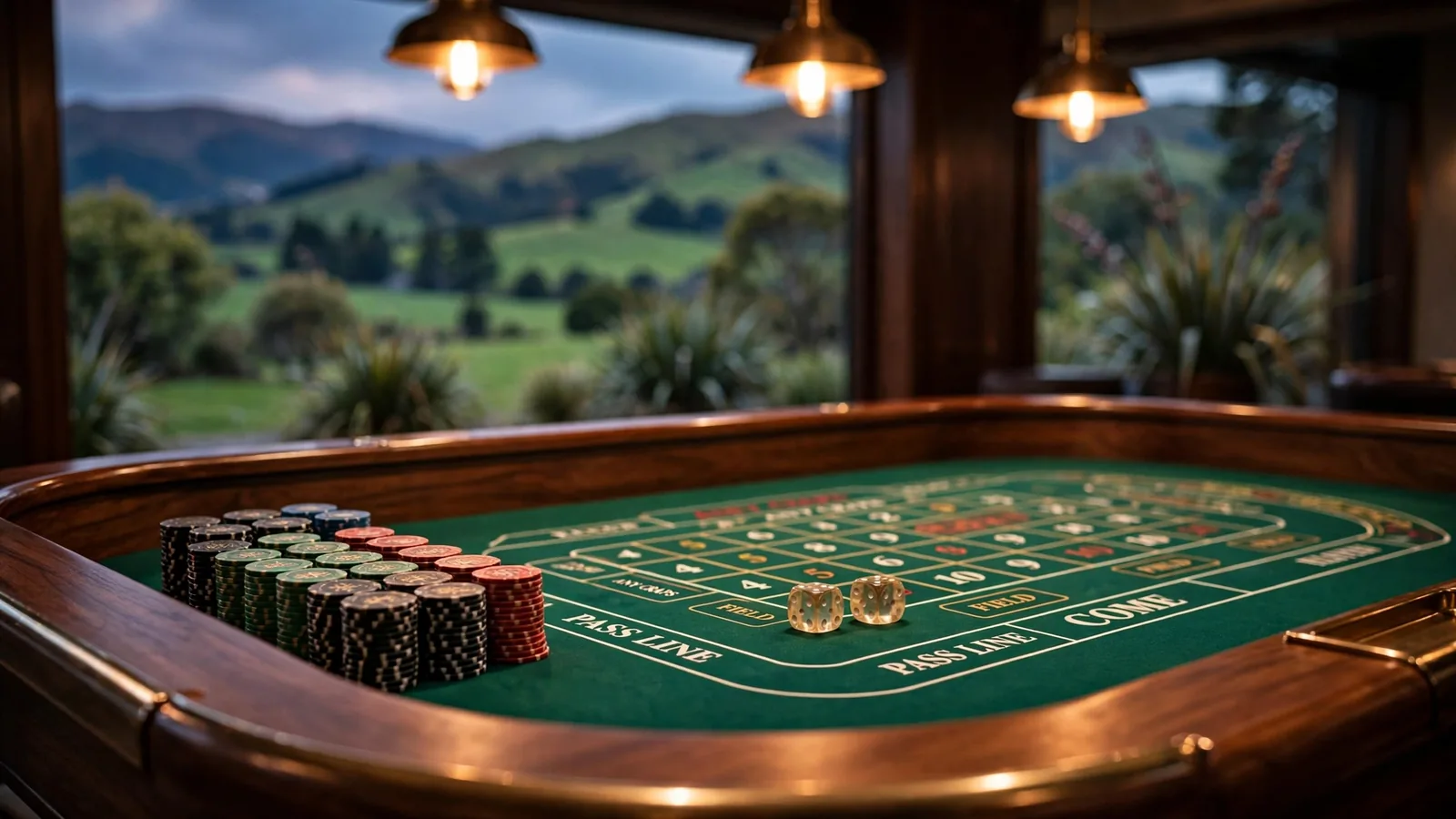
Why a Sure-Win Roulette Strategy Does Not Exist
The wish behind a sure-win roulette strategy is easy to understand: turn an uncertain game into a dependable route to a large payout. But changing the pattern of stakes cannot make a roulette result certain. A progression may alter how much is placed after a win or loss; it cannot ensure that the next spin cooperates. Every real-money bet can lose.
That distinction matters because a larger payout is not the same as a more reliable outcome. A roulette strategy to win big may sound persuasive when described as a sequence with a planned endpoint, but the endpoint depends on results that remain uncertain. No arrangement of wagers makes a losing spin impossible, and a run of wins cannot be treated as proof that another is due. The wheel does not keep accounts.
French Roulette does offer a meaningful improvement for even-money outside bets, such as red or black. Its La Partage rule changes what happens when zero appears: half the stake is returned and the other half is collected. Under En Prison, the bet is held for the next spin; a win returns the original stake without extra winnings, while a loss costs the stake. These rules soften the effect of zero on eligible bets. They do not turn a bet into a promise.
When either rule applies, the house edge on French Roulette falls to 1.35%. That is a real difference, not a verbal flourish. French Roulette therefore gives even-money bets better odds than formats without those protections. Yet an edge is a long-run feature of the game, not a forecast for an individual spin. A favourable rule can reduce the disadvantage without removing uncertainty or guaranteeing a session’s result.
French Roulette
Choosing a table with La Partage or En Prison rules reduces the house edge on even-money bets to 1.35%.
This is where claims of a win roulette strategy often blur two separate ideas: choosing conditions that are less costly, and controlling what the wheel will do. The first is possible. The second is not. Even a player who selects an eligible French table and keeps to even-money bets can see a sequence of losses. The rules change the settlement when zero lands; they do not promise that zero, or any other result, will arrive at a convenient moment.
Electronic roulette machines may make a progression look orderly, with bets entered and results displayed in a clean sequence. The interface changes the presentation, not the basic risk: each real-money wager remains exposed to a losing outcome. No machine-based pattern can make that exposure disappear.
A sensible limit is not a method for winning; it is a boundary around possible loss. Roulette should never involve money that cannot be afforded to lose. The wheel offers outcomes, not assurances. That is the whole bargain.
New Zealand Context: Bonuses, Licensing and the Rules Around Play
In New Zealand, roulette’s rules and the rules governing online casinos belong to different systems. The wheel determines the game’s odds; licensing oversight concerns who may provide online casino gambling and under what conditions. A strategy for roulette cannot bridge that divide.
The Online Casino Gambling Act 2026 established New Zealand’s first domestic licensing framework for online casino gaming. It took effect on 1 May 2026, beginning a transition that runs until 1 December 2026. Providers that were already serving people in New Zealand before the Act began may continue during this period, subject to its transitional provisions. Those that have not applied for a licence must stop providing online casino gambling in New Zealand by 1 December 2026. The full licensed regime is expected to be operational in 2027.

The Department of Internal Affairs is New Zealand’s primary gambling regulator and oversees the online casino licensing framework. The Gambling Commission hears and decides casino licensing applications, issues online casino licences, and approves changes to licence conditions. These are public responsibilities, not features of a betting pattern. A licence does not alter a roulette wheel’s pockets or make a Fibonacci progression more effective.
That distinction matters because offshore online casino gambling was not licensed or supervised by a New Zealand regulator before the new Act. Customers using offshore sites during that period had no domestic government recourse. The change in regulatory framework concerns oversight and provider obligations, rather than a promise of protection from losing a bet.
Bonuses introduce another set of conditions, often written in smaller type than the headline offer. Eligibility rules may limit who can claim them; wagering requirements, expiry dates, game contribution rules and withdrawal restrictions may shape what happens next. Bonus money must be wagered 50 times within 30 days, while winnings from free spins must be wagered 50 times within 7 days. A withdrawal request voids any active or pending bonus. These terms can affect access to promotional funds and related winnings, but they do not improve the underlying chances of a roulette bet.
The 2026 setting is therefore not a new roulette method. It is a change in the framework around online casino providers, alongside the familiar distinction between a promotion’s conditions and the game’s mathematics. Paperwork has its own odds.
D’Alembert and Line Bets: Progression Versus Position
D’Alembert is a staking progression, not a way to read the wheel. In its familiar form, the stake rises by a set unit after a loss and falls by a unit after a win. The intended effect is a measured adjustment rather than an abrupt leap. But the sequence governs only the size of the next wager; it does not make a particular result more likely.
- Use staking plans to organise your budget
- Set clear session limits to manage exposure
- Understand the house edge of the wheel
- Assume a run of losses makes a win “due”
- Treat a betting pattern as a predictive tool
- Risk money that is essential for your needs
A double-your-bet progression takes a more forceful route: after a loss, the next stake is doubled in an attempt to recover the amount lost if a later wager wins. That arithmetic can make losses accumulate quickly, while table limits or a finite bankroll can interrupt the sequence before recovery. A win can also arrive after several losses without making the progression a dependable method. Each spin remains independent.
Labouchere uses a different-looking structure. A player writes a sequence of amounts, stakes the sum of the amounts at its ends, then removes those end amounts after a win or adds the stake to the sequence after a loss. The sequence may feel like a plan with a destination; in practice, it is still a record that changes the size of future bets. Its bookkeeping cannot forecast the next spin.
These systems are often discussed as if the cleverness lies in discovering a pattern the wheel will honour. It does not. D’Alembert, doubling and Labouchere arrange exposure differently, but none changes the wheel’s probabilities or turns past results into evidence about what comes next. A progression may shape how long a session lasts and how sharply its stakes fluctuate. It cannot promise recovery.
Position is a separate question. A line bet, also called a six-line bet, is placed on the table layout across the boundary where two rows of numbers meet. It covers six numbers in those adjacent rows. The term describes the placement and coverage of a wager, not a progression in stake size.
Called bets, by contrast, group numbers by where they sit around the wheel, rather than by how the numbers are arranged on the table. That distinction matters because the table is a betting map, while called bets refer to wheel positions. Confusing the two makes a layout look like a prediction tool.
A staking system concerns the money placed; a bet type concerns the numbers covered. Neither supplies information about the next result. Roulette outcomes are random, and every real-money bet can lose. No progression makes that small sentence disappear.

Flat Betting, Mini Roulette and the Meaning of “Safest”
Flat betting means keeping the stake the same from spin to spin, rather than raising or lowering it in response to results. Its appeal is restraint: a run of losses does not automatically dictate a larger next wager, and a win does not require a change in stake. But steadiness is a way of managing bets, not a way of changing the wheel. Roulette outcomes remain random, and every real-money bet can lose.
That distinction matters when “safest” is used to describe a betting strategy. A fixed stake may make the pattern easier to follow, but it cannot make a particular outcome more likely or remove the game’s house edge. The loss of one stake can still matter; repetition does not turn the next spin into a correction.
Mini Roulette makes the word “small” especially misleading. Its wheel has 13 pockets, yet its house edge is 7.89%. Where La Partage applies, that edge falls to 3.85%. The rule changes the treatment of eligible even-money bets when zero lands; it does not make every bet on the table safer.
A compact wheel, then, is not a measure of generosity. The relevant comparison is the edge attached to the game and the rules in force, not the number of pockets visible on the screen. Flat betting on Mini Roulette remains flat betting on a game with its stated edge. La Partage improves the position for eligible bets, but does not erase risk.
The safest roulette betting strategy is therefore not a progression disguised as protection. Flat betting can keep stakes from escalating, while table rules determine the underlying disadvantage. Neither guarantees a favourable result. And no stake pattern can make a roulette outcome certain.
Do not risk more than can be afforded to lose. A steady stake is still a stake.
Written by the editors at Casino Slots Hub NZ.