Live Casinos in New Zealand: Games and Rules
 Available in US
An overview of New Zealand’s changing online casino rules, live table gameplay, operator licensing, payment options and withdrawal considerations.
Table of Contents
- New Zealand’s Live Casino Market at a Regulatory Turning Point
- What Makes a Casino Live
- The Pace and Mathematics of Live Table Games
- Bitcoin at the Live Casino: Deposits, Withdrawals and Caveats
- Checking a Live Casino Site’s Licence
- Playing Live Casino Games from New Zealand
- Real-Money Play and the Limits of the Live Format
- How Betting Works at a Live Table
- Live Tables, Timed Decisions and the Mobile Question
- How Long Live Casino Withdrawals Can Take
New Zealand’s Live Casino Market at a Regulatory Turning Point
For years, online casino gambling in New Zealand sat in an awkward legal space: services could reach Kiwi players from overseas, while the country had no domestic system for licensing online casinos. The Online Casino Gambling Act 2026 changes that arrangement. Its arrival does not simply rename an existing market; it creates a framework in which online casino operators, including those offering live dealer tables, are to be authorised under New Zealand rules.
The Act took effect on 1 May 2026. That date marks the start of a transition rather than an instant changeover. Operators already serving people in New Zealand may continue during the interim period, subject to the Act’s provisions. The period ends on 1 December 2026, when the new boundary becomes much sharper: only approved operators may legally accept New Zealand players under the regulations.
The distinction matters because a live dealer table is not being treated as a separate corner of gambling law. It falls within the same online casino licence category as online pokies and digital table games. A company cannot treat its streamed tables as a different kind of service simply because a human dealer appears on screen. For regulatory purposes, these offerings belong to the same broad sector.
That approach also gives the licence cap its significance. The Act allows no more than 15 licences for the online casino sector, with live dealer gambling included in that total. It is a ceiling on the number of authorised operators, not a promise that 15 licences will necessarily be issued. The legal structure is therefore selective by design: access to the regulated market depends on approval, rather than on the mere fact that a site is already familiar to players.
A cap is a small number with a large shadow. It turns a formerly open-ended field of offshore services into a market whose lawful participants are limited. For players, the phrase “best live casinos in New Zealand in 2026” consequently sits against a moving legal backdrop. A service’s presence in the country before the transition ends does not, by itself, establish that it will be authorised to remain after the changeover.

The dates divide the transition into two distinct periods. Before 1 December, operators already active in New Zealand may continue under the transitional arrangements. After that point, the permitted group is restricted to the approved operators, with the total number of licences capped at 15. The change is not merely a matter of a new label on a website. It determines which businesses may continue to accept local customers within the new regime.
Applications also matter during the interim. Operators without a licence application must stop serving New Zealand players when the transition ends. Those with an application still awaiting a decision may continue operating while the Department of Internal Affairs considers it, but they must do so without advertising. That distinction means the transition is not a simple switch from “open” to “closed” on one date for every operator. Some services may be waiting on a decision; others will have no route to continue.
The rules also restrict promotion during this period: operators are prohibited from advertising online casino gambling services to people in New Zealand. This gives the transition a restrained public face. A market can be changing rapidly in law without being invited to announce itself loudly.
The country’s new framework is a significant departure from the previous position, but it does not make every past uncertainty disappear at once. The Act establishes domestic licensing where there had been no New Zealand licensing framework for online casinos. Its transition provisions then set out how existing operators move toward the new system. Those are separate steps: creating a legal route to approval, and deciding which operators may use it.
For live dealer gambling, the consequence is straightforward. It is part of the regulated online casino sector, not an exception to it. Its future availability in New Zealand therefore depends on the same limited licensing structure that applies to other online casino products. The screen may show a studio and a dealer; the legal question is whether the operator behind that table is among those permitted to serve the market.
Attention: After 1 December 2026, only approved operators with one of the maximum 15 available licences may legally accept New Zealand players.
New Zealand has not chosen an unlimited licensing model. Nor has the change been postponed until every detail of the new system is settled. The Act began operating in May, while the transition continues toward its December endpoint. Between those dates, operators’ status depends on the transitional rules and the progress of any application. Afterward, approval is the dividing line.
A new boundary, then.
What Makes a Casino Live
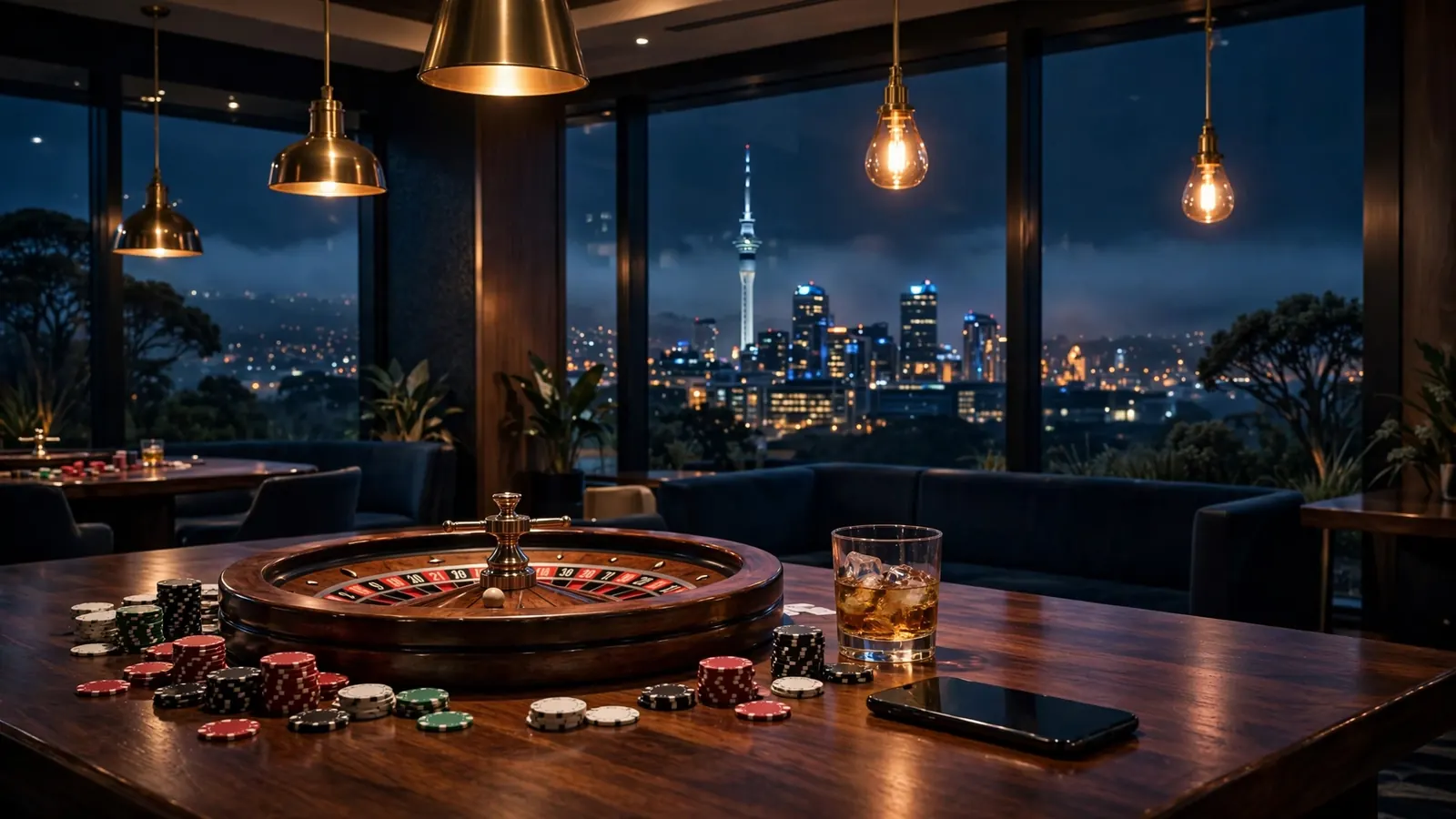
A live dealer game begins with something more stubbornly physical than its screen suggests: a table, a deck of cards or a wheel, and a dealer working in a studio or casino. A camera carries that scene to a player’s screen as it happens. The result is not a recording dressed up as an event, but a broadcast in which the game’s visible actions take place in real time.
That distinction gives the format its name. In an ordinary digital table game, the action is generated by software and displayed on screen. In a live game, the cards are real cards and the wheel is a real wheel. Professional dealers handle the equipment, while the video feed connects their table to people playing remotely. The interface may be digital; the central event is not.
A live casino is therefore less a room than a meeting arranged by technology. The dealer occupies one side of the camera; players, scattered across different places, occupy the other. Each sees the same unfolding round, although none shares the same physical table. That arrangement borrows the old social shape of gambling—a person deals, others watch and take part—and separates it from the room that once made it possible.
The broadcast matters because it supplies evidence of the game’s progress. A card is dealt, a wheel turns, and the feed shows those actions rather than asking software to represent them from scratch. The dealer’s presence gives the proceedings a human rhythm: attention shifts between equipment, the table and the people taking part through the interface. It is a modest kind of theatre, with the props doing the serious work.

The studio is not incidental scenery. Live dealer games are broadcast from a studio or from a casino based in a country, with professional dealers operating the table. The setting makes a shared event possible without bringing everyone into one building. In that sense, the screen does not simply replace a casino floor. It creates another sort of floor, one organised around a camera and a stream.
The player’s interaction happens through the on-screen interface, while the dealer handles the physical game. The live video feed allows that interaction to take place alongside the broadcast, so the experience is neither a conventional video to watch nor a fully automated game to operate alone. There is a person at the other end of the table, and the activity is visible as it unfolds.
This combination helps explain why the format feels different even when the rules of a table game remain familiar. Software can reproduce a card or a wheel as an image; live play puts the object itself in front of the lens. The difference is not that every part of the experience becomes more personal. The dealer cannot turn a broadcast into a private conversation with each participant. Rather, the shared visual event gives the game a human point of reference.
The camera also changes what “being at the table” means. In a physical casino, the table is a place reached by walking into a room. In a live game, it is a view transmitted from somewhere else. The player does not stand beside the dealer, but can follow the same sequence of visible actions and interact while it continues. Distance remains; the format works by making distance less decisive.
That compromise has a quiet social history. Gambling tables have long depended on ritual: a dealer’s gesture, a turn of the wheel, the moment when attention gathers around an outcome. Live streaming carries those gestures into a domestic setting without pretending that the domestic setting has become a casino. The room stays elsewhere. The performance arrives.
A search for the best live casino can make the format sound like a collection of screens to compare, but the defining feature is simpler than any label. A real table is broadcast, a professional dealer conducts the game, and the feed lets remote players participate in real time. The technology joins people to a physical event without making them physically present.
Not quite a night out.
The Pace and Mathematics of Live Table Games
Live blackjack, roulette and baccarat all place a human dealer between the wager and its result, but they ask different things of the player. Blackjack is a contest against the dealer’s hand; baccarat is a prediction about which of two hands will come closer to a target; roulette turns the wager towards the wheel. Their house edges are not interchangeable measures of entertainment or skill. They describe the mathematical advantage built into particular bets, and differ according to the game and, in roulette, the version being played.
Blackjack: a contest with pauses
In live blackjack, the aim is to finish with a hand closer to 21 than the dealer’s, without exceeding 21. The arithmetic sounds simple; the table is less so. Each turn belongs to someone, and the dealer’s actions come after the players’ decisions. A round can therefore move more slowly than blackjack generated by a random number generator, where there are no other players’ turns to wait through.
That change of pace is part of the format, not a change in the goal. A live table makes decisions visible as they unfold, while the software has to keep its record of the round aligned with the physical cards. A barcode scanner reads markings or chips embedded in the cards, allowing the game system to track what has been dealt. The striking detail is not that machinery has entered the casino; casinos have always been full of machinery. It is that the machinery now checks the cards while a dealer handles them in view.
In live blackjack, barcode scanners read markings or chips embedded in the cards, allowing the game system to track the dealt cards while the dealer handles them.
The slower rhythm can make the arithmetic feel more deliberate. It does not make the player’s task simpler, nor does it alter the basic boundary: get nearer to 21 than the dealer, but do not go over. A hand is still a hand, however carefully the software watches it.
Roulette: one wheel, different edges
Roulette offers a contrast. The calculation that matters here is not a hand total but the house edge attached to the version of the game. Live European roulette has a stated edge of around 2.7%; for American roulette, it is around 5.26%. The figures show why the word “roulette” alone is not enough to describe the mathematics of a wager. The version matters.
A house edge is a long-run measure of the game’s built-in advantage to the casino, not a forecast of what a particular round will do. It does not tell a player which result will come next, and it does not turn a short session into a tidy statistical sample. On an individual round, chance remains unruly. The edge belongs to the structure, not to a prediction.
That distinction is easy to lose in a live setting, where the wheel is physical and the result arrives in a shared moment. A visible wheel can lend chance a ceremonial quality: everyone watches the same object, and the outcome seems to acquire a story as it lands. The mathematics is less theatrical. The stated difference between European and American roulette is the more useful comparison than any impression created by the studio.
Baccarat: small differences, separate bets
Baccarat reduces the central question to which hand comes closest to 9. The objective is to predict whether the player or banker will have the higher hand value. The possible wager choices include banker, player or a draw, but the stated house-edge figures distinguish the first two: around 1.06% for a banker bet and around 1.24% for a player bet.
Those percentages are close, but not identical. A lower edge does not mean a banker result is assured, or that a player bet is a poor choice in every round. It describes the mathematical terms of the wager over time, not the fate of the next hand. Baccarat’s compact objective can make the game appear almost spare: two hands, a target, a prediction. Beneath that simplicity sits a difference between the bets that is measurable, even if no single outcome can settle it.
Across the three games, “live” describes the setting and pace, not one shared mathematical profile. Blackjack asks for a decision against the dealer; roulette’s stated edge changes with the wheel version; baccarat assigns different edges to banker and player wagers. The human presence may make each round feel particular. The arithmetic remains indifferent.
Slow hands. Different odds.
A contest against the dealer’s hand where the aim is to reach closer to 21 without exceeding it.
A game where the house edge varies by version, typically around 2.7% for European and 5.26% for American roulette.
A prediction on whether the player or banker hand will be closer to 9, with slightly different house edges for each bet.
Bitcoin at the Live Casino: Deposits, Withdrawals and Caveats
Bitcoin gives live dealer casino payments a different character from transactions denominated in New Zealand dollars. It is a payment method rather than a table-game feature: the cards, wheel and dealer remain part of the live game, while Bitcoin concerns how funds move into or out of an account. That distinction matters because a payment option can affect the bookkeeping around play without changing the rules of blackjack, roulette or baccarat.
A specialist review describes Bitcoin, Neteller and Skrill as methods associated with fast deposits or withdrawals, while noting that limitations or fees may apply. Those qualifications belong beside the headline claim. “Fast” is not a complete description of a payment route, and it does not mean every operator handles every method in the same way. The review’s account is a report about payment options, not a promise that a particular transfer will be immediate, cost-free or available on every live table site.
Bitcoin also asks for a little more attention to the unit in which a balance is displayed. Many operators allow deposits and withdrawals in NZD, which keeps the stated account amount in the currency used for everyday spending in New Zealand. Where Bitcoin is offered, it is worth distinguishing the currency used to fund an account from the currency shown in its balance. The two may not be the same. A familiar number on screen can conceal a different payment denomination beneath it.
There is a social history in that distinction. Casino accounts have long borrowed the language of ordinary money—deposit, balance, withdrawal—while digital payment methods make the underlying transaction less visible. NZD presents itself plainly; a Bitcoin option signals a different route. Neither label, by itself, tells the whole story of what a player will receive after fees or other limitations. The convenience is only one part of the arithmetic.
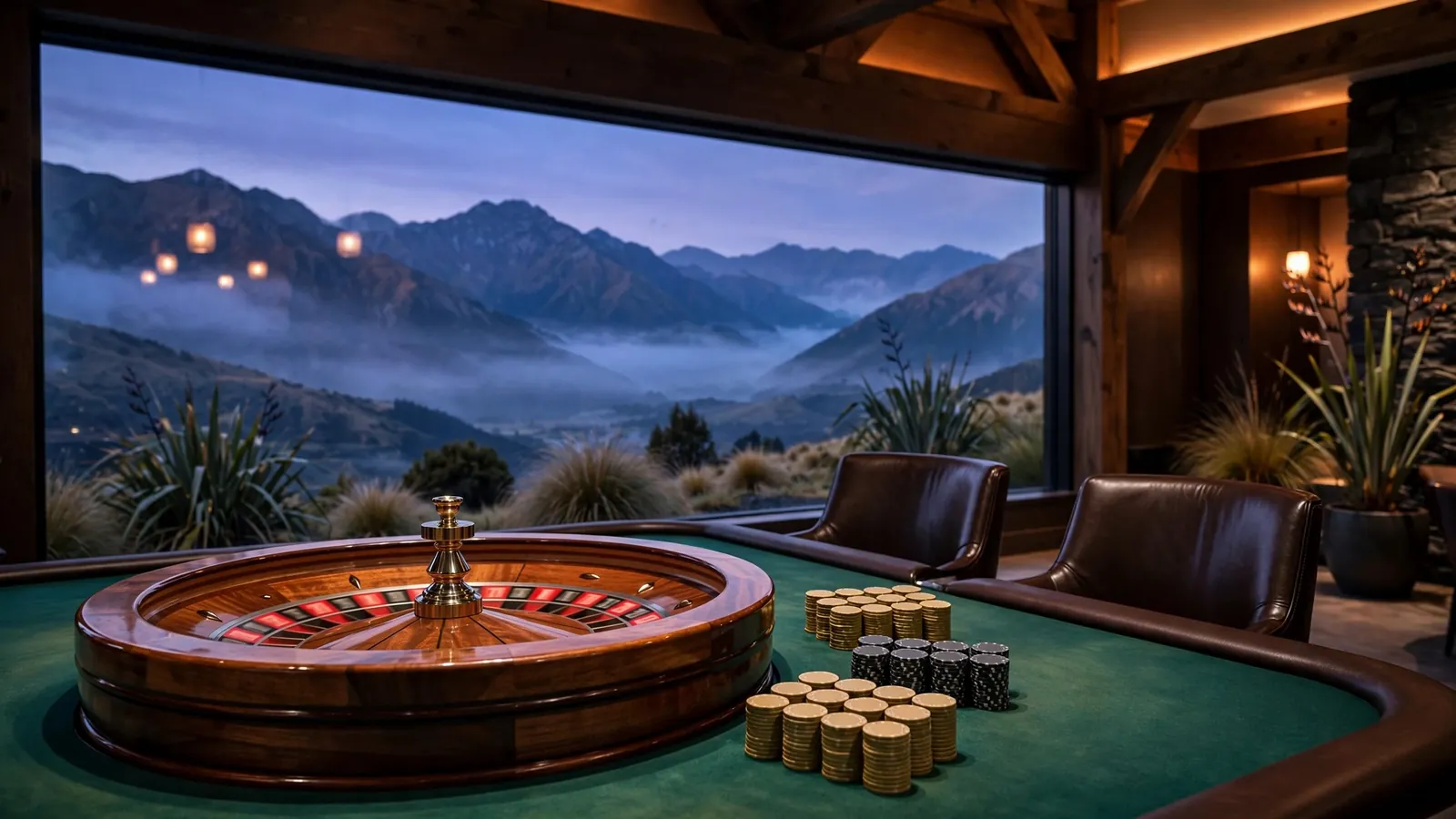
A live croupier casino is built around a public performance: the table is visible, the dealer’s actions are broadcast, and the player’s decisions happen within that shared sequence. Payments sit outside the camera’s frame. They are administrative, but not trivial. A player may be choosing between a New Zealand-dollar transaction and a digital-currency method before the first card is dealt, and those choices can shape how clearly the account’s money is understood. The table is theatrical; the cashier is not.
Bitcoin, Neteller and Skrill are often grouped together in descriptions of fast payment methods, but they are not interchangeable labels. The particular restrictions or fees can differ, and the existence of a method in a payment menu does not establish that every transaction involving it has identical terms. The useful question is not whether a site has a fashionable payment logo, but what its own payment conditions say about deposits and withdrawals. A logo is not a contract.
For NZD users, the appeal is straightforward: the account can be handled in the local currency rather than treating every amount as a conversion puzzle. That does not make all payment routes equal, nor does it remove the need to read the terms attached to a chosen method. For Bitcoin users, the appeal is the availability of a digital-currency route; its practical value depends on the operator’s stated conditions and any applicable charges or limits. The method should be judged by those particulars, not by the speed adjective alone.
Promotions can complicate the picture further. A live casino bonus or other live casino promotion is separate from the payment method used to fund an account. The presence of an offer does not explain how Bitcoin or NZD transactions are processed, and a deposit method does not by itself establish that an offer applies. Keeping the cashier terms and promotion terms distinct prevents one appealing label from doing the work of another.
The payment decision is therefore less glamorous than the live table, and more consequential than its menu suggests. Bitcoin is one available route; NZD is another possibility at many operators. Specialist reviews describe fast methods, including Bitcoin, Neteller and Skrill, but also flag potential limitations or fees. In a market where the smallest print often carries the practical meaning, that caveat deserves the last word. Not the logo.

Checking a Live Casino Site’s Licence
A licence can look reassuring in a footer and still leave basic questions unanswered: which company holds it, which regulator issued it, and whether the authorisation covers the site that is actually taking deposits. For Kiwi players comparing a live casino site, those details matter more than a polished badge. New Zealand does not issue a Kiwi-specific gambling licence, so an offshore operator cannot be checked against a domestic casino licence of that kind.
That distinction is easily blurred. A site may display an overseas licence, but that does not make it licensed by New Zealand or place it under New Zealand regulatory supervision. The relevant starting point is the operator’s own licensing information: the legal name of the company, the regulator it says oversees it, and the licence reference, if one is provided. A brand name alone may not identify the legal entity responsible for the service.
The next step is to check the claim with the named gambling body. A regulator’s own information is more useful than a logo or a sentence on the casino’s homepage. The company name and any licence details should correspond with the regulator’s record; if the site names one company but the authorisation belongs to another, the connection should be made clear rather than left to guesswork. The domain also deserves attention. A licence held by a business does not, by itself, establish that every site using a similar name operates under that authorisation.
A missing or unclear detail is not proof of wrongdoing, but it is a reason to pause. The same applies when a licence number cannot be matched to the stated operator, or when the site gives no identifiable regulator. “Licensed” is not a complete answer unless the licensing body and responsible company can be identified. Nor does an overseas licence guarantee that a customer will have the same routes for complaint or redress available under New Zealand oversight.
Checking a Licence
Find the legal name of the company behind the brand and the regulator they claim oversees them.
Compare the company name and licence reference with the records held by the named gambling body.
Check the operator’s licence status with the New Zealand Department of Internal Affairs to separate claims from official authority.
The Department of Internal Affairs is the relevant place to confirm an operator’s licence status. That check helps separate what a casino claims about itself from what can be established through the New Zealand authority. The absence of a Kiwi-specific licence should not be mistaken for a gap that an offshore badge fills: the two are different things. A foreign regulator’s authorisation is evidence of oversight in its own jurisdiction, not a New Zealand licence.
There is also a difference between checking a licence and judging the quality of a casino. A valid authorisation does not establish that every table will suit a particular player, and attractive presentation is not evidence of regulatory standing. These are separate questions. The first concerns who is accountable for the gambling service and under which regulator; the second concerns the experience offered by the site.
For an offshore operator, a careful check therefore has a plain order: identify the legal company behind the brand, identify the gambling body said to regulate it, compare the details with that body’s information, and confirm the operator’s licence status with the Department of Internal Affairs. If the claims do not line up, the site has not answered the question. A badge is not a verdict.
Playing Live Casino Games from New Zealand
Choosing a live casino in New Zealand is easier when you can check the specific details available for each operator. Use these verdicts as a concise reference when considering your options for 2026.
Payout speed: 1-3 business days Wintino lists payouts as taking 1–3 business days.
License: Curaçao Gaming Authority, licence no. OGL/2024/165/0185 BitStarz lists a Curaçao Gaming Authority licence, number OGL/2024/165/0185.
License: Malta Gaming Authority, licence no. MGA/B2C/370/2017 Play Grand lists a Malta Gaming Authority licence, number MGA/B2C/370/2017.
License: Tobique Gaming Commission, licence no. 0000091 7Bit Casino lists a Tobique Gaming Commission licence, number 0000091.
License: Tobique Gaming Commission, licence no. 0000064 Neospin lists a Tobique Gaming Commission licence, number 0000064.
License: Tobique Gaming Commission, licence no. 0000002 Ricky Casino lists a Tobique Gaming Commission licence, number 0000002.
License: 07017519840 · Payout speed: 1-3 business days Zotabet lists licence number 07017519840 and payouts of 1–3 business days.
Payout speed: 1-3 business days Lamabet lists payouts as taking 1–3 business days.
License: Malta Gaming Authority, licence no. MGA/B2C/394/2017 N1 Casino lists a Malta Gaming Authority licence, number MGA/B2C/394/2017.
Kiwi players are not barred from accessing international or offshore gambling sites that offer live dealer games. The absence of a domestic online-casino licensing framework does not, by itself, prevent someone in New Zealand from playing at one of those tables. Access and local authorisation are separate questions.
That distinction can be easy to miss. A site may accept play from New Zealand without being a casino licensed under a New Zealand system. The country’s lack of a domestic framework describes how online casino businesses are regulated locally; it does not mean that every offshore service is inaccessible to Kiwi players. Nor does a player’s ability to reach a table turn the overseas operator into a domestic one.
The live format does not change that basic position. Whether a game is streamed from an international studio or another country-based casino, Kiwi players can take part through an offshore gambling site. In that sense, playing live casino online from New Zealand is possible even though the country has not had a domestic licensing framework for online casinos.
This is a question of access, not a local endorsement. The legal position for players should not be confused with the status of the business supplying the game, or with the existence of a New Zealand-based casino. New Zealand’s rules have historically kept online casinos from being based domestically, while people could still reach services operating from overseas. A border can be firm in law and porous on a screen.
The distinction matters because the familiar language of “available” can blur several different things: a site can be reachable, a player can be allowed to participate, and the operator can still be offshore rather than part of a domestic system. Those are not interchangeable descriptions.
Access to offshore gambling sites is separate from local authorisation; Kiwi players can access international live dealer games even in the absence of a domestic licensing framework.
For Kiwi players, then, live dealer games at international or offshore sites are accessible; the country’s lack of a domestic online-casino framework is a separate fact about how the market is organised. Neither point should be mistaken for a claim that offshore platforms are New Zealand casinos. The table may be only a video feed away. The jurisdiction is not.
Real-Money Play and the Limits of the Live Format
Live dealer tables are generally built for real-money play, not as a free demonstration. A casino must cover the considerable cost of running a live table, with its dealer and studio operating as part of the service. That makes the format different from a game that can simply be offered in a no-stakes version without the same live operation behind it. The practical consequence is that a free-play option may not be available, even when a casino offers other games in a demonstration mode.
There is a small social distinction here. Free play lets a person inspect a game without placing a wager; a live table, by contrast, is a staffed performance whose costs continue whether or not a particular player joins in. The table is not merely a set of rules on a screen. It has to be run. No rehearsal room.
Real-money play also does not make the live feed immune to interruption. A specialist review reports that technical problems can occur during live dealer games. The existence of a broadcast and interactive table depends on technology working well enough to carry the session, so occasional disruption is a possibility rather than an impossibility. The report does not establish how often issues arise or what form they take, so claims about particular causes or remedies would go beyond what is known.
For anyone considering whether to play live casino games online, these limits matter more than any promise of a flawless experience. Free access may not be offered because the live format carries operating costs, while the stream itself can encounter technical trouble. Those are features of the service model, not peculiarities of a specific table or a judgment on the players who prefer it.
The phrase “real live casino” can sound like a guarantee of uninterrupted presence. It is better understood as a description of a format: a staffed table delivered through a live feed. Real, but still mediated by technology.
How Betting Works at a Live Table
At a live baccarat table, betting begins with a choice between the banker’s hand and the player’s hand. A third possibility sits alongside them: a draw. The labels describe the two hands dealt in the round, not a contest between the player at home and the dealer. The dealer manages the cards; the wager is on which hand will finish closer to the game’s target.
That small distinction matters. A bet on the player does not mean a bet on oneself, and choosing the banker does not make the dealer an opponent. The table offers three possible results—banker win, player win or draw—and the stake is attached to a predicted result before the hand is settled. The ritual is simple, though the names invite a little confusion.
The betting window is part of the decision. Some live baccarat tables require action within a set period, so a wager cannot be left undecided indefinitely while the round proceeds. Once that table’s allotted time has passed, the chance to place a bet for that hand is gone. The specific constraint belongs to the table in use; it is not a universal clock shared by every version.
This makes a live bet less like filling in a form at leisure and more like making a choice in a public room whose dealer is waiting for the table to be ready. Other participants are present, and the round has its own schedule. There is no need to mistake speed for complexity: the central decision remains which outcome to back. But the time limit can make even that modest choice feel more immediate. A narrow menu. A moving clock.
Live Tables, Timed Decisions and the Mobile Question
A live table runs to a visible rhythm: the dealer prepares a round, betting opens, and then the window closes. Most live games give players only a limited period to place a bet. That boundary keeps the action moving, but it also makes the session less like browsing a menu at leisure and more like joining a room whose proceedings are already under way.

The clock changes the character of a decision. A player has to settle on an option before the round begins, while the dealer and other participants follow the same sequence. There is little space for prolonged reconsideration once betting has closed. The result is faster gameplay, though not necessarily the quick, solitary pace associated with a digital game that resolves without waiting for a table.
This timed structure is part of what distinguishes a live table casino from a purely screen-based round: the pace is organised around a shared event. The dealer’s actions set the order, and the betting window marks the point at which spectators become participants. A session therefore has pauses and bursts, not one continuous stream of decisions.
The mobile live casino question is best understood through that same table rhythm. A session still depends on noticing when betting is open and making a choice before the dealer moves the round forward. The essential constraint is time, not the device in someone’s hand. A small screen may make the scene feel more intimate, but it does not alter the table’s clock.
That clock is the quiet organiser. It gives live play its cadence: open, decide, close, deal. The table moves on.
How Long Live Casino Withdrawals Can Take
Withdrawal speed depends partly on the payment route, but published timings should be treated as a snapshot rather than a promise. A specialist review gives one comparison: crypto payouts may clear in under an hour, while POLi and e-wallet withdrawals are listed at 24 to 48 hours. Bank transfers are given a longer window of 5 to 7 business days.
That gap can make crypto look like the obvious choice for a live casino fast withdrawal. Yet a stated processing time is not necessarily the time until funds appear in an account. Operator checks, payment-provider handling and the receiving service can all shape the wait; the quoted figures alone do not establish how a particular withdrawal will proceed.
The comparison is also time-sensitive. Payment arrangements change, and a review’s figures describe the service it assessed, not every casino or every transaction. POLi, e-wallets, crypto and bank transfers are therefore best understood as routes with different reported timelines, rather than a universal speed ranking.
There is a less glamorous distinction between “processed” and “received.” A casino may complete its part before another institution finishes moving the money. The clock has more than one keeper.
Can New Zealand players play real-money live dealer games at offshore casino sites?
Yes. New Zealand players are not prohibited from playing at offshore sites, but they should check that a site is regulated by a recognised gambling body and confirm its licence status with the Department of Internal Affairs. From 1 December 2026, only approved operators may legally accept New Zealand players under the new rules.
How do live casinos work?
A live casino streams a real table, cards or wheel from a studio or casino, where a professional dealer runs the game. Players watch the live video feed and place bets through the online interface.
How fast do live casino withdrawals arrive?
Crypto payouts often clear in under an hour. POLi and e-wallet withdrawals typically take 24 to 48 hours, while bank transfers take 5 to 7 business days.
What is a live casino dealer?
A live casino dealer is a professional who runs a real table game, such as blackjack or roulette, while it is broadcast to online players. Players can watch the dealer and interact through the game interface.
Published by the Casino Slots Hub NZ team.