Craps Gambling in New Zealand: How the Game Works
 Available in US
Craps turns the result of two dice into either a settled wager or a sequence of bets that continues across rolls.

Table of Contents
- Two Dice, and a Bet on What Comes Next
- The Dice Set the Terms
- The Come-Out Roll and the Point
- When a Round Continues
- The Craps Table, in Person or on Screen
- What Craps Means in a New Zealand Casino
- Online Craps in 2026: A Market in Transition
- Playing Online: Mobile, Live and Practice Formats
- A Strategy Built Around the Point
- Betting Systems Meet the House Edge
Two Dice, and a Bet on What Comes Next
Craps begins with a compact proposition: two dice are rolled, and money is staked on what they will show. The wager may concern the result of a single roll or what happens across a series of rolls. That distinction gives the game its shape. A pair of small objects can settle a bet immediately, or set one in motion.
The dice do not carry a story of their own. They produce a number, and the player’s wager supplies the meaning: this result matters, or that one does; this roll settles the question, or another is needed. Craps is therefore less a contest between players than a shared act of interpretation. Everyone watches the same fall, but the result can have different consequences for different bets.
That is the basic idea behind craps gambling. The subject of the wager is not a hand assembled from cards or a sequence chosen by a player. It is the outcome of two dice, considered either on its own or as part of a longer chain of rolls. The uncertainty is plain and visible. The rules turn it into a system.
There is something unusually public about this arrangement. A roll cannot be privately improved once it has begun; its result arrives in the open. The wager, by contrast, belongs to the person who made it. One shared event, several private stakes. That division between common spectacle and individual risk is part of the game’s enduring appeal, though it is also why the rules matter: a number is only an outcome until the bet defines what it means.
The phrase “gambling craps” may sound like a category, but the game’s central object is simpler than the label. A player predicts something about the dice and places a wager on that prediction. The prediction may be narrow, tied to the next roll, or may remain unresolved while a series of rolls unfolds. In either case, the dice supply the event; the wager determines the financial consequence.

This also explains why a table can feel busy before anything dramatic has happened. The action is not merely the physical roll. It is the collection of expectations attached to it. People may be waiting for different outcomes, and the same number can settle one wager while leaving another alive. The dice are impartial in the strictest sense. Their audience is not.
Craps makes chance legible by giving it a small vocabulary: two dice, a result, and a bet about what comes next. Its rules do not remove uncertainty; they organise it. That is a modest invention, but a durable one. The roll remains beyond anyone’s control, while the wager gives each spectator a reason to care. Two dice. Many expectations.
The Dice Set the Terms
Before the shooter rolls, the bets are placed. That order gives craps its particular tension: the wager comes first, while the dice have not yet supplied an answer. The person handling them is not simply demonstrating a game of chance. Their roll is the event around which the table’s decisions are arranged.
Two dice are the instruments, but the important distinction is between the act of rolling and the terms already attached to it. A bet names an outcome or a sequence of outcomes that matters to the player; the dice then decide whether that expectation survives. The rules do not wait for the shooter to act before defining what counts. They are in place beforehand.
This sequence also makes the shooter’s role narrower than it may appear. The shooter supplies the roll, not the wager’s meaning. A roll can matter differently to different players because their bets may concern different results. The same physical event therefore carries several interpretations at once, each governed by the choice made before the dice moved.
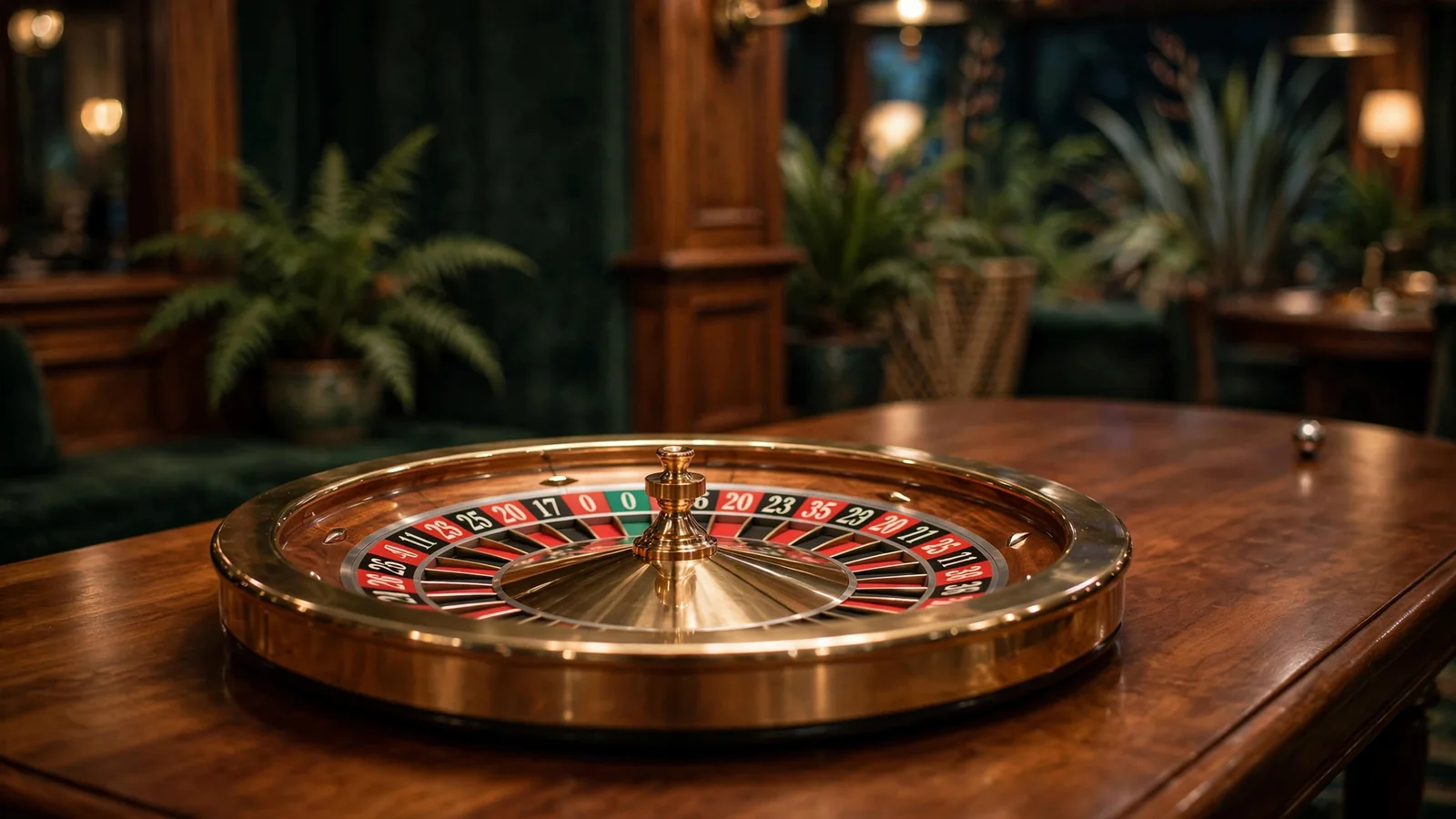
There is a small piece of theatre in that arrangement. The table waits on a person’s hands, yet the person does not control what the dice will settle. The wager is deliberate; the outcome is not. Craps gives that imbalance a public form, with decisions made in view of other people and resolved by a shared event. It is not a private calculation disguised as a spectacle. The spectacle is part of the calculation.
The sequence is spare: bets first, roll after. That simple order keeps the game legible even when several people are involved. Everyone’s attention gathers around the same action, while each wager retains its own terms. The shooter becomes the centre of the moment without becoming its author.
This is why the dice seem to set the terms, although the rules and wagers have already done so. Their roll closes the distance between expectation and result. Until then, the table contains possibilities rather than answers. Then the dice move, and the waiting ends.
The Come-Out Roll and the Point
The come-out roll is the opening decision in a round of craps. Its name marks a beginning, but the roll does more than start the action: it sorts the principal bets into immediate wins, immediate losses and wagers that must wait. The same total can therefore mean different things depending on which side of the table a bet occupies.
The possible totals fall into three groups. A 7 or 11 is called a natural. A total of 2, 3 or 12 is called craps. The remaining listed totals—4, 5, 6, 8, 9 and 10—establish a point. These names are not merely labels for the dice. They describe what the opening result does to the round.

For a Pass Line bet, the natural is favourable: 7 or 11 settles the wager as a win on the opening roll. A 2, 3 or 12 has the opposite effect, and the bet loses at once. A point number does neither. It gives the Pass Line wager a number to wait for, carrying it beyond the opening decision.
The Don’t Pass bet reverses much of that opening pattern. A 2 or 3 brings a win, while 7 or 11 ends the wager in a loss. A 12 is treated differently: rather than paying or taking the bet, it leaves the Don’t Pass wager in a push. The stake is neither won nor lost on that result.
That distinction on 12 is small in wording and large in consequence. It prevents the two sides from being perfect mirror images. On a 2 or 3, Pass Line and Don’t Pass reach opposite outcomes. On 7 or 11, they do so again. But when 12 appears, the Pass Line bet loses and the Don’t Pass bet is returned without a win. The table’s grammar has an exception.
When the opening total is one of the point numbers, neither main bet is decided yet. The roll has assigned the round its point, and the opening phase gives way to a contest involving that number. This is why a point is not simply another kind of immediate result: it changes what counts as a resolution. The Pass Line wager has survived the come-out roll, but it has not won; the Don’t Pass wager has likewise avoided an immediate decision.
A total of 7 or 11, which results in an immediate win for Pass Line bets on the come-out roll.
A total of 2, 3 or 12, which leads to an immediate loss for Pass Line bets on the come-out roll.
A total of 4, 5, 6, 8, 9 or 10, which establishes a point and carries the wager beyond the opening decision.
Craps can look like a game of quick verdicts, and the come-out roll certainly delivers them for some bets. Yet its most consequential result may be the one that refuses to settle anything. A point turns a single throw into a condition that the round must now meet. The dice have named the terms. The answer can wait.
The opening roll is therefore a compact map of the game’s basic tension: some totals close the wager immediately, while others defer its fate. Pass Line and Don’t Pass place opposite expectations on that map, with the push on 12 as its deliberate asymmetry. No elaborate system is needed to see the design. One roll, several meanings.
When a Round Continues
Once a point has been established, the opening decision is no longer the immediate test. The shooter keeps rolling, and the Pass Line and Don’t Pass wagers wait on the order in which two possible results appear: the point or a 7. The dice have narrowed the question, but they have not answered it.
For a Pass Line bet, the point must return before a 7. If it does, the bet wins. If a 7 appears first, the bet loses. The same two numbers therefore remain in play, but their order matters: a point arriving after a 7 cannot rescue the wager, because the seven has already settled it.
A Don’t Pass bet reverses that contest. Its player wins when 7 comes before the established point. If the point returns first, the bet loses. There is no special advantage in the number itself; the wager is about which of the two results arrives first.
That sequence can make the continuing phase feel like a small study in patience. A roll that is neither the point nor 7 does not settle these bets, so the contest remains open. The shooter rolls again, and the same condition applies. The table is waiting not for any dramatic combination, but for one of two familiar outcomes to arrive ahead of the other.

This is the central distinction in craps gambling rules after a point has been set. Pass Line and Don’t Pass players are attached to opposite outcomes, yet both depend on the same race between the point and 7. The game does not ask whether the point will appear at some indefinite later moment; it asks whether it appears before the 7 interrupts the sequence.
The simplicity is deceptive. Each roll is a fresh physical event, while the bets carry the memory of the point already established. That is why the same number can have a different significance from one stage of a round to another. Once the point exists, the table’s terms have changed.
No grand resolution. Just order.
The Craps Table, in Person or on Screen
A craps table is a social machine as much as a gaming surface: one person rolls, others watch the same pair of dice, and bets gather around a result that has not yet arrived. In a physical casino, the table makes that shared attention visible. Online, the game is presented through a screen, but the distinction between a table-game format and a live casino format still matters. The first describes the game’s category; the second points to a presentation involving a live dealer.
A specialist review describes craps as available in table-game and live-casino formats on many New Zealand casino sites. That is a report about what such a review found, not a permanent inventory of the market. Games can be added, withdrawn or made unavailable, and a label alone does not establish what a particular service currently offers. Nor does the word “table” promise a particular layout, camera view or set of controls. Those details belong to the individual presentation.

The live version has a different emphasis. A specialist review reports that online craps in New Zealand may be offered with live dealers. In that format, the screen carries a dealer-led game rather than presenting only a digital interface. The human presence changes the texture of the experience, though not the underlying fact that craps turns on wagers associated with two dice. A live image is not the same thing as a physical table shared by everyone watching it. It is a mediated event, delivered to separate screens.
That distinction has a quiet social consequence. At a real table, the roll becomes common property: several people can follow the same action at once, even while their interests differ. On a screen, the scene is framed and transmitted. A dealer can make the process feel more immediate, but the participants remain apart. The room has been compressed into an image. The image does not abolish distance.
The formats should also be kept separate from the law governing who may provide remote interactive gambling. A game appearing on a website does not, by itself, mean that its provider is authorised under New Zealand’s emerging system. Remote interactive gambling is prohibited as a domestic offering under the existing framework, while the 2026 Act establishes a transition towards domestic licensing. Offshore sites may be accessible, but customers using an unlicensed platform do not have the same player protections. Availability and protection are not synonyms.
This matters because the screen can make a service seem settled when its legal status is changing. A table-game label identifies a type of game; “live” describes how it is presented. Neither term certifies the operator, supplies local safeguards, or turns a remote service into a New Zealand-licensed one. The distinction is plain. The consequences are not.
Craps can therefore appear in more than one visual form without becoming a different wager in principle. What changes is the setting: felt and shared room, or a digital table carried by a screen. What does not follow is that every version is equally protected, permanently available, or locally authorised. A polished presentation can soften those differences. It cannot settle them.
What Craps Means in a New Zealand Casino
If you’re looking for craps gambling options in New Zealand in 2026, a concise operator overview can help you focus on the details available for each site. Check the information relevant to your needs before deciding where to play.
Payout speed: 1-3 business days Wintino lists a payout speed of 1–3 business days.
License: Curaçao Gaming Authority, licence no. OGL/2024/165/0185 BitStarz lists a Curaçao Gaming Authority licence, number OGL/2024/165/0185.
License: Malta Gaming Authority, licence no. MGA/B2C/370/2017 Play Grand lists a Malta Gaming Authority licence, number MGA/B2C/370/2017.
License: Tobique Gaming Commission, licence no. 0000091 7Bit Casino lists a Tobique Gaming Commission licence, number 0000091.
License: Tobique Gaming Commission, licence no. 0000064 Neospin lists a Tobique Gaming Commission licence, number 0000064.
License: Tobique Gaming Commission, licence no. 0000002 Ricky Casino lists a Tobique Gaming Commission licence, number 0000002.
License: 07017519840 · Payout speed: 1-3 business days Zotabet lists licence number 07017519840 and a payout speed of 1–3 business days.
Payout speed: 1-3 business days Lamabet lists a payout speed of 1–3 business days.
License: Malta Gaming Authority, licence no. MGA/B2C/394/2017 N1 Casino lists a Malta Gaming Authority licence, number MGA/B2C/394/2017.
Craps is a casino game in which wagers concern the result of a roll, or a sequence of rolls, of two dice. The dice are small; the social machinery around them is not. Players place bets on outcomes, and the shooter throws the dice while the table’s rules determine which wagers win, lose or remain in play. At its simplest, craps is a way of turning two tumbling cubes into a shared event with money attached.
That definition matters because the game is not a single wager on whether a particular number will appear. Some bets concern the next roll; others follow a number across several rolls. The distinction gives craps its characteristic rhythm: the dice are brief, the consequences can last longer. A table may gather several players around the same action, each with a different stake in what happens next.
In New Zealand, the game’s presence needs to be understood alongside a wider distinction in gambling law. The Gambling Act 2003 does not permit online casinos to be based in New Zealand, and domestic online casino provision has been prohibited. The Online Casino Gambling Act 2026 has since established a framework for regulating remote interactive gambling, but that does not make every offshore platform a locally licensed service. The legal setting is changing; the basic nature of the wager is not.
Legal Risk
Customers using unlicensed platforms do not have the same player protections and may have no domestic government recourse.
A specialist review describes craps as appearing on many New Zealand casino sites, either as a table game or in a live casino presentation. That is a report about the market’s offerings, not a promise that any particular site carries the game or that its status is equivalent to a locally licensed service. Offshore websites may be accessible to New Zealanders, but access is not the same as domestic supervision. Customers using an unlicensed platform do not have the same player protections, and during the earlier offshore-only arrangement they had no domestic government recourse.
There is an old social theatre in craps. The throw belongs to one person for a moment, while the wagers belong to a crowd. That arrangement gives the game an unusually public face among casino games: attention gathers around the shooter, even though each player’s bet remains their own. A roll can therefore feel communal without making the risk communal. The dice do not know whose money is on the felt.
For anyone encountering the name in a casino context, the useful distinction is between the game’s compact premise and the market in which it is offered. Craps means betting on two-dice outcomes; its availability in New Zealand depends on the setting and the provider, not on the dice themselves. The law is a separate matter, and a changing one. The table, meanwhile, keeps its old bargain: chance in plain sight.
Online Craps in 2026: A Market in Transition
Craps played through a remote casino is part of a larger change in New Zealand’s gambling framework. The central shift is not about the dice or the bets, but about who may provide online casino gambling to people in the country, and when. A game can look unchanged on screen while the legal conditions around its provider are being rewritten.

The Gambling Act 2003 remains the primary law for gambling activity in New Zealand. It does not permit online casinos to be based domestically, and remote interactive gambling provision in New Zealand is prohibited outside the new statutory framework. For years, that left a gap between where many online casino services operated and the jurisdiction of the people using them. Offshore websites could be accessible to New Zealand customers, but they were not licensed or supervised by a New Zealand regulator. Access and domestic oversight were separate matters.
That distinction had consequences beyond legal terminology. Before the new regime, a customer using an offshore casino had no domestic government recourse if a dispute arose. The arrangement was less a system of local consumer safeguards than an absence of them. The law’s new direction is to bring online casino providers within a domestic licensing structure, rather than treat the border as a substitute for supervision.
A transition with a fixed end date
The Online Casino Gambling Act 2026 came into force on 1 May 2026. It establishes New Zealand’s first domestic licensing regime for online casino gambling and sets out a transitional period while the system is put in place. The Department of Internal Affairs is leading that implementation.
The transition is not an open-ended continuation of the old arrangement. Online casinos that were already providing services to New Zealand customers before the Act began may continue operating during the transitional period, which ends on 1 December 2026. That permission applies to providers already serving the market at the start of the transition; it is not a general invitation for new operators to enter.
After that date, the market is intended to narrow to providers that succeeded in the government’s auction process and are entitled to apply for a New Zealand online casino licence. In practical terms, an operator that does not qualify through that process must leave the New Zealand market rather than continue supplying casino gambling to local customers. The transition therefore has two distinct stages: temporary continuation for eligible incumbents, followed by access limited to those who pass through the auction and licensing pathway.
The distinction matters when considering online craps in particular. The game itself does not receive a separate legal category simply because it uses dice rather than cards or a wheel. It falls within online casino gambling, so its availability depends on the status of the provider and the rules governing that provider’s operation. Familiarity with a game cannot settle the question of whether its platform may continue offering it.
Licensing takes longer than the calendar change
The end of the transition does not mean every part of the licensing system will be fully operational on the same day. The regime is being introduced in stages and is not expected to be fully operational until 2027. The regulator expects to begin issuing online casino licences from early 2027.
That timetable creates a period in which the statutory framework is already in force, transitional permissions are still operating, and the final licensed market is not yet complete. The Act sets the direction; the Department of Internal Affairs is responsible for implementing the system; and the licensing process follows its own timetable. Those are related developments, but they are not interchangeable.
Market Transition
- The Online Casino Gambling Act 2026 establishes a domestic licensing regime led by the Department of Internal Affairs.
- Eligible incumbents may operate during a transitional period ending 1 December 2026.
- Post-transition access is limited to providers that succeed in the government’s auction process.
- The full licensing regime is expected to be operational by 2027.
For customers, the important point is that the changing framework concerns the provider’s authority to offer services, not the rules of a particular craps wager. During the transition, eligible existing providers may continue under the Act’s transitional provisions. Once the deadline passes, provision is restricted to operators that have succeeded at auction and are entitled to seek a licence. An unlicensed platform does not carry the same player protections as one operating within the New Zealand system.
This is a regulatory change, not an endorsement of any particular site or game. Nor does the arrival of a licensing framework mean that all remote casino activity instantly becomes locally supervised. The phased rollout leaves a defined transition and a later licensing stage, with the full regime expected to take shape in 2027.
For a game as old as craps, the surrounding machinery is strikingly modern: legislation, an auction, an implementation programme and licences issued on a timetable. The dice remain indifferent. The provider does not.
Playing Online: Mobile, Live and Practice Formats
The screen changes the setting of craps, not the nature of the wager. A specialist review reports that online craps can be played on mobile devices in New Zealand. That describes a possible way to access the game, not a guarantee that every casino site offers it or that a particular game will remain available. A phone can put the table within reach; it cannot settle the separate question of whether the service is lawfully provided.
The distinction matters because remote interactive gambling is prohibited in New Zealand. The legal position concerns the provision of the service, not merely the device used to reach it. A game opening on a mobile screen does not, by itself, establish that its operator is entitled to offer it in the country. Nor does a tablet or computer turn a foreign service into a locally regulated one.
New Zealanders may access offshore online casinos, but an unlicensed platform does not provide the same player protections as a service operating under the domestic regime. During the earlier period, offshore online casino gambling was not licensed or supervised by a New Zealand regulator, leaving customers without domestic government recourse. The current legal transition changes the regulatory setting for providers; it does not make a screen a certificate of approval. Format and status are separate matters.
On mobile, the practical difference is chiefly one of presentation. The game appears on a smaller display, with controls and information arranged for that screen. The essential object remains a wager on dice outcomes; no particular interface, pace, or set of features follows simply from the word “mobile.” Availability can also change as operators alter their offerings. The claim that mobile craps can be found in New Zealand comes from specialist review material, so it is best read as a report about availability, not a permanent description of the whole market.
A live-dealer version adds a human presence to the digital setting. A specialist review reports that online craps may be offered with live dealers. In that format, the game is presented through a live casino environment rather than solely through an automated display. “May” carries weight here: it signals a possibility, not a dependable feature across sites. Nothing about a live stream establishes the operator’s regulatory status, either. The dealer is visible; the legal arrangements behind the service are not.
The contrast between automated and live formats is therefore less dramatic than it first appears. One places the game before the player through software; the other may show a dealer conducting it. Both remain remote services, and both must be considered in the context of New Zealand’s rules. A polished stream can lend a sense of presence, but presence is not oversight. A neat distinction.
Practice without a wager
Free demo versions offer a different kind of screen-based access. A specialist review reports that players in New Zealand can practise craps in demo versions without wagering NZD. The value of a demo lies in rehearsal: it can make the interface and sequence of play more familiar without turning that session into a cash wager. It is not the same as playing for money, and it should not be confused with an assurance that a particular operator is authorised to provide remote interactive gambling.

That separation can be useful because a demo concerns how the game is explored, while regulation concerns who may provide the service and under what framework. The two questions are often blurred in casino interfaces, where a practice mode and a paid mode may sit close together. Yet a free session does not answer questions about an operator’s licence, consumer protections, or the terms that would apply to wagering. Those remain distinct matters.
The word “free” also needs to be kept within its proper boundary. Here it means that practice can take place without staking NZD; it does not imply that every site has a demo, that a demo includes every feature of a paid game, or that access will be unchanged over time. The availability claim comes from a specialist review and should be understood in that limited way, rather than treated as a general market guarantee.
For someone examining craps as a screen-based game, the formats offer different kinds of exposure: a mobile presentation, a possible live-dealer setting, or a demo in which no NZD is wagered. None should be mistaken for another. A demo is practice, not paid play; a live dealer is a presentation format, not proof of local regulation; mobile access is a device option, not legal permission.
In New Zealand, these distinctions are more than technical. The country’s rules govern the provision of remote interactive gambling, while the visible interface can make the service seem ordinary and immediate. The screen compresses distance. It does not erase the difference between access and protection.
A Strategy Built Around the Point
Once the point has been established, the table offers wagers that narrow the question. A Place bet backs one of the numbers 4, 5, 6, 8, 9 or 10: it wins if that number appears before a 7. The bet is therefore about a particular result arriving first, not about the Pass Line wager as a whole.
That choice changes the shape of the decision. A player might select one eligible number or several; each Place bet remains tied to its own number and its race against 7. The point does not have to be the number selected. A point of 5, for instance, does not prevent a Place bet on 8 from being judged by whether 8 or 7 comes first. The dice have supplied the round’s central contest, but a Place bet opens a smaller one alongside it.
Odds bets take a different route. They are attached to the Pass bet and pay if the point is rolled before a 7. Their particular appeal is mathematical: an Odds bet carries no house edge. That does not make every wager at the table edge-free, nor does it alter the result of the dice. The amount placed as Odds is limited in relation to the Pass bet, so the wager is not an unlimited way to enlarge a position.
The distinction is useful when considering craps gambling strategy without pretending that strategy can command the roll. Place bets select a number and depend on it beating 7. Odds bets add a wager to the Pass bet’s point-or-7 contest, with no house edge on that added wager. They are not interchangeable simply because both concern what happens after a point exists.
There is a social elegance to these side-by-side questions: one table, several definitions of what counts as progress. A player can stake on a chosen number, or add Odds to the Pass bet; neither choice makes the other’s condition disappear. The dice remain indifferent. The terms are not.
Betting Systems Meet the House Edge
A betting system can arrange wagers; it cannot alter the rules that determine whether a wager wins. The distinction matters with the Come bet, whose progress after a point is established gives it a changing position in the round, not a changing mathematical character.
The bet may be placed once a point exists. If the next roll is 7 or 11, it wins; if the result is 2, 3 or 12, it loses. A 4, 5, 6, 8, 9 or 10 instead moves the bet onto that number. From then on, it wins if that number appears again before a 7. The bet’s path is therefore set by the dice, not by a sequence of increases or decreases chosen by the player.
A specialist review reports a house edge of about 1.4% for a Come bet without Odds. That figure describes the wager’s long-run mathematical disadvantage, not a prediction of what happens in an individual round. A short run can go either way; a staking pattern does not remove the underlying edge. It can change how much is at risk, and how quickly a bankroll is exposed, but it cannot make the bet favourable by repetition.
That is the limit of systems such as raising a stake after a loss or reducing it after a win. The sequence may look orderly. The dice have not agreed to follow it.
The Come bet’s stages can tempt players to treat a moved wager as a fresh opportunity. It is still the same bet, now tied to a box number, and its result still depends on that number arriving before a 7. Odds may be placed behind it after it moves, but that is a separate wager, not a repair to the Come bet’s edge.
In New Zealand, remote interactive gambling is prohibited outside the applicable legal framework. The transition to a domestic licensing regime does not make an unlicensed platform equivalent to a protected one; customers using one do not have the same player protections. No betting system changes that distinction either.
Published by the Casino Slots Hub NZ team.